In addition to a five-days-a-week in-office mandate, the company is also offering employee buyouts
Skydance Institutes Company-Wide Mandatory Return To Office So It Can Avoid Saying ‘Layoffs’ So Soon After Merger

In addition to a five-days-a-week in-office mandate, the company is also offering employee buyouts

### Unveiling the Creation of Zach Cregger’s “Resident Evil”: The Motion of the Merged Monster
As the excitement dissipates following the unprecedented opening weekend of Zach Cregger’s cinematic version of *Resident Evil*, the film’s creative team is shedding light on the detailed efforts that went into designing its standout monster. Notably, choreographer Jakub Hudlický shared exclusive behind-the-scenes content that highlights the choreography and physical dynamics that brought the film’s distinctive creature to life.
Upon the film’s debut, Hudlický conveyed his enthusiasm through social media, discussing his responsibilities as the Movement Coordinator, where he teamed up with actors to tackle a vital question: “How can the Merged Monster moooove?” This question was crucial, as the creature, characterized by Cregger as the “human tumbleweed” and described by fans as “that Katamari Damacy thing,” is a hideous collage of disparate human limbs. The uniqueness of the Merged Monster’s movements played a significant role in establishing a spine-chilling ambiance within the film.
In a remarkable show of innovation, a team of experts was trained to embody this peculiar hybrid, employing harnesses to emulate the disconcerting connection of body parts. Performers executed intricate movements such as bouncing and rolling, granting the creature a life-like presence on screen. While the foundation for the Merged Monster was established through these physical performances, the final realization of this character necessitated CGI enhancements to effectively portray the creature’s extraterrestrial traits.
Cregger initially aimed for a more live-action technique, striving to utilize the skills of Cirque du Soleil performers. He organized a test where five individuals were bound together, investigating the possibilities of achieving a continuous cartwheel featuring inverted movements. However, Cregger conceded that this approach did not produce the desired agility and resulted in visible heads, which detracted from the intended horror impact. Ultimately, the film depended on a blend of practical effects and computer-generated imagery to create a more seamless and disturbing entity.
Despite varied responses from *Resident Evil* fans concerning Cregger’s divergence from aspects of the original material, the film showcased an array of mutants inspired by the iconic features of Capcom’s gaming series. The Merged Monster, with its disquieting and grotesque design, emerged as a symbol of the ingenuity that drives horror cinema.
As fans continue to reflect on the film and its surprising interpretations of the cherished franchise, the collaborative efforts and inventive approach to character motion remind viewers of the complex artistry inherent in contemporary filmmaking. Hudlický’s behind-the-scenes footage acts as both a tribute to movement and a fascination with the bounds of human expression when confronted with the eerie. As discussions persist, the Merged Monster may remain a pivotal figure in the *Resident Evil* legacy, fusing horror with unconventional performance art.

Budget Win or Recycle Bin? (Image credit: Future) Andy Edser is a man with a mission. It’s a mission he…
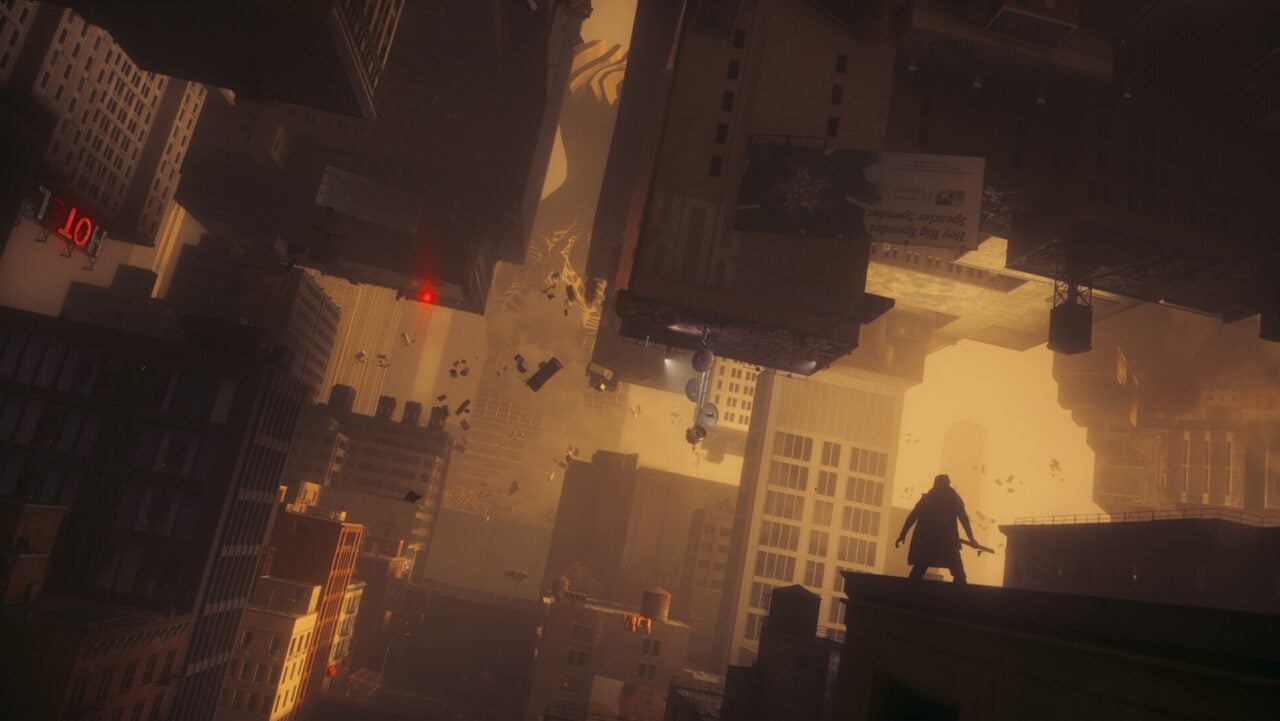
### Investigating the Contrast Between Jesse and Dylan Faden in Control and Control Resonant
The video game franchise *Control*, which commenced with its namesake initial entry in 2019, immersed players in a complex storyline centered on the Federal Bureau of Control (FBC) and its oversight of paranormal occurrences within the eerie confines of the Oldest House, a colossal, brutalist edifice located in Manhattan. The sequel, *Control Resonant*, expands the universe yet elicits mixed reactions among players regarding its shift from the original’s claustrophobic atmosphere. This shift is vital for understanding the tales of its two main characters, siblings Jesse and Dylan Faden, and the differing realities they traverse.
**A Basis of Trauma and Empowerment**
The Faden siblings share a turbulent past. As youths, they encountered the FBC during a disastrous incident that changed their lives irrevocably. Dylan was taken captive and subjected to confinement and experimentation for nearly two decades, while Jesse succeeded in escaping this fate, creating a ripple of contrast between their experiences.
In the first installment, Jesse returns to the Oldest House as an adult searching for her brother, now possessing her own supernatural powers. She ascends to the position of Director of the FBC, maneuvering through the building’s peculiar corridors while combating malevolent entities, illustrating a path of empowerment and authority. Her acceptance of the Oldest House underscores her adaptation to its chaotic essence, as expressed in her assertion that the strange space feels “right” to her.
In sharp contrast, Dylan’s storyline unfolds against the backdrop of his traumatic history within the same establishment. Portrayed as the principal antagonist in the first entry, Dylan’s possession by the sinister entity known as the Hiss results from his desperation to escape his captivity. In *Control Resonant*, after years of dormancy, Dylan awakens to discover that the Hiss has broken free, thrusting him into a world from which he has been long estranged.
**The Importance of Setting: Oldest House vs. External World**
One of the key criticisms from players pertains to the narrative dynamics of *Control Resonant* venturing beyond the architecture of the Oldest House. However, this decision is purposeful; it mirrors the individual journeys of Jesse and Dylan.
Jesse’s upbringing was defined by interactions with the FBC, which molded her into a figure of authority within its ranks. She experienced a sense of agency within the Oldest House, transforming it from a site of trauma into one of empowerment. On the other hand, Dylan’s relationship with the FBC is characterized by victimhood. His imprisonment within the Oldest House hindered him from realizing his potential and independence. Thus, stepping into the outer world symbolizes a journey of reclamation and personal growth.
As Dylan traverses into the uncharted territories beyond the Oldest House, players gain insight into his viewpoint. He enters a reality that has progressed in his absence, underscoring the profound contrast between his enforced isolation and Jesse’s encounters with agency. While Jesse enjoys a homecoming within the Oldest House, Dylan walks into a reality that is both alien and liberating.
**Comprehending the Antagonist: Dr. Darling**
A further dimension in this narrative inquiry is the character of Dr. Casper Darling, whose manipulation of Dylan becomes apparent in *Control Resonant*. While he appears as an eccentric and brilliant scientist in *Control*, Dylan’s interactions unveil a darker truth; Darling embodies the oppressive forces of the FBC. His neglectful and cruel treatment of Dylan amplifies the narrative’s complexity and underlines Dylan’s role as a victim rather than a villain.
As Jesse reconciles her history with Darling’s influence while advancing through the FBC, Dylan faces the trauma imposed on him by the very institution that shaped his reality. This contrast highlights the differing trajectories of the Faden siblings, enriching their characterization and enhancing the narrative depth across both games.
**Concluding Thoughts: Evolution Beyond Imprisonment**
The disparity in settings between *Control* and *Control Resonant* is not simply a stylistic decision but serves a significant narrative function. It mirrors the evolution and transformation of the Faden siblings, spotlighting Dylan’s transition from confinement to freedom. While players may long for the uniquely strange charm of the Oldest House, Dylan’s experiences outside its boundaries are crucial; they allow him to embrace individuality, healing, and the possibility of a new life untainted by his tragic past. The stories of Jesse and Dylan embody broader themes of agency, trauma, and self-discovery within the supernatural confines of the FBC, illustrating a compelling contrast that enriches the *Control* universe.