Uncategorized

Controversy Arises Over ‘Fart Gas’ Debate Related to Upcoming Release of Marvel’s Wolverine

**Examining the Varied Opinions on *Marvel’s Wolverine*: A Debatable Debut**

As the gaming community anticipates the launch of *Marvel’s Wolverine*, conversations have taken an unforeseen twist with some humorously referring to it as “fart gas.” This term originated from a review by YouTuber Ralph “Skill Up” Panebianco, highlighting the game’s excessively guiding mechanics, which diminish player autonomy. With reviews coming in, the game has garnered a mix of responses, indicating it struggles to balance cinematic narrative with engaging gameplay.

### Feedback and Gameplay Issues

The early feedback on *Marvel’s Wolverine* has varied from moderate to unfavorable, with prominent outlets like *Kotaku* raising issues about the linear gameplay and repetitive combat. Critics contend that the game’s design elements seem outdated, resulting in a frustrating experience where players encounter too much guidance rather than being empowered to explore the environment independently.

Skill Up’s review particularly notes areas in the game where players are forced to follow a tightly controlled route through the levels. He points out several navigation aids, such as scent trails following characters and constant markers, calling them condescending. The term “fart gas,” pointing to the visual indicator that directs players to trail Jean Grey, has struck a chord with audiences, showcasing the critique’s humorous and absurd elements.

### Accessibility Options and Player Agency

Much of the feedback centers on the game’s accessibility options being characterized as excessive handholding, sparking debates about the ability to adjust these features. Some players have found that a variety of guiding options can be turned off via the accessibility menu, although others, including the notorious fart gas, cannot be disabled. This variability has prompted additional conversations regarding game design philosophy—whether it’s better to emphasize accessibility at the potential cost of player immersion and difficulty.

Critics worry that such a high level of guidance undermines player involvement, resulting in a gameplay experience that feels more scripted than interactive. As *Wolverine* strives to appeal to a broad audience by integrating extensive tutorials and markers, it risks disenfranchising players who prefer greater freedom in gameplay.

### The Wider Impact on Game Development

The dialogue surrounding *Marvel’s Wolverine* reflects larger trends in contemporary game development, especially among major titles. Critics express annoyance over an increasing dependence on formulaic gameplay elements, which prioritize visual appeal and accessibility over depth and challenge. As players grow accustomed to games that reward skill and strategic choices, like Soulslike titles or demanding RPGs, *Wolverine* seems to inhabit an uneasy spot where it does not quite satisfy either group.

The game’s strategy raises questions about the equilibrium developers must maintain when creating content for a varied audience. While making gameplay more streamlined can render a title more approachable for newcomers, straying from essential gameplay components that engage long-term players may result in decreased satisfaction among dedicated fans.

### Conclusion: Is Fart Gas a Strength or Weakness?

Though *Marvel’s Wolverine* has not yet been released, the pre-launch discussions around its mechanics and design choices provide important insights into player expectations in today’s gaming environment. As the industry progresses, achieving a balance between accessibility, depth, and player engagement remains a significant challenge for developers. With *Wolverine*’s impending release, only time will reveal if it can transcend the critiques and offer an experience that resonates with both casual gamers and committed fans. For the moment, the blend of humor and critique regarding aspects like “fart gas” contributes to an intriguing narrative leading up to one of Sony’s key releases of the year.

Uncategorized

Saudi Arabia Investigates Possible Consolidation of EA and Savvy Games Group

**Title: Saudi Authorities Evaluate Merger Between Electronic Arts and Savvy Games Group**

In a notable shift in the gaming sector, the Saudi Arabian Public Investment Fund (PIF), along with private equity firms Silver Lake Partners and Affinity Partners, has recently taken ownership of Electronic Arts (EA), recognized for its popular franchises such as *Sims*, *Apex Legends*, and *Madden*. With this acquisition still recent, rumors have emerged indicating that the Saudi government is considering a merger of EA with Savvy Games Group, a gaming company also supported by the PIF.

**Possible Merger with Savvy Games Group**

As per a report from Bloomberg, the merger is intended to establish a unified entity that improves coordination among the PIF’s assets, potentially streamlining operations within the extensive gaming sector. This initiative would create a centralized platform for managing acquisitions and game development, simplifying the challenges posed by multiple subsidiaries working autonomously.

Savvy Games Group, which possesses studios such as Scopely, is actively broadening its influence in the gaming industry. Nonetheless, the realization of this merger seems dependent on Savvy’s acquisition of Moontown, a Chinese mobile gaming firm, for roughly $6 billion. No definitive decisions regarding the merger with EA have been publicly disclosed at this moment.

**Legal Ramifications and Sector Concerns**

The prospective merger brings forth substantial legal challenges, especially concerning antitrust matters. If the Saudi fund’s initiative moves forward, it could face scrutiny akin to that encountered by Microsoft during its acquisition of Activision Blizzard, which faced numerous regulatory obstacles. The gaming community and industry analysts are closely monitoring these developments, aware that consolidation of this nature could transform the landscape of game publishing and development.

**Effects on Workforce and Development Teams**

Reports indicate that staff at EA, particularly developers and other entry-level personnel, are experiencing uncertainty regarding the ramifications of the acquisition. There is an increasing worry that the merger could result in significant layoffs throughout EA’s studios, as the company aims to reduce expenses during the integration phase. Projections suggest a potential workforce reduction targeting annual savings of $700 million, igniting fears of a “bloodbath” in job losses.

In conclusion, as negotiations regarding the merger of Electronic Arts and Savvy Games Group progress, the gaming sector remains vigilant regarding the larger consequences of such an immense consolidation. The possibility of legal obstacles, impacts on employees, and the future trajectory of gaming under Saudi governance will surely be critical focal points for stakeholders within this unfolding narrative.

Uncategorized

Extensive Compilation Assembled by Supporters of Sony’s Remarks on Digital Game Ownership in Light of Legal Allegations Regarding Player Rights

As part of a class action lawsuit aimed at Sony, the company’s legal team has claimed that “reasonable” consumers comprehend that when they buy a digital game on the PlayStation platform, they do not genuinely own it. This assertion raises important questions about consumer rights and digital ownership, especially regarding the transparency of Sony’s communications to its customers about game acquisitions.

The lawsuit, initiated by gamers in California, asserts that Sony has not adequately disclosed the reality of digital game ownership within the PlayStation Store. According to the terms of service, what consumers obtain upon purchasing a game is fundamentally a revocable, limited license to access that digital content, instead of ownership of the game itself. This inconsistency between consumer perception and legal documentation has become a key point of dispute.

Sony’s attorneys maintain that, in today’s digital environment, it is unreasonable for consumers to think they are gaining full ownership of a digital game. Conversely, the plaintiffs argue that the terminology consistently used by PlayStation—such as “Purchase” and “Owned”—is deceptive. The term “owned” is frequently used on the platform, leading to an impression that might cause consumers to feel they have complete rights to their digital games.

A number of instances have been documented highlighting PlayStation’s use of the word “own” concerning digital products. Such mentions create ambiguity regarding what consumers can genuinely claim as theirs. For example, players are frequently notified about “games you own” or are advised that they do not need to buy the PS5 version of a game they “already own.” This phrasing implies a degree of ownership that contradicts the legal situation outlined in Sony’s terms of service.

Critics have noted that while Sony does specify the limitations of digital ownership in its legal documents, these texts are often neglected by the typical consumer, many of whom may not fully understand the legal intricacies. The reliance on complicated legal terminology could alienate consumers who do not engage with such terms. Furthermore, the lack of clear disclaimers indicating that what users actually get is a license, not ownership, complicates the issue further.

This legal contention arises at a time when the gaming industry is increasingly shifting toward digital distribution, raising questions about ownership and the future of digital content. Concerns are growing about how digital purchases will be managed in terms of accessibility and preservation in a fully digital marketplace. As the discussion expands, it is likely that this topic will arise again in future conversations about consumer rights in the digital era.

Sony’s difficulty lies in aligning consumer expectations with legal truths, and continued scrutiny from both the public and the judicial system may influence how digital ownership is defined and communicated in the future. As the environment changes, the necessity for clear communication regarding digital ownership will be essential in sustaining consumer trust and satisfaction.

Uncategorized

Rebounder: A Game Inspired by Celeste That Promotes Risk-Taking in an Extraterrestrial Setting

### The Captivating Mechanics of *Rebounder*: A New Perspective on Platforming

In the realm of video gaming, the platformer category has significantly transformed over time, with creators consistently aiming to build experiences that are both demanding and gratifying. One title that is receiving notable attention is *Rebounder*, which adopts contemporary design concepts tailored for players in search of instant satisfaction and a streamlined gameplay journey.

#### The Excitement of Quick Respawns

One of the most appealing attributes of *Rebounder* is its rapid respawn system, echoing the celebrated *Celeste*. When players fail a jump or tumble into a chasm, they are swiftly brought back to the beginning of the area, permitting quick attempts without the exasperating wait times that have plagued many platformers previously. This fast-paced cycle not only reduces inactivity but also boosts the player’s immersion, making it simpler to contemplate errors and create strategies for achievement.

As players advance through progressively intricate areas, this rapid series of efforts cultivates a feeling of smoothness and drive. For many, including those who tend to play more carefully, the act of maneuvering through a sequence of obstacles becomes empowering as they refine their timing and decision-making with each leap.

#### Smooth Movement and Rewarding Feedback

Another vital component of *Rebounder* is the game’s precise controls and responsive mechanics. Players guide a diminutive space character that glides with accuracy and elegance, embodying the sensation of an unceasing motion engine. With each item collected and timely jump executed, players experience gratifying visual and auditory feedback—explosions, sounds, and lively animations that render the gameplay vibrant and energetic.

The visual style significantly contributes to the game’s charm. Blending a comic-book aesthetic with muted tones and unique animations, *Rebounder* enchants players and draws them into its realm. This immersive quality, combined with chaotic yet amusing text features, enriches the experience, encouraging players to interact with their surroundings even while racing through stages.

#### Compelling Narrative Components

While the gameplay mechanics and visual elements are essential, *Rebounder* also weaves narrative threads into its design, establishing an absorbing storytelling backdrop. Set in a science fiction setting, players tackle challenges as a blue-collar worker bound to an enigmatic job that seems both crucial and trivial. The exchanges between the player and the overseer introduce depths to the narrative, cleverly refraining from handing out information, instead allowing players to reconstruct the tale themselves.

This nuanced narrative technique elevates the experience, as players find themselves engaged not merely in the mechanics but also in the character’s journey and the surrounding world. The contrast of a lively and fast-paced platformer against themes of corporate exploitation provides a reflective experience beneath the surface of the gravity-defying leaps.

#### Conclusion: The Charm of *Rebounder*

*Rebounder* shines as a prominent title in the platforming landscape, successfully achieving a fine balance between challenge and reward, fluid movement, and captivating narrative content. For players who generally approach platformers with care, the game presents a rejuvenating shift in tempo, fostering a more adventurous mindset. With its sleek mechanics, swift respawn feature, and intriguing universe, it encourages players to welcome failures, learn from them, and ultimately relish the thrilling journey of exploration. The surprising enjoyment stemming from this title uncovers an exciting promise for future platformers that emphasize rapid learning and responsive design.

Uncategorized

Creative Assembly’s Strategy for Introducing New Players to Total War: Warhammer 40,000’s Grimdark Setting

I remember once when I was a child, my uncle was visiting and completely unprompted (and kindly) he gave me a copy of one of the Total War games, I think the Rome one, you’ll have to forgive my memory. I’d literally never played a strategy game in my life, but I gave it a go anyway, and quickly found myself thinking, “hey, where are the collectibles? Why’s there no triple jump?” The onboarding process did not help me much, and after a failure of a battle where I lost everything, I soon gave up after. So it’s because of not particularly strategic people like me that makes me understand why developer Creative Assembly want Total War: Warhammer 40,000 “approachable and accessible”.

Read more

Uncategorized

“The New Apothecary Diaries Game: An Alternative for Enthusiasts of the Ace Attorney Series”

### What on Earth, Nintendo?! Thrilling Update on *The Apothecary Diaries* Game

In an unexpected showcase at a recent gaming convention, Nintendo enticingly presented a fleeting look at an upcoming video game adaptation of the cherished anime series *Apothecary Diaries*. This moment of thrill, albeit frustratingly brief, has spurred fans to crave more. Closely following the announcement of *Metroid Ravenous*, the reveal of *The Apothecary Diaries: The False Imperial Brother* has attracted considerable attention and excitement from both gamers and anime enthusiasts alike.

#### A Quick Summary of *Apothecary Diaries*

The *Apothecary Diaries* series chronicles the journeys of Mao Mao, a modest yet sharp-witted apothecary who finds herself in the captivating role of a poison taster for the Imperial harem. The series intertwines elements of mystery and historical drama as Mao Mao utilizes her distinct pharmaceutical expertise to uncover sinister plots and solve crimes. Her relationship with Master Jinshi, an imperial eunuch who supports her investigations, adds layers of complexity, as their dynamics often reflect the beloved rapport of Dr. House and Dr. Wilson from *House, MD*.

#### What Awaits in *The False Imperial Brother*

Koei Tecmo is crafting an original narrative for *The False Imperial Brother*, developed under the supervision of the series creator, Hyuganatsu. It revolves around Mao Mao and Jinshi as they confront “The Five Mysteries of the Rear Palace.” Initial revelations indicate that the game will include gameplay reminiscent of the *Ace Attorney* series, where players must explore crime scenes, conduct interviews, and present their conclusions—though in front of the emperor rather than a courtroom judge.

The game promises a vibrant mix of exploration, gathering, and crafting mechanics, enabling players to deeply engage in the life within the imperial palace. This multifaceted approach is anticipated to enrich the gameplay experience, encouraging players to create items or concoctions that will assist in their investigations.

#### Excitement and Upcoming Developments

*Apothecary Diaries* represented a notable return for this writer to the anime realm after a considerable break. It shines as a unique, captivating show that has kept viewers engrossed, and with season three launching soon, there’s plenty to anticipate. The game is slated for release in early 2027 on platforms including PS5, Nintendo Switch 2, and Steam.

In summary, while the brief teaser from Nintendo might have left fans yearning for more, the full unveil of *The Apothecary Diaries: The False Imperial Brother* promises a well-crafted narrative and captivating gameplay that will undoubtedly attract both anime fans and newcomers alike. With its robust story foundation and intriguing characters, players are poised for an adventure teeming with mystery and intrigue in the imperial palace.

Uncategorized

Ubisoft Announces Potential Removal of Connect Launcher Requirement for Steam Games

Ubisoft are planning to start testing a new tool that’ll allow Prince of Persia The Lost Crown Steam players to access features only usually available via the publishers’ Connect launcher without actually having to have said launcher installed. That’s according to a Steam announcement post which only appears to be visible to folks who already own a copy of The Lost Crown on Valve’s storefront.

Read more

Uncategorized

Investigating a Game That Converts Tetris into a Doom-Inspired Adventure for Young Kids

### Title: The Whimsical Charm of *Blocks for Babies*: An Exceptional Indie Game Adventure

#### Introduction
In the bustling realm of indie game creation, distinguishing oneself is vital for triumph. One impactful strategy to attract interest is via captivating titles. Recently, prior to PAX West, I stumbled upon a game with a name that immediately captured my curiosity: *Blocks for Babies*. The playful essence of the title alone was sufficient to entice me, and it turns out, the game itself delivers a delightful blend of enjoyment and mayhem that perfectly matches its whimsical branding.

#### Gameplay Mechanics
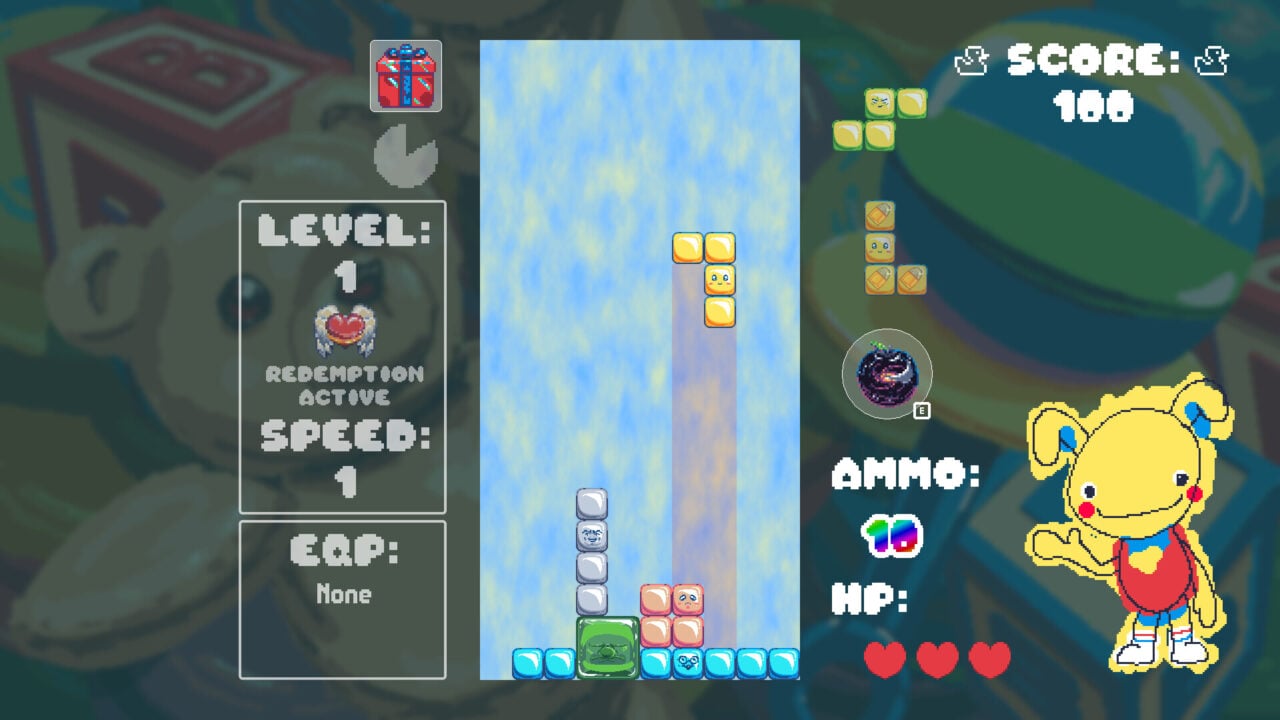
*Blocks for Babies* welcomes players into a universe where an infant character calls upon your assistance to organize blocks, presenting what seems to be a simple task at first glance. The gameplay strikingly echoes *Tetris*, as you eliminate lines of blocks. Yet, the game adds a twist—some blocks are a striking red and cannot be removed in the typical way. This distinct challenge encourages players to think innovatively regarding the management of these pesky blocks.

To tackle these obstinate blocks, players can shift into a first-person shooter mode reminiscent of the classic *Doom*. This transformation turns the captivating puzzle game into a thrilling action escapade as the blocks evolve into aggressive cubic monsters, introducing layers of challenge and excitement.

#### Roguelike Elements
What sets *Blocks for Babies* apart even more is its incorporation of roguelike elements. Following the completion of rounds, players select from an array of perks and buffs that enhance their gameplay, such as automatically clearing specific blocks or setting them ablaze. Nevertheless, these advantages come with a catch: as players acquire power, the game’s difficulty also escalates. This intriguing dynamic keeps players invested, as they must adjust to fresh challenges while striving to optimize their benefits.

#### Artistic Style and Humor
The game’s artistic style merges messy contrasts, combining 2D and 3D aspects that foster an engaging aesthetic. The baby’s clumsy movements and the volatile nature of the irate blocks contribute to a humorous ambiance. With every explosion, a playful chaos reminiscent of a cartoonish skirmish unfolds, perfectly aligning with the game’s overarching theme.

The writing in *Blocks for Babies* adds an additional layer of amusement. The game’s humor effectively plays with absurdity, cleverly appealing to players’ inner ‘shitposter.’ This humor, paired with the surprising contrasts between Tetris-like puzzle gameplay and intense first-person shooter action, creates an engaging experience.

#### The Experience and Future Prospects
At first, following the demo, I was uncertain about the game’s lasting allure. The novelty of its concept had its limits, and I pondered how much depth was left in switching between puzzle-solving and shooting. However, after viewing the trailer, which showcases a multitude of potential challenges, new block types, and a hint of horror elements, my enthusiasm was rekindled.

The trailer not only emphasizes the humor but also hints at a more extensive narrative and gameplay intricacy that may develop throughout the game. This potential for growth and adaptation has convinced me to give *Blocks for Babies* another chance, eager to discover what new challenges await as the game evolves.

#### Conclusion
*Blocks for Babies* stands as a prime example of how an intriguing title can effectively capture attention within the gaming community. Merging puzzle, action, and humor, it offers a distinctive gaming experience that embraces the enjoyment of both *Tetris* and *Doom*. As players navigate its levels, the engaging mechanics, artistic style, and comedic writing promise to keep them entertained. With further exploration and the evolution of gameplay, *Blocks for Babies* may well become a cherished title among indie game aficionados.

Uncategorized

“Learn Visual Programming Techniques to Help Your Heroes Overcome Challenges in Dungeon Automata”

The beautiful thing about people that like dungeon crawlers is that they’re all sickos. Every single one of them! This is not a genre that’s for the faint of heart. It is often plodding and methodical and conniving, so focused on stats and character classes that you could drown in the amount of numbers you have to pay attention to. So, how about a dungeon crawler where the battling happens automatically, and all you have to do is a little bit of programming? It’s called Dungeon Automata, and trust me, the programming isn’t as bad as it sounds.

Read more

Uncategorized

Recreation of Distinct Moment from GTA 6 Trailer Acted Out in Reality

### Examination of Jason’s Backflip in Grand Theft Auto 6: Reality vs. Animation

The latest *Grand Theft Auto 6* (GTA 6) Extended Look trailer has ignited considerable discussion among enthusiasts, especially regarding a scene where a character named Jason executes a running backflip off a pier. This moment has not only enthralled viewers but also sparked substantial online discourse about its plausibility in reality.

#### Grand Trailer Launch and Immediate Responses

On August 27, Rockstar Games debuted almost 30 minutes of gameplay footage for *GTA 6*. This extensive reveal drew attention for its multitude of details and elaborate animations. While many features received acclaim, Jason’s backflip swiftly became a target for criticism. Observers pointed out that the action seemed somewhat unrealistic, with descriptors like “off” and “stiff” frequently surfacing in conversations. This critical response was particularly pronounced when the trailer was shared with a wider audience, highlighting the backflip as an atypical animation choice.

#### Demonstrating the Impossible: An Athlete’s Task

To confront the doubts regarding the realism of the backflip, an athlete and content creator named Aspen Tree accepted the challenge to reproduce the maneuver in real life. Despite his physical abilities, Aspen discovered that executing the backflip was quite difficult, particularly while trying to adhere to the aesthetics of the video game animation. The endeavor involved significant trial and error, underscoring the intricacies involved in accurately performing such a feat.

Aspen’s attempts illustrated that although the backflip is technically feasible, the precision and timing needed render it tough for most people to replicate successfully. His experience emphasizes the idea that animations in video games frequently incorporate idealized physics that do not always transfer smoothly into reality.

#### Analysis of Jason’s Abilities

Speculation regarding Jason’s capabilities has arisen from this backflip examination. Viewers have wondered if Jason has exceptional athletic gifts, suggesting scenarios like extensive training or even a fictional background that includes circus involvement. However, a more plausible explanation is that the animation for the backflip was less polished compared to other moves in the trailer, resulting in a perception of awkwardness.

#### Upcoming Updates from Rockstar

With the game scheduled for release on November 19, uncertainties persist about possible updates to the animation. Will Rockstar decide to enhance Jason’s backflip based on community input, or will it remain as part of the final offering? As anticipation increases, fans are eagerly looking forward to more information about the game and possible modifications to its animations.

In summary, the discussion surrounding Jason’s backflip in *GTA 6* illustrates the convergence of gaming realism and player expectations. It serves as a reminder of the creative freedoms exercised by game developers and the diverse reactions from the community. Whether viewed as an enjoyable aspect of the game or critiqued for its execution, this moment encapsulates the essence of gaming culture’s interaction with animation and realism.