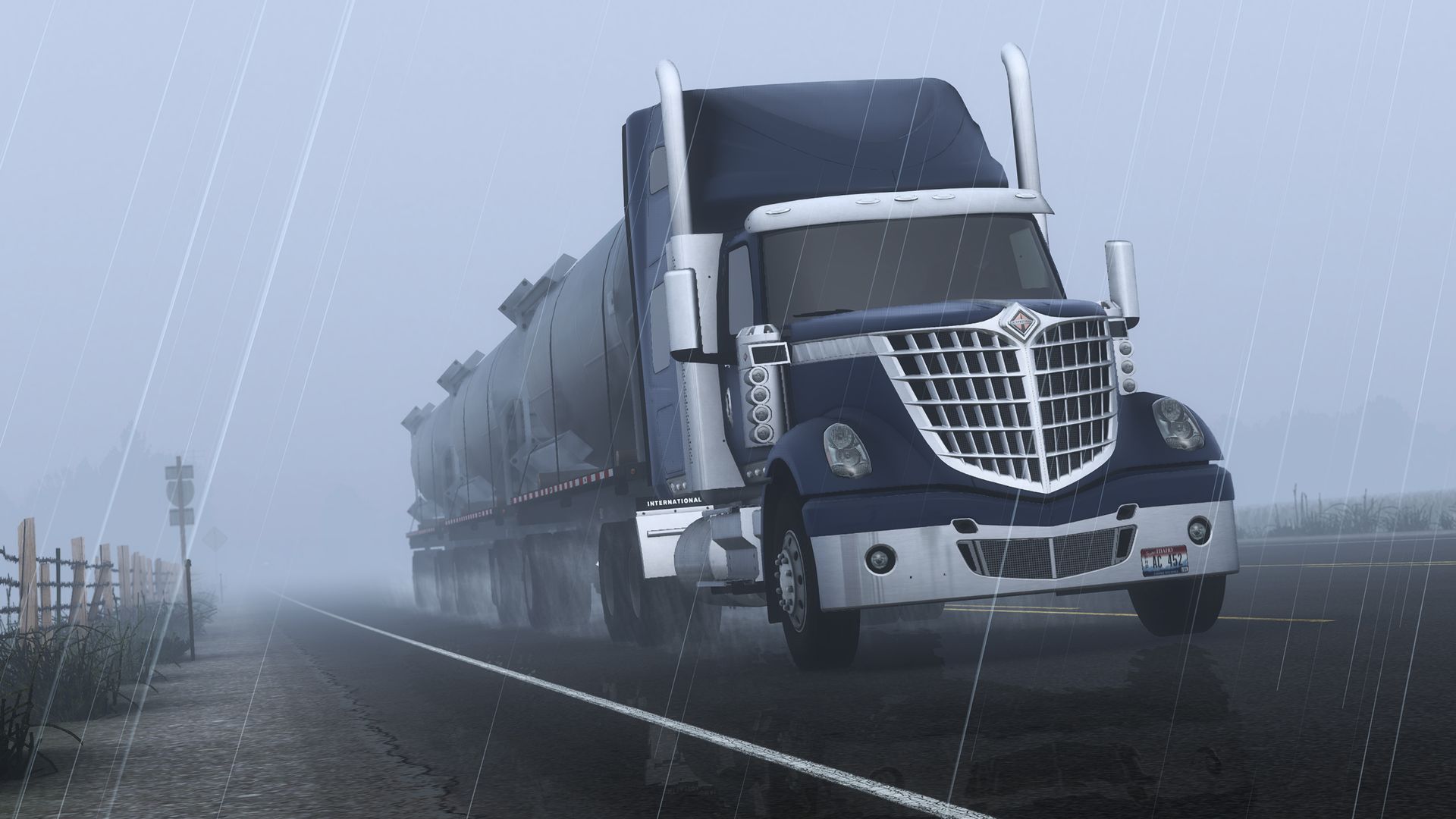
AI data centers are springing up across the US at an unprecedented rate, and with them comes a number of problems. Aside from the noise, disruption, and environmental concerns, the vast infrastructure projects also require the transport of millions of dollars worth of equipment—and opportunistic thieves are cashing in.
An NBC News report details two audacious data center equipment heists, both involving literal examples of highway robbery. A shipment carrying $13 million worth of server equipment travelling on a section of interstate through the Mojave Desert had its security escort rammed by a separate vehicle, forcing it to stop. The trailer carrying the equipment was later found at a truck yard in California, minus its valuable load.
“The accident was not an accident,” says Gerado Pachucha, an ex-member of the LA Country Sheriff’s Department cargo criminal apprehension team. “The bad guys wanted that load, so they intentionally took out the escorts.”
A second incident, also involving a collision with a security vehicle, led to the loss of another trailer carrying an estimated $10 million worth of server rack components. NBC reports that, according to industry leaders, consultants, and investigators it’s spoken to regarding the heists, thieves are estimated to have stolen more than $100 million worth of data center freight since June of this year.
Keith Lewis, head of operations of a cargo theft tracking team at Verisk CargoNet, says “It’s like stealing pure gold bars.”
“We’ve seen some of these thefts go up into 30-plus million dollars for one particular shipment. It’s so much easier to steal this than to rob a bank.”
Aside from the server racks themselves, data centers also require a vast amount of copper wires, fiber optic cables, RAM modules, storage drives, and various other high-value components that need to be transported to their destination by conventional means.
“Things that are precursors for the AI data centers: copper, server racks and RAM. Those are the things that are the precursors to build one, so that’s what we’re seeing the big increase in,” says Lewis. “It’s the dollar value that’s getting the attention because the product they’re stealing costs so much more.”
And despite the addition of security escorts, it seems some criminals are willing to go to increasingly sophisticated lengths to obtain such high-value items.
The FBI issued a warning in April of this year regarding “cyber-enabled strategic cargo theft,” in which an online heist method is detailed. This involves spoofing broker’s email addresses to gain access to cargo systems and bidding on loads, which are then said to be “cross-docked” or “transloaded” to complicit drivers, who then move the cargo to a separate location for resale.
However, while the two hit-and-run style thefts detailed above are seen as isolated incidents (in terms of their methods) for now, the experts NBC has spoken to view them as a potential escalation of violent tactics more commonly seen in other countries—and it’s not just data center equipment that’s at risk.
Scott Cornell, chair of the Transported Asset Protection Association, Americas, says: “These are extremely high-level organized rings that are operating from a dozen different countries, targeting freight in the United States supply chain. These are not unsophisticated crews just pulling off theft.”
“They’re planned. They’re plotted. They’re strategic. They’re playing chess in the supply chain,” says Cornell.
Meanwhile, states such as Arizona, California, Tennessee, and Illinois have established specialised cargo theft task forces to deal with the issue. Private security escort companies are seeing increasing demand from data center logistics providers, while a new bill to combat wider organized retail crime is currently being debated by US congress.
Where the money goes, I guess it’s no surprise that organised crime will follow. And given the value of some of the data center freight now making its way across the US, it seems that opportunistic criminals have a new high-value target to consider.