### Unbeatable Review: A Heartfelt Rhythm Game with a Punch
**Developer:** D-Cell Games
**Publisher:** Playstack
**Release Date:** December 9th, 2025
**Platform:** Windows
**Price:** $28/£25/€25
**Reviewed on:** AMD Ryzen 5 2600X, 32GB RAM, Nvidia GeForce GTX 1660, Windows 10
**Steam Link:** [Unbeatable](https://store.steampowered.com/app/2240620/UNBEATABLE/)
Unbeatable presents an intriguing blend of heartwarming storytelling and entertaining gameplay set against an oppressive regime that has deemed music illegal. Players join a ragtag band composed of young adults and a twelve-year-old girl as they confront the authoritarian forces represented by H.A.R.M. (Harmonics and Resonance Management). The game’s tagline, “A game where music is illegal and you do crimes,” outlines the rebellious tone at its core.
### Gameplay Mechanics
Unbeatable comprises two primary modes: Story mode and Arcade mode. In Story mode, players control Beat, a slacker who becomes embroiled in a quest alongside Quaver, a girl searching for her missing mother. Together, they recruit twins Treble and Clef to form their band, aptly named Unbeatable, and confront the anti-music police through various rhythm-based challenges.
The rhythm mechanics involve a simple two-track system where notes appear for the player to hit in time with the music. The game introduces a variety of note types, including dodged notes, notes that need to be held, and notes that require quick button mashing—creating an engaging rhythm experience that becomes increasingly complex as difficulty rises. Customizable controls allow players to tailor the game experience to their preferences.
### Story Mode: A Heartfelt Narrative
Story mode serves as the emotional backbone of Unbeatable. Its narrative features moments of poignant character development and exploration of themes like rebellion, friendship, and self-discovery. While the pacing suffers at times, particularly during repetitive sequences early in the game, the narrative ultimately thrives on its endearing character interactions. The band members’ distinct personalities—Beat’s sarcasm, Clef’s aggression, Treble’s awkwardness, and Quaver’s youthful exuberance—drive the humor and heart of the story.
However, while the narrative captivates with its charm, it stumbles with worldbuilding elements that are left somewhat ambiguous or unfinished. For instance, historical events and the origins of H.A.R.M. are touched upon but not fully explored, leaving gaps that could hinder player immersion.
### Arcade Mode: A Rhythm Celebration
Arcade mode offers an extensive collection of songs, allowing players to refine their skills and chase high scores. Featuring a mix of original music by Unbeatable and remixes, the diverse soundtrack encompasses genres ranging from garage rock to ambient electronica, ensuring a consistently engaging experience.
Additionally, Arcade mode features a Challenge Board that encourages players to unlock achievements and further explore the game mechanics. The challenge structure promotes experimentation and continued gameplay, making each session rewarding.
### Artistic Direction and Aesthetic
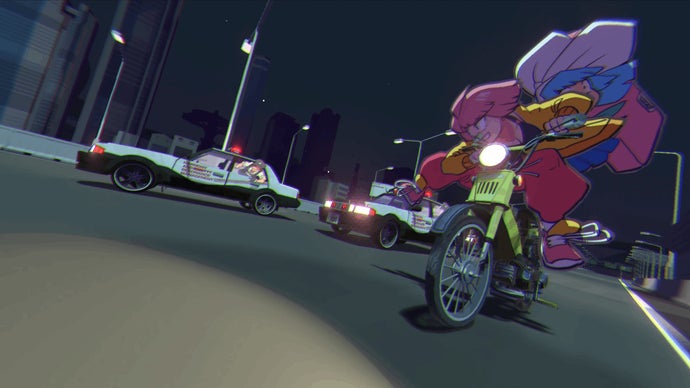
Unbeatable’s unique aesthetic draws from anime and zine culture, creating a handmade feel. The juxtaposition of flat sprites against 3D backgrounds provides a refreshing visual style, although occasional glitches during transitions may disrupt the experience. Despite these issues, the overall artistic direction complements the game’s celebratory themes of creativity and rebellion.
### Conclusion
Unbeatable ultimately shines as a tribute to music’s power and the human spirit. While it faces challenges in pacing and worldbuilding, the game’s heart and vibrancy resonate deeply. Players will find themselves drawn into Beat’s journey, wanting to rock out with the band and embrace the joyous chaos of music. It’s a rhythm game that, despite its flaws, remains a compelling experience worth celebrating.