**The Cozy Challenge of Repairing Electronics: Exploring Restory**
As the holiday season approaches, sorting through tangled Christmas lights often evokes a mix of nostalgia and frustration. One might be tempted to toss the entire jumble in favor of a shiny new set, but for some, the challenge of untangling presents a rewarding experience. This contrast between the urge to discard and the desire to restore parallels the gameplay of “Restory,” a cozy simulation set in a nostalgic electronics repair shop in early 2000s Tokyo.
**Game Overview**
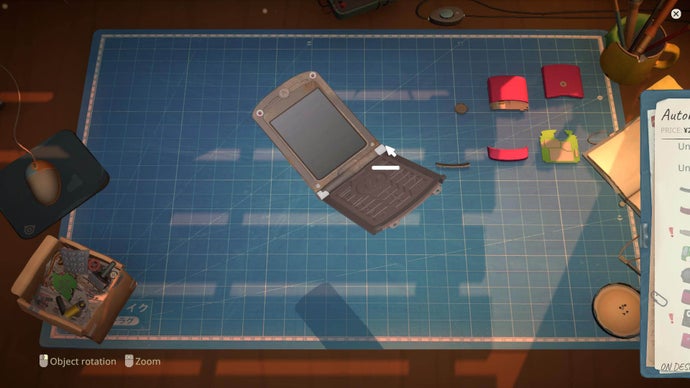
In “Restory,” players assume the role of a small shop manager tasked with reviving broken electronics. Customers bring in various devices that require careful disassembly, cleaning, and the replacement of faulty parts. Players can also browse and order broken electronics and spare pieces using a retro-styled computer, enhancing the immersive experience of managing a repair shop at this particular historical moment.
The game’s premise hinges on the delicate balance of managing finances—earning money to cover rent, bills, and necessary licenses to repair complex devices. However, the management aspect remains relatively light-hearted, as players don’t engage in competitive pricing or sourcing unauthorized parts; the focus lies primarily on the hands-on repair process.
**Gameplay Mechanics**
From initial gameplay experiences, “Restory” presents a straightforward repair process: disassemble devices, dispose of broken parts, clean components, and reassemble everything to return to the grateful customers. While this might spark initial excitement, the repeated nature of tasks can lead to a sense of disposability regarding the items players handle. Each device may tell a story, but their interchangeability can dilute the emotional connection to the repair work.
The game contrasts with other titles in the cozy restoration genre, such as “Assemble With Care,” where players engage in unique puzzle-solving for each object. In “Restory,” familiarity with repeated devices—like various iterations of retro tech reminiscent of the early 2000s—can lead to feelings of repetitiveness that overshadow the initial nostalgic charm.
**Narrative Depth**
Although “Restory” features engaging narratives woven through customer interactions, inconsistencies can arise between the emotional storytelling and the mechanical gameplay. A standout moment involves a security guard whose rare flashlight holds sentimental value. The player fixes it by cannibalizing parts from another similar device, raising questions about the game’s underlying message regarding the value of objects and memories.
While some customer stories resonate—like a recluse communicating through messages lowered from their window—others suffer from a lack of depth, particularly when they feel rushed or minimized. Instances where emotional stakes seem high, such as a seller’s plea to preserve their child’s memory through a toy, lose their weight when juxtaposed with the immediate ability to dismantle said items.
**Future Prospects**
As “Restory” approaches its scheduled release in 2026, there remains potential for growth. The framework of managing an electronics repair shop provides fertile ground for deeper gameplay mechanics and varied narrative experiences. It draws parallels with successful titles that embrace the charm of mechanical repair and the intricacies of managing a business.
For players seeking a meditative experience, the excitement of handling tech and restoring it to life can be thoroughly captivating. However, the game’s success will hinge on its ability to enrich the narrative threads that accompany the gameplay and introduce variability in tasks and devices.
“Restory” represents a thoughtful exploration of the art of restoration, inviting players to appreciate the stories behind everyday electronics while navigating the complexities of managing a small business. As the development progresses, fans will be hopeful that it evolves into a compelling experience that captures both the cozy and the meaningful aspects of repair culture.