
**AMD’s FSR Redstone: A New Era of Upscaling, Frame Generation, and Ray Tracing**
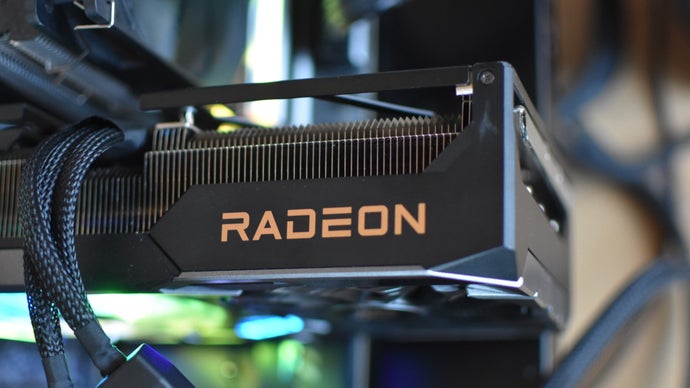
AMD is set to launch FSR Redstone, a comprehensive suite of upgrades focused on upscaling, frame generation, and ray tracing. This new suite emerges as a challenger to Nvidia’s DLSS 4, which has dominated the GPU landscape. Historically, AMD’s FidelityFX Super Resolution (FSR) has been more GPU-agnostic, but Redstone pivots to more advanced machine-learning techniques that require the latest Radeon RX 9000 series graphics cards.
The strategic shift to supporting only the newest hardware represents AMD’s commitment to improving image quality and stability. Early tests with FSR Redstone indicate AMD’s confidence may be well-founded, particularly in the realm of upscaling technology.
### Understanding FSR Redstone
FSR Redstone incorporates elements from previous iterations, particularly FSR 4, which debuted alongside the RX 9000 series. This AI-assisted upscaler boasts enhanced performance and image quality compared to earlier versions, which relied on simpler techniques. While benchmarks in popular titles, such as *Cyberpunk 2077*, *Blops 7*, and *F1 25*, demonstrated that not all aspects had notably changed, the improvements brought by the new upscaling technology are evident.
FSR Upscaling aims to produce sharper images even when scaling to lower resolutions like 1080p, competing closely with Nvidia’s DLSS 4. Although DLSS 4 maintains a slight edge in preserving clarity, particularly in rapid movements, FSR’s advancements are commendable.
### Frame Generation and Quality Improvements
FSR Redstone also introduces enhanced frame generation capabilities. Using machine learning, the frame generation feature now provides higher FPS and smoother motion while maintaining image quality. Although frame generation inherently increases input lag, improvements have minimized jitteriness compared to the previous FSR versions. Tests showed less ghosting with the new system and only marginal reductions in FPS, maintaining high frame rates even in demanding scenarios.
An example of Redstone’s effectiveness was noted when comparing the previous frame generation methods to the current iteration. While a drop from an average of 288fps to 243fps in *F1 25* was observed, this difference remains imperceptible to the average gamer, especially given today’s display refresh rates.
### Ray Tracing Capabilities of FSR Redstone
Additionally, FSR Redstone steps into the realm of advanced ray tracing with a new mechanism called Ray Regeneration. This technology utilizes machine learning to enhance the processing of ray-traced reflections, providing clearer and sharper visual effects. As of now, support is limited to one game, *Blops 7*, but the initial results suggest that the performance impact is negligible, further solidifying AMD’s commitment to competitive graphics performance.
Though the feature of Radiance Caching is anticipated for future releases, it remains to be seen how it will impact the gaming experience.
### Competitive Landscape and Future Outlook
FSR Redstone marks a notable evolution in AMD’s strategy. As Nvidia has focused on advancing their hardware capabilities while maintaining premium pricing, AMD appears ready to contest this territory through improved technology. By adopting a more focused approach on the newest GPUs, AMD is showing its intent to close the gap on Nvidia’s dominance, particularly regarding deep learning-based technologies.
In conclusion, FSR Redstone emerges not simply as an upgrade but as a transformative suite that moves AMD’s offerings into a more competitive space. While there may still be some visual fidelity aspects where DLSS leads, FSR Redstone effectively diminishes the gap, making it a worthy consideration for gamers and creatives seeking high-performance graphics solutions. The transition aligns with a broader trend in the industry, where cutting-edge features require up-to-date hardware, offering a fresh start for AMD amid a fiercely competitive market.