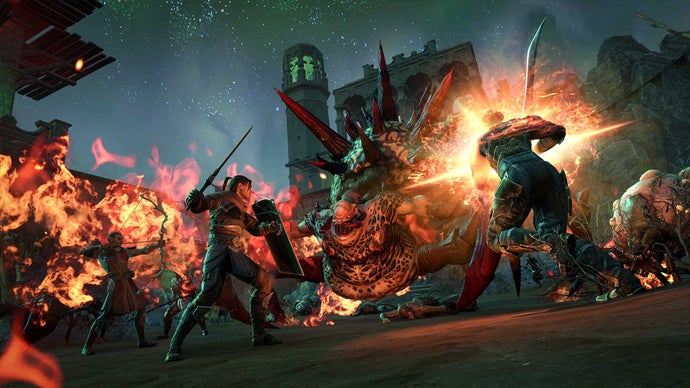

Back in September, studio game director Rich Lambert indicated to GamesIndustry.biz that the Elder Scrolls Online (ESO) team was contemplating a shift from large expansions to smaller, more frequent updates. Fast forward four months, and this change is already underway.
This is not merely a recapitulation of old news; rather, it comes packed with new insights, akin to a meal prepared with fresh ingredients rather than stale leftovers.
Before the Christmas break, I garnered information about the first three seasons slated for release in 2026 and was bound by confidentiality, but that restriction has now lapsed. Crucially, the new seasonal updates will be free for all players, whether they access the game through Game Pass or are paid ESO Plus members.
On April 2, Zenimax Online Studios will introduce Season Zero for ESO, followed by Season One in July and Season Two in October. This marks the end of the prolonged wait times of 12 to 18 months typical of major expansions, ushering in a new season model featuring smaller updates every three months.
Game director Nick Giaomini noted during a pre-Christmas briefing that player feedback indicated the game had grown predictable and formulaic, largely due to the chapter model’s lengthy development times. This new approach aims to grant the team the flexibility to enhance player experiences by addressing long-standing issues, adding requested features, and iterating on the core game instead of solely pursuing new content.
The more focused nature of the upcoming seasonal updates is evident in their design. Season Zero will introduce a new PvE area named The Night Market, a battle pass titled Tamriel Tomes, and a PvP progression system tailored for Vengeance players. Players will also see new difficulty options for overland areas, alongside a refresh of the Dragonknight class and the two-handed weapon skill tree.
Subsequent seasons will continue this trend. In July’s Season Two, new quests for the Thieves Guild, multi-stage co-op world events, and a trial named Crimson Veldt are expected, while balance and art refreshes for the Warden class are planned. Season Three in October will feature a new dungeon, dynamic world events, and a refresh for the Sorcerer class.
This adaptive strategy bears resemblance to Ubisoft’s method with Rainbow Six Siege, where they utilized seasons to revitalize older maps and characters to integrate them better with newer content.
Additionally, many past expansions, such as the Thieves Guild, Dark Brotherhood, Orsinium, and the Imperial City, will now be part of the base game, eliminating the need for players to purchase them separately or subscribe to ESO Plus. This transition is likely a strategic move to create new monetization avenues within the game.
Tamriel Tomes represents ESO’s new battle pass system, launching with each season and offering a rewards track based on player achievements in various activities, from dungeon completions to crafting. While there is a complimentary version, two paid tiers are available that unlock additional rewards.
However, the backdrop to these substantial changes is a significant workforce reduction at Zenimax following Microsoft’s layoffs, which affected over 9,000 employees across the corporation. Staff described these layoffs as “inhumane,” with the rapid cuts leaving little room for farewells. The team was also reportedly working on a new project, dubbed Blackbird, which was canceled amid the downsizing.
While shifting to seasonal releases could enhance agility for the reduced team, questions remain about whether the ability to create the content traditionally associated with expansions was feasible post-layoffs. Further insights may emerge from forthcoming discussions with Zenimax representatives.