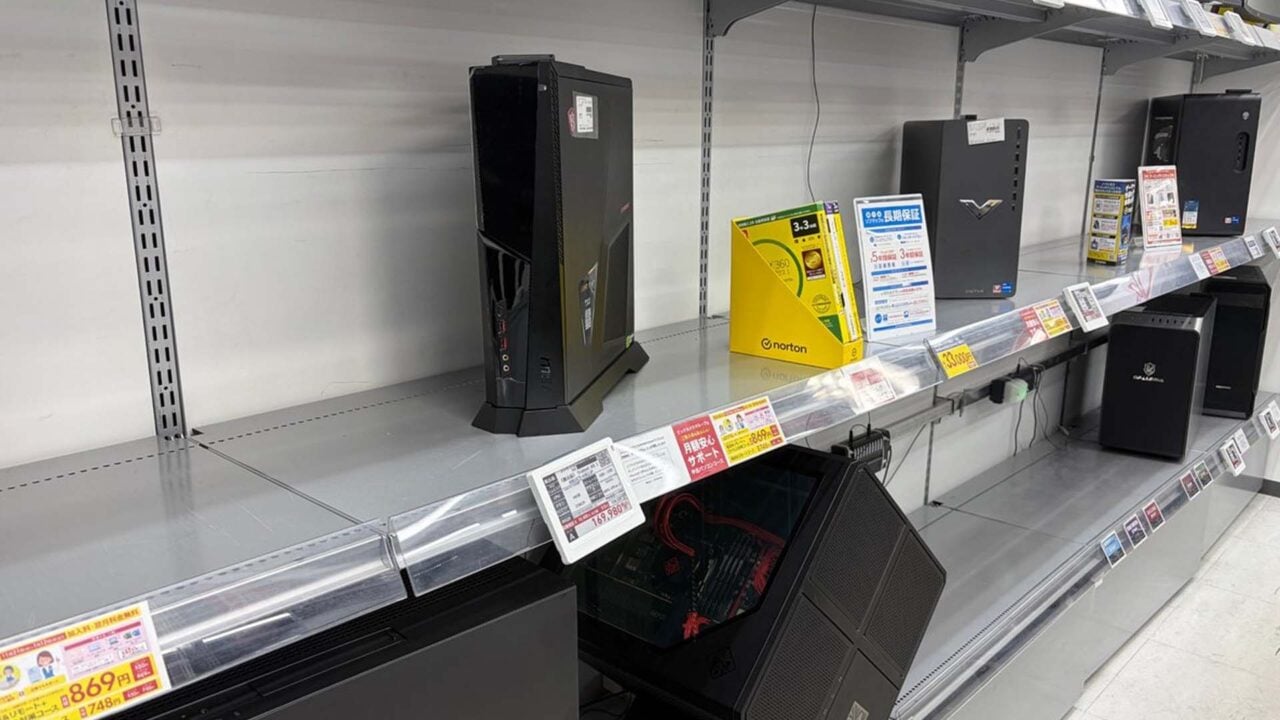

As PC components such as RAM continue to be consumed by AI hyperscalers, resulting in increased costs and dwindling supplies, a major electronics retailer in Japan is depleting its inventory of computers and parts, urging customers to sell them their old PCs.
In recent months, the expense of building or upgrading a PC has risen. A primary factor contributing to this is AI-oriented tech firms acquiring PC components for the establishment of extensive data centers. It has become quite costly and difficult for the average consumer to purchase PC RAM and graphics cards, as companies like Micron cease to sell to individuals and increasingly concentrate on large corporations that purchase in large quantities. Prebuilt PCs from manufacturers such as HP, Dell, and Asus are also anticipated to experience a price hike of 15 to 20 percent, as reported by *PC World*. All these factors, along with tariffs creating additional issues, have resulted in a scarcity of PC parts and computers on store shelves, compelling one retailer to solicit the public for hardware.
On January 7, as noted by *PC-Watch* and *Tom’s Hardware*, Sofmap Gaming, a prominent electronics retailer in the Akihabara area of Tokyo, issued a somewhat urgent request. Here is the tweet text translated via machine translation:
“Um, as a favor, if you acquire a new PC, please sell your gaming PC to our company. We purchase them back at quite favorable prices. Whether it’s a gaming desktop or a laptop, or even a standard non-gaming one, we virtually buy any PC.”
Accompanying the tweet was an image of what seems to be a largely vacant shelf inside Sofmap Gaming with merely a few PCs and monitors remaining. “Gaming PCs, even second-hand ones, are truly out of stock at the moment. This is all we have,” stated Sofmap Gaming. The account is also engaging with nearly every user who responds with inquiries about what they can sell and the potential value.
With some analysts suggesting that the persistent demand for memory and other PC components, including GPUs, may persist as an issue until 2026 and possibly 2027, now could be an opportune moment to begin searching your home for any random pieces of hardware gathering dust. If the components aren’t too outdated, they could be worth a significant amount soon.