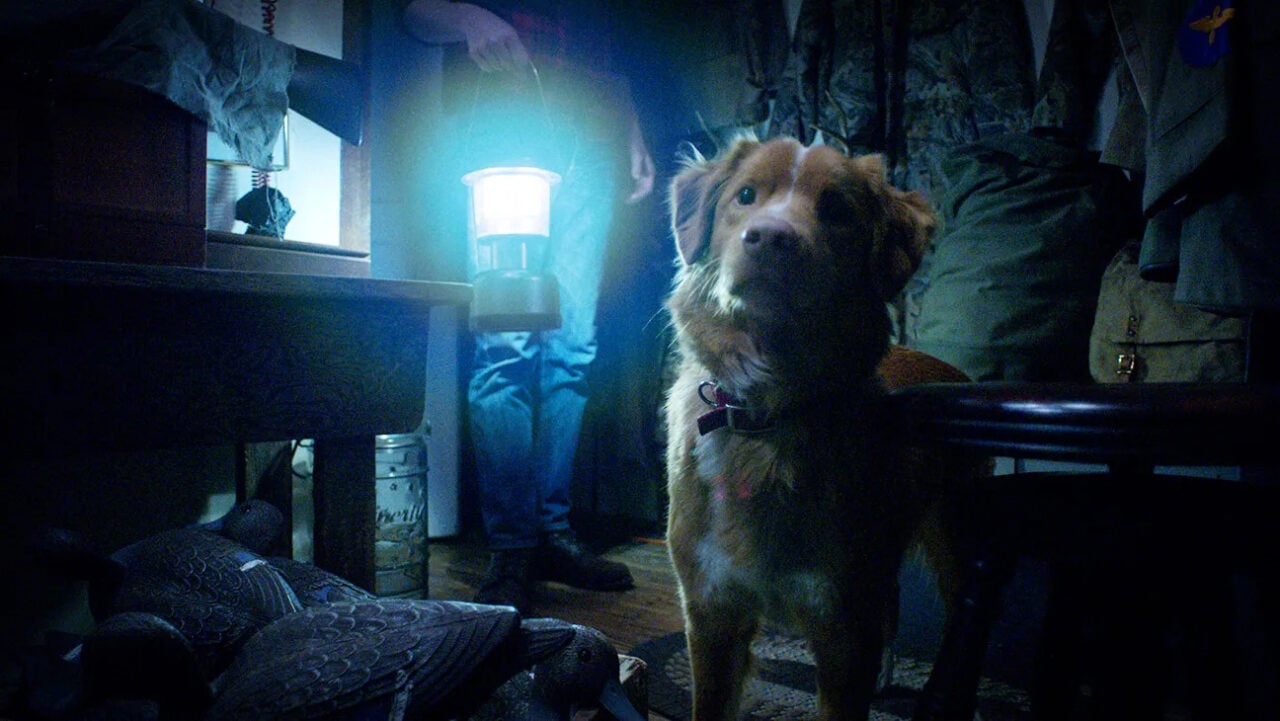
When *Good Boy*, the dog-led horror film featuring Indy the retriever, debuted last year, a number of viewers shared playful thoughts regarding the necessity for acknowledgment of animal performances in cinema. However, as the awards season progressed, Indy not only won over the audience’s affection but also secured actual honors, such as the Astra Award for Best Performance in a Horror or Thriller on January 9. This accomplishment has ignited a blend of excitement and doubt concerning the present condition of award ceremonies.
Indy’s route to fame is remarkable, given that he was not a conventional trained acting dog. Director Ben Leonberg disclosed in a behind-the-scenes mini-documentary that Indy’s acting relied mainly on meticulously edited footage and signals from off-camera sounds rather than standard acting methods. This approach has provoked discussions about the genuineness of his performance, leading to diverse interpretations of his accolade.
Indy had earlier been recognized in categories dedicated solely to animal performances, including honors from the South by Southwest Film & TV Festival, San Diego Film Critics Society, and Boston Society of Film Critics. Nonetheless, the Astra Award represented a pivotal moment, as it positioned him directly against human performers:
– Alison Brie – *Together* as Millie Wilson
– Ethan Hawke – *Black Phone 2* as The Grabber
– Sally Hawkins – *Bring Her Back* as Laura
– Sophie Thatcher – *Companion* as Iris
– Alfie Williams – *28 Years Later* as Spike
Responses to Indy’s triumph were varied. While many applauded his charming look in a bowtie, particularly in the comment sections of the acceptance speech video, others condemned the decision. The critiques mirrored a wider skepticism regarding the legitimacy of the award show. Observers remarked how granting an award to a dog over experienced actors resembled a storyline from a family film in which a pet succeeds in a talent contest, eclipsing authentic artistic accomplishments.
Many users on social media voiced their dissatisfaction, with remarks emphasizing the importance of recognizing diligent acting efforts. Comments such as “being told you’re worse than a dog” and “how offensive and degrading it is to actual artists” reflect the worries shared by genre enthusiasts and award participants. Numerous individuals pointed out that horror performances seldom receive substantial recognition, making Indy’s victory feel even more disheartening to those who anticipated acknowledgment of human talent.
Critics highlighted the absurdity of an award meant to celebrate acting skills recognizing a performance that many contended did not involve real acting. Some likened awarding Indy to acknowledging a performance dictated by strict direction with no space for interpretation or talent. This sentiment resonated through discussions on platforms like Reddit, where users debated Indy’s merit for the accolade, with many concluding that the idea of a canine actor receiving honors, particularly in serious categories, diminished the value of more experienced performers.
Moreover, as the award sought to celebrate horror performances, the decision to honor an animal at the cost of adept actors did not resonate positively. The horror genre has historically struggled to attain recognition at mainstream awards, making Indy’s victory seem like a lost chance to showcase talented individuals within the genre.
In summary, while *Good Boy* has highlighted the appeal of animals in cinema and brought some delight, the consequences of awarding Indy alongside established human performers raise significant questions about recognition in the industry and the criteria by which performances are appraised. As filmmakers and their canine partners continue to capture attention, audiences and critics alike will be closely observing how discussions surrounding animal performances develop within award circuits.