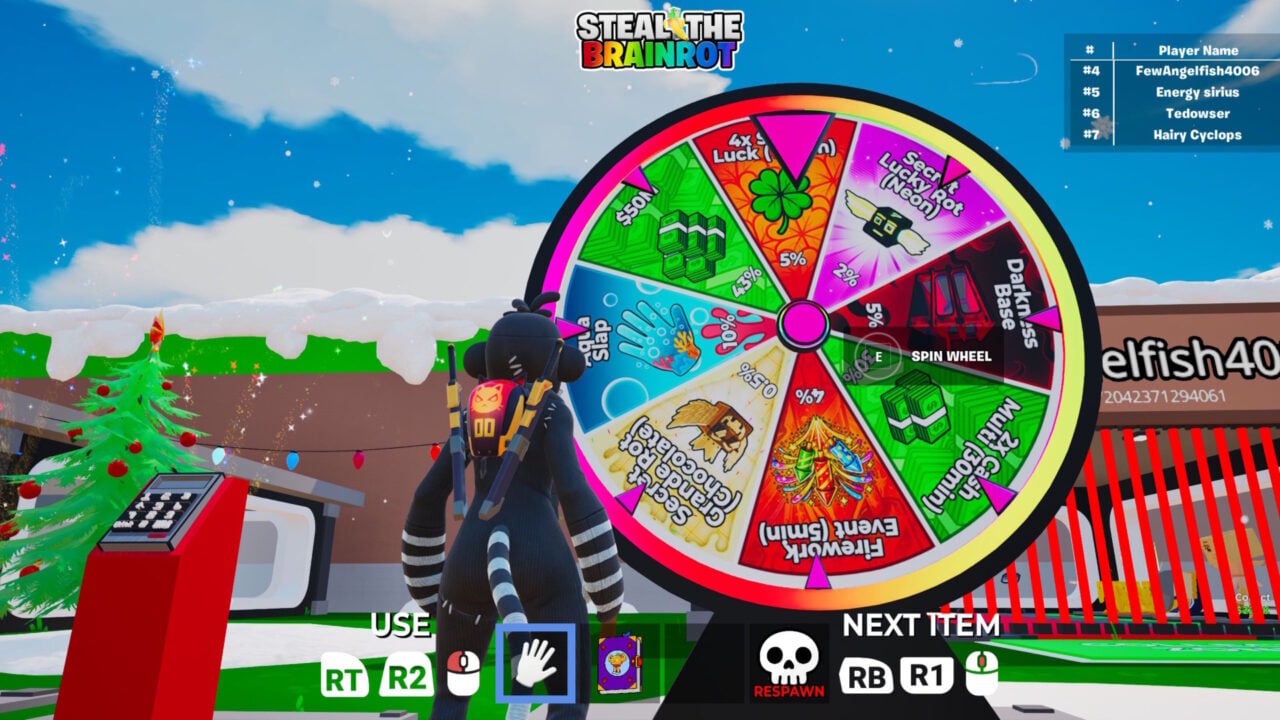

### The Unlikely Fame of Roblox and Fortnite Fan-Games
Although many might think that games like **Arc Raiders** and **Battlefield 6** dominate in popularity, the truth is remarkably different. Titles such as **Roblox** and **Fortnite** fan-games are attracting vast player communities. Recently, the **Roblox** game **Fish It!** reported nearly 28 million players in a single day, with 1.4 million playing at once. In contrast, **Fortnite**’s user-generated game **Steal the Brainrot** set a record with 1.09 million concurrent players, notably after recent updates that enabled creators to introduce microtransactions.
#### The Development of Steal the Brainrot
**Steal the Brainrot**, a creation within **Fortnite**, originates from the highly popular **Roblox** game **Steal a Brainrot**, which gained fame in 2025, inspired by the **Italian brainrot meme**. Players take part in activities involving bizarre animal collectibles that generate in-game currency, fostering a thriving player-driven economy. The original game hit an incredible 25 million concurrent users, showcasing its significant effect in the gaming realm.
When **Steal a Brainrot** moved to **Fortnite** in July, its popularity skyrocketed, especially when the game’s monetization model was adjusted to utilize real-world currency. With the introduction of microtransactions, players gained the ability to buy bundles and engage with gambling mechanics, similar to slot machines, significantly shifting the game’s engagement strategy.
#### Adjustments to Fortnite’s Monetization Policies
Epic Games’ strategy with **Fortnite** increasingly mirrors **Roblox**’s design, particularly in user-generated content. Until recently, **Fortnite** did not provide creators with the monetization capabilities that **Roblox** did, which granted it a competitive advantage. A recent policy change now permits creators to earn income from microtransactions with a notable profit-sharing model—developers receive a larger percentage compared to platforms like Steam.
These modifications imply that creators in **Fortnite** now have the opportunity to integrate various payment systems into their games, drastically altering the economic framework of player-generated content. By the end of January 2026, creators will receive 100% of the V-Bucks spent in their games for a limited duration, subsequently decreasing to 50%.
#### The Ethical Concerns Surrounding Gambling Mechanics
The incorporation of gambling mechanics in **Steal the Brainrot**, such as the “Lucky Rot” loot box and a gambling wheel, has prompted ethical issues, especially considering the game’s main audience is children. Players can utilize real money to interact with these features, which many critics liken to slot machines.
The debate regarding these changes has ignited discussions about the ramifications of exposing younger players to gambling-like systems within a game primarily designed for children. This is in contrast to the understanding that **Fortnite** engages a diverse demographic, a significant segment of which includes adult players. However, the drive to monetize through systems targeting younger players raises serious concerns about the accountability of game developers.
#### Conclusion
The trends in gaming reveal an intriguing landscape where titles like **Roblox** and **Fortnite**’s user-generated content attract millions of players, despite the competition from traditional blockbuster games. As games evolve and become more complex in their monetization strategies, the stream of innovation will continue to influence gaming culture, albeit not without ethical issues that must be navigated with care. The shift towards integrating real-world financial aspects into these games indicates a significant change in gamer demographics and experiences, highlighting the urgent need for responsible development practices moving forward.