**Fogpiercer: A Unique Blend of Roguelike Mechanics and Creative Artillery Combat**
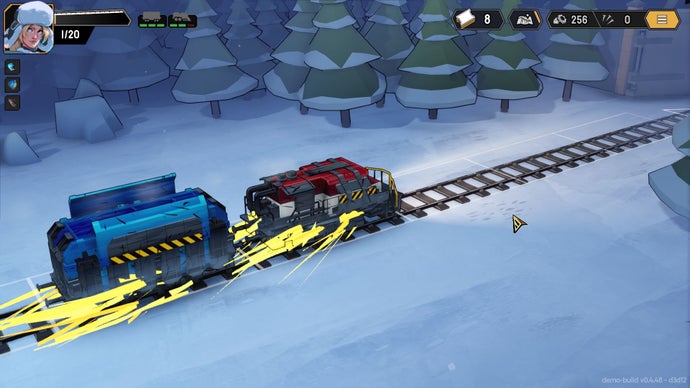
Fogpiercer is an intriguing deckbuilding roguelike where players control a train while fending off Mad Max-style bandits in a post-apocalyptic landscape shrouded in thick smog. The game’s mechanics offer a distinct joy in utilizing artillery. Unlike many titles, Fogpiercer thrives on the satisfaction of not only hitting enemies with powerful shells but also on the strategic use of explosive blasts to reposition foes, thereby throwing them into walls or off tracks. This gameplay element aligns Fogpiercer with classics like Into The Breach, where tactical positioning is pivotal.
At the beginning of your run, players select a character and a locomotive, embarking on a branching map filled with various event nodes reminiscent of games like Slay The Spire. Each chosen character possesses unique abilities: for instance, Monica can freeze enemies, while Pan can manipulate time, creating a diverse range of strategies. Although the demo features limited options, the potential for diverse character and locomotive abilities promises an engaging gameplay experience as players explore the game’s full roster.
Fogpiercer sets itself apart by emphasizing strategic battles. Your locomotive and its accompanying carriages occupy a track in the center of the battlefield. Each turn, players draw cards from a deck that reflects the capabilities of their chosen locomotive and carriages. For example, a protector carriage can yield shield cards for defense, while a minigun carriage focuses on offensive capabilities. While your train is confined to the track, enemies can move freely on the grid surrounding it, creating a dynamic combat environment where positioning is key.
The game adopts a transparent combat system, akin to Into The Breach, allowing players to foresee enemy actions and plan accordingly. Each turn presents a puzzle of sorts: determining how to avoid or redirect incoming damage while leveraging the enemies’ attack patterns to your advantage. This level of strategy is further enriched when utilizing artillery capabilities, which not only inflict damage but can push enemies into one another or into fatal positions off the track.
One of the most engaging aspects of Fogpiercer is the use of artillery to alter the battlefield dramatically. A well-placed artillery shot can send multiple enemies crashing into each other, onto the tracks for a train ram, or against the perilous canyon walls that flank the map. The thrill of executing complex maneuvers and watching enemies collide thanks to clever positioning adds layers of depth to the gameplay.
However, while Fogpiercer’s demo showcases promising mechanics, players may encounter moments where the game’s more exciting elements feel limited. For instance, artillery can primarily move lighter units, which can become less effective against heavier foes as the run progresses. This situation may limit the chaotic and creative play that makes artillery so appealing.
Despite these minor drawbacks, anticipation for Fogpiercer’s full release remains high. The demo’s charm lies in its potential for inventive gameplay, as evidenced by the promise of quirky carriages, such as those equipped with cranes for repositioning enemies. The experience may evoke nostalgia for fans of similar roguelikes and deckbuilders.
In conclusion, Fogpiercer offers a compelling blend of strategy and artillery-based combat within an engaging roguelike format. As players await the game’s official release later this year, it’s evident that the mixture of innovative mechanics and tactical gameplay will keep fans of the genre excited and eager for more.