### Exploring “Star Wars: Galactic Racer”: A Traditional Path in Racing Games
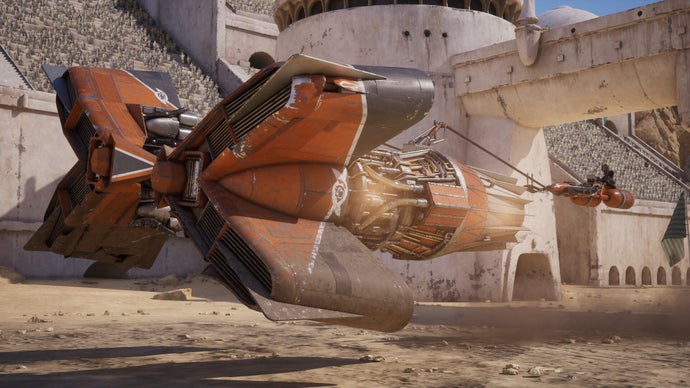
“Star Wars: Galactic Racer” by Fuse Games is generating excitement among fans and racing enthusiasts alike. This upcoming title aims to capture the thrill of off-road speeder races set in the beloved Star Wars universe. As more details emerge, including insights from a recent interview with Fuse’s founder Matt Webster and creative director Kieran Crimmins, the game is being shaped into an experience that emphasizes traditional racing mechanics over the increasingly common open-world approach.
#### Traditional Track Racing vs. Open World
In the interview, Crimmins articulated the reasons behind choosing a traditional track-based racing format. He asserted that while both traditional and open-world racers have their merits, there was a desire for “replayability.” This focus on mastering tracks encourages players to refine their skills and achieve perfection, an experience akin to participating in a competitive sport. The setup of a Galactic League with distinct characters and narratives facilitates storytelling, enhancing the overall experience.
Open-world racers, which often prioritize player freedom and exploration, deliver a different kind of enjoyment. Titles like “Forza Horizon” and “Burnout Paradise” showcase sprawling environments where players can indulge in a sandbox-style approach. However, Crimmins suggests that such experiences may lead to a less focused racing environment, lacking the intensity that comes with structured tracks where every moment counts.
#### The Challenge of Innovation in Racing Games
A significant point raised in the discussion revolves around the innovation landscape of racing games. Crimmins noted that despite the potential for creativity, the racing genre faces unique challenges due to its nature. The cognitive load of racing is exceptionally high; players need to respond to dynamic conditions quickly while managing vehicle handling. This makes meaningful innovation more difficult compared to other genres where gameplay can afford to be more varied.
While established franchises like “Forza Horizon” strive to innovate—such as rumored improvements in track customization—these innovations often borrow elements from other genres rather than introducing groundbreaking concepts. The tension inherent in introducing new features without alienating fans of the core racing experience is a delicate balance developers must navigate.
#### The Current State of Racing Games
The racing game landscape has evolved dramatically, with larger titles dominating sales and player interest. Franchises such as “Need for Speed,” “Burnout,” and “Midnight Club” have seen diminished activity, with many developers prioritizing titles that guarantee profitability. The risk associated with innovative approaches may contribute to a cycle of iterative game design, leaving little room for truly revolutionary ideas.
Despite this, indie developers continue to push boundaries, creating innovative racers that both reflect nostalgia and explore new mechanics. “Star Wars: Galactic Racer” can be seen as a response to the current state of racing games, emphasizing refined gameplay mechanics focused on precision and replayability rather than vast open-world exploration.
#### Conclusion
“Star Wars: Galactic Racer” stands out in a landscape crowded with open-world racing titles. By embracing a traditional track-based format, the game aims to provide players with a high-stakes, skill-focused racing experience set in the iconic Star Wars universe. As it approaches release, fans can look forward to a new interpretation of racing that balances nostalgia with innovation, aiming to deliver one of the best racing experiences available.