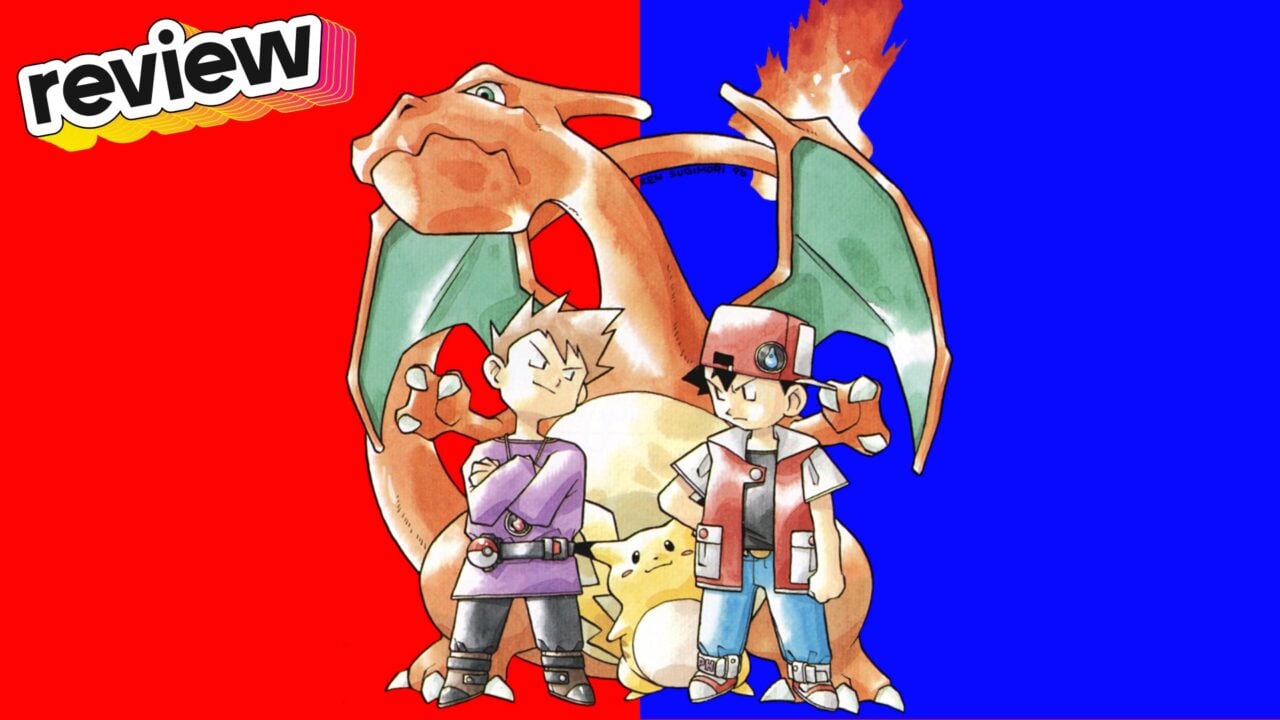

The **Pokémon** franchise has experienced numerous changes since the launch of **Red** and **Green** (**Red** and **Blue** in the U.S.) in 1996, making these original Game Boy titles feel almost like artifacts of a bygone era. The 8-bit graphics and somewhat outdated mechanics serve as a reminder of the original games’ age, but what is particularly intriguing about revisiting them three decades later is the realization that the **Pokémon** universe has progressed just as much as the creatures you can catch during gameplay.
These original Game Boy titles seem retro today not only because of their pixelated graphics and chiptune music but also because the game world feels like it belongs to a different, earlier time compared to contemporary releases such as **Legends: Z-A** or **Scarlet and Violet**. As gaming technology has advanced, the **Pokémon** universe has adapted too. The Kanto region in **Blue** and **Red** exhibits a level of technological sophistication with its compact Poké Ball devices that can capture even the largest creatures, yet it remains more grounded than **Pokémon** has ever been, likely never to feel this way again.
### A Simpler Time with Simpler Struggles
The Pokédex, which you gradually fill with data from captured Pokémon, hasn’t yet transformed into a Rotom-infused smartphone. The cumbersome HM system, requiring players to teach traversal moves to their Pokémon, hasn’t been replaced by the option to simply ride Pokémon over vast distances. Even the legendary Pokémon scattered throughout its world don’t feel quite as grand yet. It was indeed a simpler time, likely crafted without any foresight that it would endure for 30 years, evolving from a few quirky experiments and urban legends into a universe with a grand overarching design.
Playing **Pokémon Red** or any variant of those first-generation games is akin to opening a history book and discovering the challenges faced by those who embarked on their **Pokémon** adventures while sitting in the backseat of their parents’ car, illuminating the Game Boy just right under the overhead lights. For those of us who experienced that time, it evokes a poignant reminder that our past has become history, and only through time and direct experience of change can we recognize how much better our situation has become. Yes, these games can be remade numerous times, allowing players to explore Kanto with a run button and vibrant sprites, but there exists a history here that even **FireRed** and **LeafGreen** struggle to replicate by placing players back in Pallet Town on a Game Boy Advance.
Unaffected by the decades of Pokémania that would ensue, the humble nature of **Red** and **Blue** makes the world they provide feel more enigmatic, mysterious, and gratifying to explore. In revisiting this title for the first time in over ten years, I opted to refrain from consulting databases, allowing myself to navigate by memory and intuition. I recognized the need to locate a Pikachu in Viridian Forest before pursuing my eight gym badges, confronting the nefarious Team Rocket, and aspiring to be a regional champion, yet beyond that, I approached the game as if it were my first experience, aiming to reclaim that feeling of discovery I had in the ‘90s, although achieving this is easier said than done.
Three decades on, **Pokémon Red** and **Blue** remain exquisitely crafted games that also carry the burden of years of updates, rendering some of their more antiquated elements quite tedious to revisit. You can’t sprint through the small towns and urban areas of Kanto as you can in **Ruby** and **Sapphire**; the shared experience points across your entire team are allocated in fractions instead of uniformly distributed to every creature in your possession; and HMs—while an interesting way to make Pokémon feel like they exist beyond mere turn-based battles—litter your party with primarily useless moves that can’t be swapped out and are only applicable outside of battles for exploration.
### As Games Have Improved, So Has the Pokémon World
**Pokémon** possesses a peculiar trait in that it often introduces quality-of-life enhancements in a diegetic manner; for instance, new features or adjustments, such as sprinting, only arrive when the character is bestowed with Running Shoes in **Ruby** and **Sapphire**, enabling them to do more than just lightly jog through the tall grass inhabited by wild Pokémon. The series is not only creating superior games; it is also forging a more refined and efficient world with each new installment. The trade-off for these quality-of-life upgrades is that some of the allure has diminished as Game Freak has continually unveiled the mysteries, while fans have extensively documented the entirety of the world.