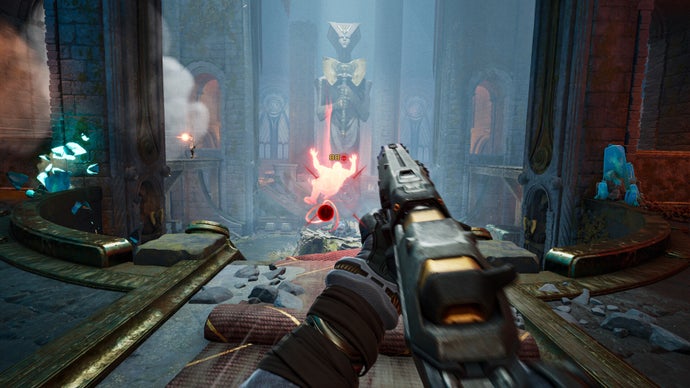
### Analyzing Highguard: Insights from Former Developers and Industry Challenges
In the evolving landscape of video games, especially with the rise of live service models, many titles have struggled to make a lasting impact. One such game, Highguard, which was once a hot topic, has faced significant challenges that hindered its success. Former senior level designer Alex Graner shared insights that might shed light on the reasons behind Highguard’s struggles, particularly in the context of competitive gaming.
Highguard was positioned as an ambitious project developed by Wildlight. Graner explained that the team was always aiming to push the boundaries of game design, yet often the outcome did not align with their aspirations. According to Graner, the focus on the competitive elements of the game proved to be a double-edged sword. He articulated that the game “leaned too far into the competitive scene,” particularly emphasizing a 3v3 format that may have alienated a broader audience.
Graner identified the nature of the 3v3 duos as particularly daunting, stating, “It requires such a high intensity of communication with your team, and team play, that it doesn’t leave much room for casualness.” This high demand for coordination and skill created an environment where casual players felt overwhelmed, leading to a dwindling player base. Many players left Highguard after encountering difficulties with teamwork and performance, especially when faced with inferior teaming experiences.
Moreover, the pressure brought by high-profile events, such as Geoff’s Night of Statues and Trailers, heightened expectations for the game. While games like Apex Legends flourished by entering the market during a time of novelty in the battle royale genre, Highguard’s complexity and steep learning curve framed it as a less accessible option for players. Graner highlighted that the game’s mechanics and competitive structure made it challenging for newcomers, contributing to its decline.
While Graner’s observations on gameplay dynamics offer valuable narratives, external factors—including leadership decisions—also played a pivotal role in the game’s reception and performance. Reports have indicated that poor management and decision-making from the top down further exacerbated the issues faced during development.
In conclusion, Highguard serves as a case study on the challenges of game design within a competitive framework. As the industry continues to evolve, understanding the delicate balance between competitive mechanics and accessibility remains crucial for developers aiming to attract and retain a diverse player base.