**Total War: Medieval 3 – A Future of Replayability and Strategic Depth**
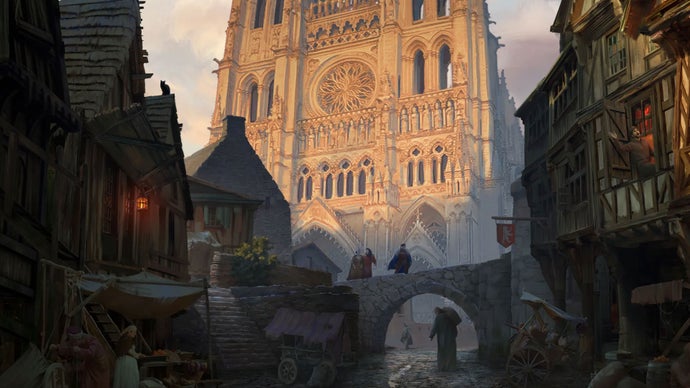
Creative Assembly has officially announced that Total War: Medieval 3 is currently in the pre-production phase and remains years away from release. Despite this, the development team has been transparent about its plans for the long-awaited strategy game, particularly regarding the mechanics that will enhance replayability. Creative director Leif Walter has shared insights into how players can expect to engage with inheritance planning, specifically in the context of ruling the Kingdom of France.
The game’s focus on inheritance systems resonates with players who appreciate the intricacies of governance, particularly those who may find themselves navigating similar real-life bureaucratic challenges such as drafting wills. This integration of real-world elements into gameplay serves not just as a thematic experience but also as a method of enriching player engagement throughout their 12th-century campaigns.
One of the most significant strategies Creative Assembly is implementing for Total War: Medieval 3 is the concept of replayability. This focus reflects lessons learned from popular titles such as Crusader Kings 3, showcasing the importance of varying gameplay experiences across different playthroughs.
### Faction Diversity and Horizontal Replayability
Total War: Medieval 3 aims to maintain the franchise’s tradition of featuring diverse factions, a mechanic established since the inaugural Shogun: Total War. Walter noted that Total War: Warhammer successfully differentiated factions through unique mechanics and gameplay styles, suggesting a continuation of this trend. For example, the gameplay experience of the Kingdom of France will significantly differ from that of the Kingdom of England, a concept Walter describes as “horizontal replayability.”
Each faction will boast distinct unit rosters, including unique units exclusive to them, while some units may be shared and “unlocked” as players progress. This approach, coupled with the varied starting positions and alliances, ensures that each faction offers a unique strategic experience from the outset.
### Vertical Replayability Through Flexible Systems
Where Total War: Medieval 3 begins to carve out new territory is through the introduction of what Walter terms “vertical replayability.” This innovation allows players to modify the fundamental systems and laws governing their factions throughout their campaigns. For instance, players may start with a traditional monarchy focused on dynastic inheritance and later transition to a system resembling the elective monarchy of the Holy Roman Empire.
This shift provides an alternative path for players who wish to explore the intricacies of faction governance without needing to select entirely different factions each time. It opens the door for customization, where players can influence the laws and governance systems that dictate the political landscape of their chosen realm.
### Implications for Strategy and Gameplay
The implications of such systems are significant. While potential heirs may be disheartened by changes that could prevent them from ascending the throne simply by virtue of birth order, these mechanics pave the way for meritocratic leadership. Players seeking to optimize their governance strategies can actively choose to shift from one legal framework to another, fostering a dynamic political environment.
Though Walter did not disclose extensive details, the introduction of these complex systems promises to fundamentally alter how players interact with their factions. The potential for radical shifts in governance mirrors historical events, such as Henry VIII’s Reformation, suggesting that internal political dynamics will play a crucial role in gameplay.
Creative Assembly has traditionally emphasized a different approach than Paradox Interactive, known for their deep grand strategy games. However, the incorporation of more nuanced systems could provide an enriched experience that enhances thematic depth and strategic complexity in Total War: Medieval 3.
In conclusion, while Total War: Medieval 3 is still a distant prospect, the insights shared by Creative Assembly reveal an ambitious vision for the game. Through enhanced replayability driven by faction diversity and flexible legal systems, players can expect a rich and varied strategic experience when they finally step into the tumultuous world of the medieval period.