
In recent conversations regarding the video game series **Call of Duty**, a notable controversy arose after the Trump administration utilized game-related memes to commemorate military operations in Iran. This prompted a response from Chance Glasco, co-founder of Infinity Ward, who disclosed that Activision had previously exerted pressure on the development team to devise a story arc featuring Iran attacking Israel. Glasco’s remarks have rekindled discussions about the interplay between video games, real-world politics, and ethical narratives in interactive media.
### Background Context
In March 2026, Glasco took to social media to voice his outrage at the White House’s video montage, which combined clips from the *Call of Duty* series with actual violent incidents. He expressed, “I recall that after Activision assumed control following the Respawn formation, there was a rather uncomfortable push from Activision for us to create the next *CoD* focused on Iran attacking Israel.” Luckily for the narrative integrity of the game, he pointed out that most developers deemed the idea unacceptable, leading to its ultimate rejection.
The timeline Glasco mentions traces back to 2010, a turbulent period for Infinity Ward when co-founders Jason West and Vince Zampella were dismissed under claims of insubordination. Their termination, viewed by some as unjust, prompted them to create Respawn Entertainment, the minds behind the critically acclaimed *Titanfall*. Meanwhile, the remaining developers kept progressing on *Call of Duty: Ghosts*. This backstory provides insight into the cultural and operational hurdles within Activision during this timeframe.
### Corporate Pressure and Development Ethics
Glasco’s revelation highlights a broader issue of corporate influence in creative sectors. The notion of a game focused on a delicate geopolitical dispute raised ethical dilemmas, particularly in light of the developers’ aim to depict the grim realities of war. Glasco recounted, “Fortunately, the vast majority of our devs were appalled by the notion and it was quickly discarded,” underscoring a cultural rift between the publisher’s business objectives and the artistic aspirations of its creators.
### The Legacy of “No Russian”
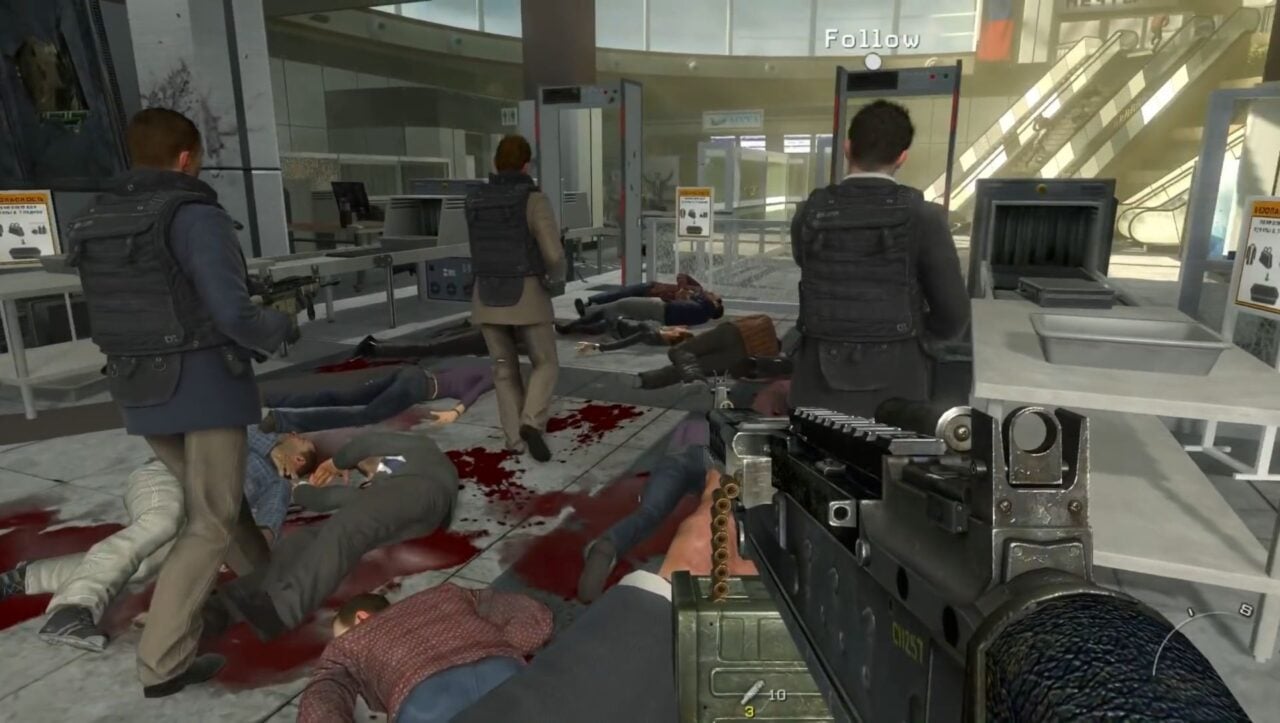
Complicating the narrative further is the notorious mission from *Call of Duty: Modern Warfare 2*, known as “No Russian,” where players could engage in a simulated terrorist attack at an airport. Glasco offered insights into its early conception, mentioning that the graphic scene was initially intended as a plot element for loading screens. This transition to a playable sequence was designed to elicit emotional responses, with early test players showing a range of reactions from shock to outright refusal to partake.
He reflected on the purpose behind such instances in earlier *Call of Duty* titles, asserting that they aimed to portray war as horrific, seeking to evoke emotions of disgust and sadness rather than glorifying violence. As he remarked, playtesters who were emotionally moved were more valuable than those who played without feeling, emphasizing a goal of crafting profound narratives within the gaming landscape.
### Conclusion
Glasco’s comments carry significant importance in dialogues concerning the portrayal of war in video games and corporate ethics in creative production. The dismissal of narratives motivated solely by sensationalism in favor of more reflective and responsible storytelling showcases a critical viewpoint against the commodification of serious themes for entertainment purposes. As the gaming industry progresses, these discussions become essential in shaping the future of interactive media, ensuring that while games may entertain, they also prompt players to reflect critically on real-world consequences.