**Controversial Game Concepts: Chance Glasco’s Claims on Activision and Infinity Ward**
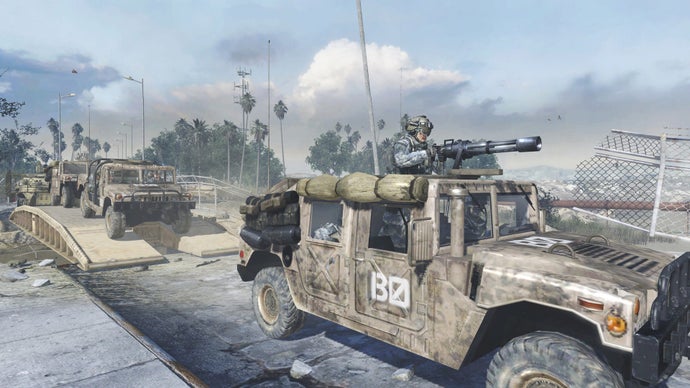
Chance Glasco, a former lead animator for the Call of Duty series, has revealed a troubling episode from his time at Infinity Ward, where he claims Activision pressed the studio to create a game centered around a narrative in which Iran attacks Israel. This revelation comes in the wake of a video montage shared by the White House on the platform formerly known as Twitter, which juxtaposes real military actions taken by the U.S. against Iran with gaming elements from Call of Duty, highlighting the intersection of video games and military propaganda.
In his response, Glasco, who worked with Infinity Ward from 2002 until 2014, recounted the significant shifts within the company post-Activision’s acquisition following the contentious ousting of studio co-founders Vince Zampella and Jason West in 2010. After their departure, Zampella and West went on to establish Respawn Entertainment, creators of the well-known franchises Titanfall and Apex Legends.
According to Glasco, the notion for a game revolving around Iran’s aggression toward Israel was met with overwhelming disapproval from the majority of Infinity Ward’s development team. He expressed that creativity in game development should not succumb to the whims of politicized narratives, particularly those that might stir up real-world tensions. The alleged pressure from Activision to pursue such a storyline appears to have surfaced sometime between their takeover and Glasco’s exit in 2014.
The political backdrop surrounding these claims is significant. Since February 2026, Israel, along with the Trump administration’s U.S. military, has been involved in ongoing strikes against Iran, resulting in thousands of civilian casualties, including many children, as reported by Human Rights Activists News Agency. The use of video games as tools for shaping public perception regarding military conflicts is a growing concern, particularly as governments and media intertwine gaming with narratives that influence public sentiment.
In a follow-up discussion, Glasco remarked on the moral responsibilities associated with portraying humane elements in war through video games. He contrasted the hypothetical Iran-Israel scenario with the infamous “No Russian” mission from Call of Duty: Modern Warfare 2, which thrust players into a harrowing depiction of an airport shooting orchestrated by Russian ultranationalists. He emphasized that earlier iterations of Call of Duty aimed to convey the gravity and horror of war, intending to evoke feelings of disgust rather than glorification.
Glasco’s comments raise vital questions about the ethical implications of integrating real-world conflicts into interactive entertainment. As the gaming industry continues to evolve, the responsibility of developers to maintain a clear boundary between entertainment and the politicization of conflict remains a significant topic of debate.
Moreover, the potential for governmental influence over the themes within popular video game franchises underscores a critical discourse on the role of media in shaping public narratives, particularly in an era marked by ongoing global tensions. The complexities of storytelling in the context of warfare demand an awareness of the deeper implications that accompany the narratives crafted within these digital experiences.
As the gaming community reacts to Glasco’s revelations, the conversation about the intersection of video games, public opinion, and military operations is likely to expand, prompting developers and players alike to consider the impact of narratives they engage with, both virtually and in real life.