### Exploring the Strategic Depths of Total War: Medieval 3
Creative Assembly’s forthcoming title, Total War: Medieval 3, promises to innovate and deepen the series’ strategic gameplay with a revamped approach to military organization and recruitment, as discussed in a recent post by Julian. The creative director, Leif Walter, has provided insights into how inheritance laws, regional economies, and troop production will evolve throughout a campaign, setting the stage for a blend of strategy and history.
#### Transition from Levies to Standing Armies
One of the major gameplay mechanics introduced in Medieval 3 is the transition from levy-based armies to standing professional forces. Early in the game, players will need to recruit troops from local populations, with Walter confirming that “there are no ‘standing’ (or permanent) armies early on.” This means that players will need to muster units when war breaks out and disband them when peace is restored, returning soldiers to their agricultural duties.
The gradual shift to standing armies will occur as players progress through the campaign, particularly around the 14th century. This evolution is not merely aesthetic; it will affect overall strategy and reflect the player’s development of their realm. A well-managed region can support more elite military units, offering players the chance to curate their armies based on local strengths and resources.
#### Economic and Social Implications of Levies
When players muster levies, it comes at a cost. Drawing troops from local economies can potentially weaken agricultural output, impacting resource availability. Additionally, a ruler’s legitimacy plays a crucial role; if it is low, local populations might be less willing to serve. As the game progresses toward professional armies, players will shift their focus toward managing upkeep costs, reminiscent of previous Total War titles.
#### Regional Identity and Customization
A significant aspect of the game revolves around the cultivation of regional troops and their unique identities. Players can influence the type and quality of their levies based on regional infrastructure. Upgrading stables, for instance, allows for the creation of elite cavalry units. Additionally, a proposed trait-based ‘traditions’ system aims to imbue regional retinues with character and a strong sense of identity, which reflects local warfare traditions.
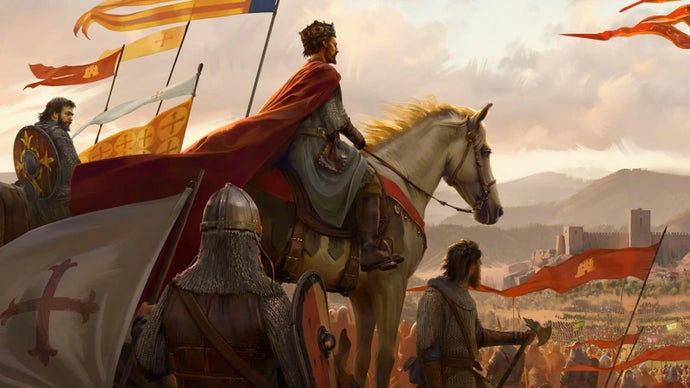
The representation of regional heraldry in battles is another intriguing element Walter mentioned, allowing players to visually distinguish units from various parts of their realm. This focus on regional identity marks a potential departure from previous titles, where the political allegiances of lords overshadowed the cultural characteristics of troops.
#### Asymmetrical Army Composition
Walter has mentioned the desire for greater freedom in army composition, indicating that different regions may contribute varying numbers of units. This could lead to scenarios where heavily militarized areas like Sussex might field a larger number of troops compared to less militarized regions such as Cornwall, creating an asymmetric military landscape that requires players to adapt their strategies accordingly.
#### Narrative Depth and Character Development
The introduction of a “Man of the Hour” system reflects Creative Assembly’s commitment to adding narrative depth to the gameplay. This feature could facilitate player-generated stories where heroes emerge from battles, establishing new characters and influencing the realm’s political landscape. Such developments could lead to engaging narratives steeped in the complexities of medieval politics, where the descendants of prominent characters might vie for power generations later.
#### Historical Progression and Thematic Evolution
The overarching goal of Total War: Medieval 3 is to replicate the historical military progression from the crusader knight era to the late medieval period, highlighting shifts in warfare, urbanization, and socio-political changes. This thematic evolution is intended to create a more immersive experience, reflecting the real-world challenges of the time, from economic development to the impacts of the plague and foreign invasions.
#### Conclusion
Total War: Medieval 3 is set to deliver a fresh and engaging strategy experience, blending traditional mechanics with innovative ideas that focus on regional dynamics, military evolution, and narrative engagement. The transition from levies to professional armies may redefine the player experience, ensuring that each decision impacts the broader strategic canvas. As the game approaches its release, anticipation builds for how these elements will play out on the grand stage of medieval warfare.