**The Unique Challenges of Game Design: A Look at Accessibility in Strategy Games**
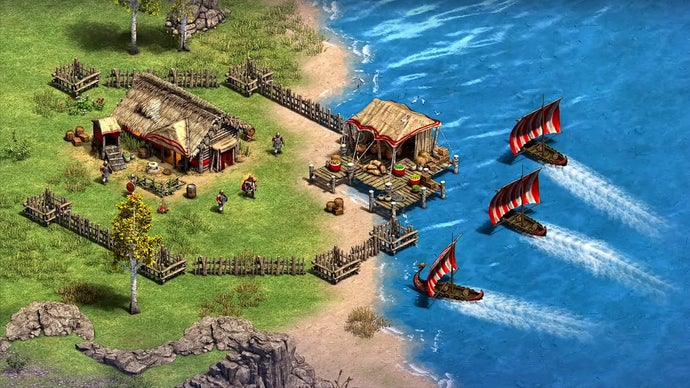
When employees seek feedback on their work, the experience often involves a mix of anxiety and anticipation, particularly in creative fields such as game design. For level designers at Ensemble Studios, the making of the classic strategy game *Age of Empires* provided a unique testing environment during the assessment process. Tony Goodman, the studio head, implemented an unconventional yet effective method for evaluating the game’s scenarios during his lunch break.
**The Concerns of Game Accessibility**
Initiated in 1997, the development of *Age of Empires* was not only about creating an engaging gameplay experience but also ensuring that the game could be enjoyed by a wide range of players. Ian Fischer, who joined the team for quality assurance and scenario design, recalled an important aspect of the development process. A board was maintained in the studio that outlined potential reasons players might decide against purchasing the game. These reasons ranged from technical limitations—like hardware requirements—to concerns about the game’s complexity.
The challenge for the design team was significant, as strategy games often carry a reputation for being complex and potentially intimidating to new players. Goodman’s focus was on making *Age of Empires* more accessible, ensuring that players could learn and enjoy the game without feeling overwhelmed.
**The Lunch Break Test**
To address the game’s accessibility, Goodman established a unique assessment protocol: he would play each new scenario and, if defeated before returning from lunch, it necessitated adjustments to the level’s difficulty. This method emphasized a critical design philosophy—if the game’s artificial intelligence could defeat players too easily, it risked discouraging them before they had the chance to grasp the game mechanics.
Goodman believed that players should first be allowed to explore the game’s systems without the immediate threat of defeat, ensuring that they could comfortably learn and engage with the gameplay elements.
**Continuing the Philosophy**
Fischer has carried this philosophy throughout his career, influencing his work on subsequent projects like *Halo Wars* and *Orcs Must Die!*. However, he cautions that while accessibility is vital, there’s a risk involved. Overextending the inclusion of accessibility features can dilute the essence of the gameplay, potentially leading to a “vanilla” experience that fails to satisfy any specific segment of players.
Understanding exactly how wide of an audience to target can be a nuanced decision that evolves over time, requiring developers to balance inclusivity with maintaining the game’s core identity.
**Conclusion**
In the realm of game design, finding the right balance between accessibility and challenge is an ongoing pursuit. Iconic games like *Age of Empires* illustrate the importance of this understanding, showcasing that creating an engaging player experience often requires innovative approaches to design and testing. As the gaming industry progresses, developers must remain mindful of how to invite a diverse audience into their worlds—perhaps taking a lesson from Goodman’s lunchtime experiments on the journey to achieving equilibrium in game design.