**Crimson Desert’s AI Art Controversy: A Glimpse into Placeholder Assets in Game Development**
The recent debut of *Crimson Desert*, an open-world RPG from Pearl Abyss, was tarnished by the revelation of AI-generated art assets integrated into the game. As debates unfolded, the development team explained that these AI-crafted images were used as temporary placeholders during the development stage, with plans for replacement prior to the final launch. Nevertheless, doubts about this clarification surfaced, especially among game developers who recognize the critical nature and function of appropriate placeholder assets.
On March 22, images circulating online showcased strange in-game artwork, including horses illustrated with extra legs, triggering immediate concerns regarding the quality and legitimacy of these assets. Pearl Abyss admitted that AI components had inadvertently made their way into the completed version of the game, attributing this oversight to a slip-up during the development cycle meant to reflect the game’s tone and atmosphere.
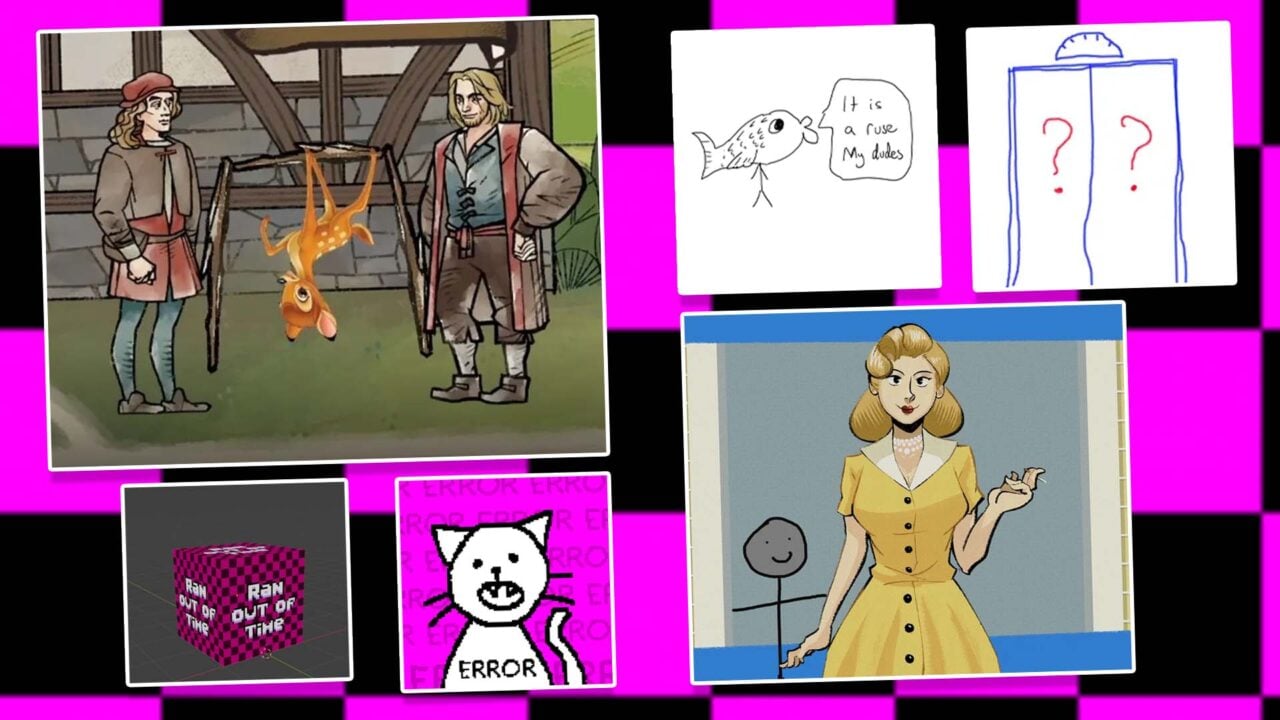
Critics of this rationale noted that in game design, placeholder art should be strikingly unpolished. Developers typically employ intentionally rough designs or humorous visuals to ensure there’s no ambiguity with final assets. Following the revelation from *Crimson Desert*, various game industry professionals took to social media, sharing their own examples of playful and outlandish placeholder art. These illustrations varied from crude MS Paint creations to meme visuals, all crafted to unmistakably indicate that they were not final polished products.
A notable instance came from Obsidian Entertainment’s Josh Sawyer, who showcased amusing temporary art used in the game *Pentiment*. His submissions featured images like an upside-down Bambi and even a text-only graphic stating “Guy Sux.” This underscores a vital principle in game development: the importance of placeholder assets being clearly temporary and often absurd, to mitigate the risk of them being overlooked and inadvertently included in the final game.
Sawyer elaborated on this idea, asserting that suitable placeholder images should be decidedly silly, drawing attention to their transient nature. If a placeholder is perceived as too polished or acceptable, there’s a risk that it may persist in the final build, potentially leading to unforeseen consequences.
Others participated in this dialogue, displaying quirky placeholder art. Developer Dr. Miko Charbonneau shared doodles created for his project, emphasizing that placeholder assets should elicit laughter and maintain a clear distinction from refined art to avoid accidental incorporation.
One memorable story recounted by another developer entailed a missing wood texture for a 3D model, forcing the developer to devise a “texture” using crayon, illustrating the often chaotic essence of game development and the inventive solutions that emerge.
As discussions regarding the use of AI in game development intensify, the *Crimson Desert* incident stands as a pivotal case study on the necessity of transparency and the need for properly defined placeholder art. While AI-generated art presents advantages in terms of efficiency and creativity, its application demands a critical understanding of context and intention within game development practices. The gaming community persists in advocating for comprehensive vetting processes to prevent similar oversights in upcoming projects.