### The Role of AI in Art and Entertainment: A Focus on Pragmata
The intersection of artificial intelligence and art has garnered increasing attention over the years, particularly in the realm of video games. The concept isn’t entirely new; iconic filmmakers like Steven Spielberg explored themes of AI in their works, such as in *A.I. Artificial Intelligence*. However, the current landscape of AI in art often presents a mixed bag, ranging from innovative creations to garbled imitations lacking the nuanced touch of human creativity.
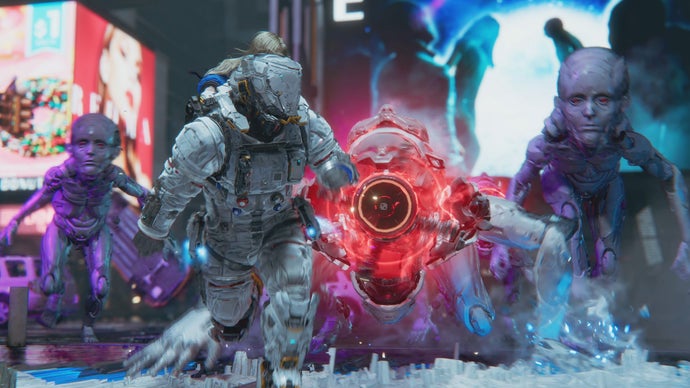
One upcoming title that exemplifies a thoughtful approach to this topic is Capcom’s *Pragmata*. Set to release on April 17, 2024, *Pragmata* offers a surreal rendition of New York City—characterized by a distorted reality that echoes the imperfections often found in AI-generated content. During a recent interview, director Cho Yonghee elaborated on this concept, explaining, “For Pragmata, we set the premise as ‘a fake New York generated by AI.’ When familiar locations appear, players can relate more easily. On top of that, to make it clear that this isn’t the real New York, we wanted something slightly distorted.”
The game raises intriguing questions about the nature of reality and perception in artistic expression. Producer Naoto Oyama reinforced this sentiment by noting the “unique appeal” derived from anomalies like cars and buses seemingly suspended in mid-air or stuck within the ground. These quirks emphasize the human developers’ role in crafting the environment to resemble an AI-generated world, showcasing a conscious effort to create an uncanny aesthetic without relying on actual AI tools.
As discussions around AI’s growing presence in creative industries intensify, the developers behind *Pragmata* stand out for their willingness to embrace the uncomfortable aspects of AI-generated art. They highlight that while technology can yield fascinating outcomes, it’s essential to acknowledge the limitations and peculiarities that often accompany it. This is particularly notable in an era when some in the industry promote AI as an inevitability, raising concerns about the potential devaluation of human artistry.
Despite being a Capcom title—a studio known for its experimental use of AI technologies, such as in the recent yassification of characters through Nvidia’s DLSS5—*Pragmata* seems to take a more nuanced stance. It reflects a deeper understanding of how AI affects art without succumbing to the temptation of solely leveraging its capabilities.
In conclusion, *Pragmata* promises to be more than just another action shooter; it endeavors to challenge players’ perceptions through its intentionally flawed representation of familiar locales. As the game approaches its release date, it invites players to consider the broader implications of AI in art and what it means for the future of creativity in gaming.