### The Tale of AionGuard: An Abandoned Game that Continues to Resound
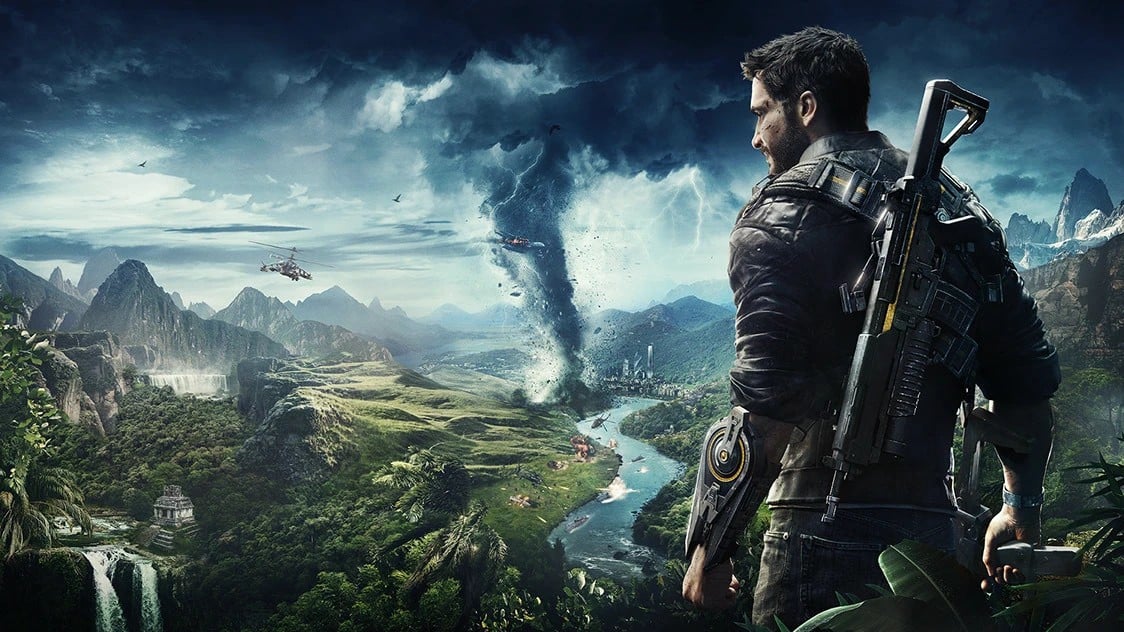
Avalanche Studios, famous for its blockbuster titles like the *Just Cause* series and the post-apocalyptic adventure *Mad Max* (2015), has a rich history. Nevertheless, this Swedish development group has encountered its share of setbacks, having canceled nearly as many projects as it has launched. Among these, the halt of *AionGuard*, a WW1/medieval/fantasy game, remains especially significant for co-founder and former CCO Christofer Sundberg.
In a recent conversation with *PC Gamer*, Sundberg reminisced about his time at Avalanche Studios, which he departed in 2019, alongside his new endeavor, *Samson*, created by Liquid Swords. However, his remarks frequently circled back to *AionGuard*, highlighting the enduring effect of its cancellation. The game, which had been in development since 2009, was designed to intertwine different genres, incorporating fantasy elements within a vast open-world setting.
#### Concept and Gameplay
*AionGuard* aimed to deliver players an engrossing experience where they would take on the role of a member of the AionGuard—a brave assembly of magical knights dedicated to reclaiming their devastated realm from sinister adversaries. Each area players explored would be dominated by an enemy stronghold, providing gamers the freedom to tackle missions in a multitude of ways. Whether players opted to rush headfirst into battle, covertly sabotage enemy assets, or collaborate with local factions, the open-world structure would permit diverse strategies.
As noted by Luke Plunkett in *Kotaku*, the game would have offered a rich array of gameplay possibilities. “You assume the role of a member of the AionGuard, valiant types of magic knights who endure the apocalypse and embark on a quest to reclaim that world,” Plunkett observed, emphasizing the game’s ambition and breadth.
#### The Cancellation and Its Consequences
Despite obtaining the rights to *AionGuard* soon after its initial reveal, the game succumbed to evolving industry trends. Sundberg disclosed in the interview that following a cover story in *EDGE Magazine* in January 2009, every publisher subsequently turned away from the project, claiming its announcement had become a barrier. The industry’s priorities had shifted, favoring well-established franchises over innovative concepts.
Sundberg’s indignation was further intensified by how the cancellation unfolded. He recounted that a prominent publisher abruptly ended their collaboration via text message, a dismissal that left a bitter impression on Sundberg. He stated, “They broke up with us via text message, which I will never forgive them for,” underscoring the personal impact that the cancellation inflicted on the development team.
#### Impact and Heritage
Even while *AionGuard* remains a distant concept, its ambitions resonate with many who ponder what might have been had it reached fruition. Sundberg suggested similarities between *AionGuard* and *Crimson Desert*, a title that raises inquiries about the possible connections between canceled initiatives and those that eventually see completion. Though *Crimson Desert* has garnered attention for its expansive landscapes and engaging storytelling, its link to *AionGuard* casts a long shadow over its creative origin.
In hindsight, the only remnants of *AionGuard* are a handful of low-resolution images and the echoes of a bold vision. This narrative serves as a reminder of the obstacles encountered by game developers and the unpredictability of the gaming sector, where promising concepts can disappear before their moment arrives.
As the gaming community contemplates the projects that remain unrealized, *AionGuard* symbolizes ambition, missed chances, and the intricate relationship between developers and the publishers who grasp their aspirations tightly.