**The Killing Stone: An Intriguing and Unique Deckbuilder Experience**
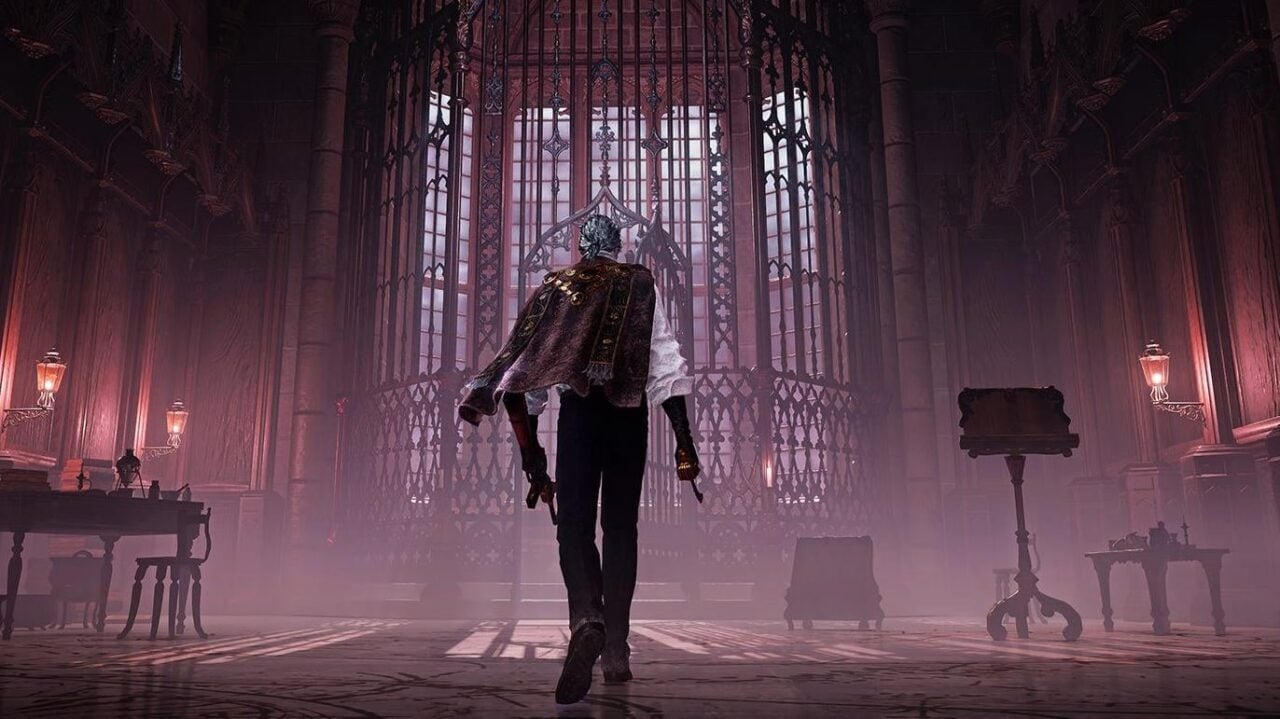
In the realm of deckbuilding games, *The Killing Stone* stands out as one of the most intriguing titles of the year, vying for attention alongside anticipated releases such as *Slay the Spire 2*. Set in the 17th century, the game places players in the shoes of a student of the famed occultist Mariken Svangård. Following her mysterious passing, players journey to a surreal mansion in the Antarctic circle to pay respects and confront the troubling fate of Mariken’s relatives, who have sold their souls to various demons.
**Gameplay Mechanics**
The primary objective in *The Killing Stone* is to rescue the Svangård family members bound to their demonic contracts before the vigil concludes. The gameplay revolves around roguelite campaigns characterized by a series of strategic haggling matches, as players navigate through a diabolical contract that unfurls like molted snakeskin. Players engage in card battles against the demons presiding over these contracts, bringing novel deck-building mechanics into play.
Unlike typical magical duels found in many titles, battles are framed as lawyerly negotiations where players must exploit loopholes in the contracts and utilize card synergies to their advantage. Players navigate branching campaign paths, making critical decisions on whether to pursue safer upgrades or challenge elite minion battles for greater rewards.
**Battle System**
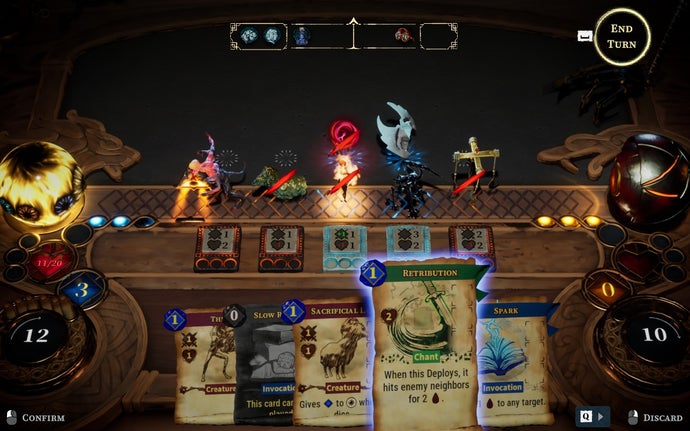
The turn-based battle system of *The Killing Stone* bears a resemblance to *Monster Train*, differentiating itself from the mechanics of *Slay the Spire*. Players position creature cards across a battle line divided into six slots and defend their magical eye—once owned by Guido Strange—at either end of the line. Successful attacks on the opponent’s eye lead to defeat, prompting players to either restart or resume their efforts using in-game currency.
The game also introduces a Reserve line for reinforcements that automatically join the battle when adjacent creatures fall. This mechanic emphasizes the importance of strategic placement and synergies between creatures on the main and Reserve lines.
**Strategic Depth and Customization**
The card options available in *The Killing Stone* often play into the game’s thematic elements. For instance, the character Fine Print—a clockwork arachnid—can disrupt enemy formations, emphasizing indirect strategies. Other creatures offer unique effects, contributing to the game’s depth and tactical complexity.
In a notable twist, players cannot customize individual cards but can swap entire packs, leading to frequent shifts in strategy as they create mini-decks within their overall deck. While faced with cursed cards, which can’t be traded away, players might find themselves drawn to powerful options that also restrict deck flexibility.
**Narrative and Atmosphere**
*The Killing Stone* shines with its narrative depth, allowing players to toggle between modern prose and an Elizabethan period dialogue option, which enhances the storytelling experience. This choice infuses the dialogues with a Shakespearean flair filled with clever wordplay and humor. The game’s voice acting, featuring talents like Liam O’Brien and Emma Gregory, adds to the enchantment of the narrative, providing a rich auditory experience that complements the gameplay.
The characters’ deep backstories interweave with mechanics—each Svangård family member reflecting their personality through unique cards and abilities, further enhancing player immersion.
**Conclusion**
With its engaging blend of tactical depth, rich narrative, and strategic gameplay, *The Killing Stone* positions itself as a formidable competitor in the deckbuilding genre. For players seeking a fresh and vibrant experience beyond the familiar mechanics of titles like *Slay the Spire*, this game promises an enriching journey filled with intrigue, humor, and cunning challenges. Explore more on [Steam](https://store.steampowered.com/app/2781470/The_Killing_Stone/).