### Minos Review: A Complex Roguelike Tower Defense Adventure
**Developer:** Artificer
**Publisher:** Devolver Digital
**Release Date:** April 9th, 2026
**Platforms:** Windows 10 and up
**Price:** £15.99
**Reviewed on:** Intel Core i7-8700, 16GB RAM, Nvidia GeForce GTX 1070, Windows 11
**Steam Link:** [Minos on Steam](https://store.steampowered.com/app/3181650/MINOS/)
**Introduction**
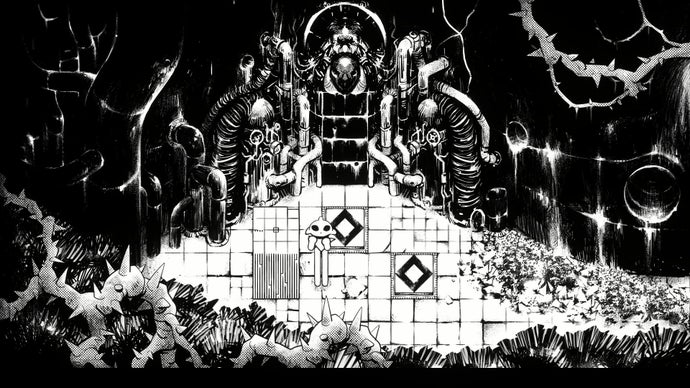
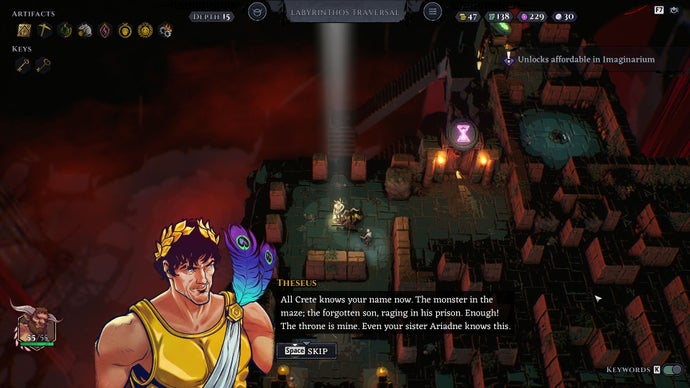
In the game “Minos,” players step into the role of Daedalus, the architect of the labyrinth, tasked with defending Asterion, the minotaur, against waves of mercenaries led by Theseus. This roguelike tower defense game blends strategic planning with real-time decision-making as players navigate a complex and shifting maze to protect the young beast.
**Gameplay Mechanics**
Minos presents a unique gameplay loop where players manage both the architecture of the labyrinth and the traps deployed to thwart invading mercenaries. The levels are set on a grid, dotted with traps, treasures, and obstacles. Players can modify the labyrinth during the preparation phase, placing traps derived from a card system ranging from spike pits to various traps that exploit enemy vulnerabilities.
During the attack phase, players must contend with the advancing mercenaries, each with distinct strengths and weaknesses. The strategic placement of traps is crucial, as the order of attack and the type of enemies facing the traps can significantly influence the outcome.
**The Challenge of Complexity**
Initially, the framework of Minos feels engaging and rewarding. However, as players delve deeper, they encounter increasingly complex enemy formations and abilities, requiring more precise management of traps. This progression can become overwhelming, particularly as the game’s complexity escalates with each level.
In late-game scenarios, players must juggle multiple enemy parties coming from various entrances, making it difficult to effectively predict the outcomes of trap placements. As a result, the mental load shifts from an enjoyable strategic challenge to an intricate puzzle that can lead to frustrating miscalculations.
**Resource Management and Upgrades**
Between levels, players can spend resources earned from defeating mercenaries to unlock permanent upgrades for traps and Asterion’s abilities. This aspect adds a layer of depth, allowing players to customize their approach for future runs. Despite the potential for power upgrades, the balance of risk and reward is delicate and may not always lead to a comfortable experience.
**Conclusion**
As players descend through the labyrinth in Minos, the challenge metamorphoses from satisfying to excessively complex, demanding skills that may not come naturally to all players. While those adept at strategic thinking may thrive, others might find the experience frustrating as the increases in enemy density and variety begin to overwhelm their resources and mental capacity.
For players who appreciate intricate tactical challenges and can effectively manage the cognitive load, Minos may be a rewarding venture. However, for those who struggle with the game’s demands, it might be more beneficial to explore simpler alternatives in the tower defense genre, where enjoyment can be maintained without the steep learning curve.
Ultimately, Minos offers a fresh take on tower defense within a roguelike framework, but its complexity may alienate a portion of its audience.