**Masters of Albion: A Letdown from Peter Molyneux’s 22cans**
In the world of video games, few individuals stir both admiration and doubt quite like Peter Molyneux. Famous for his pioneering God games like *Populous* and *Dungeon Keeper*, Molyneux’s newest project, *Masters of Albion*, has encountered a blend of excitement and apprehension, echoing the pattern of his previous works which have frequently not met expectations. Despite the grand ambition of reviving the magic of his former titles, *Masters of Albion* has ultimately let many down with its execution.
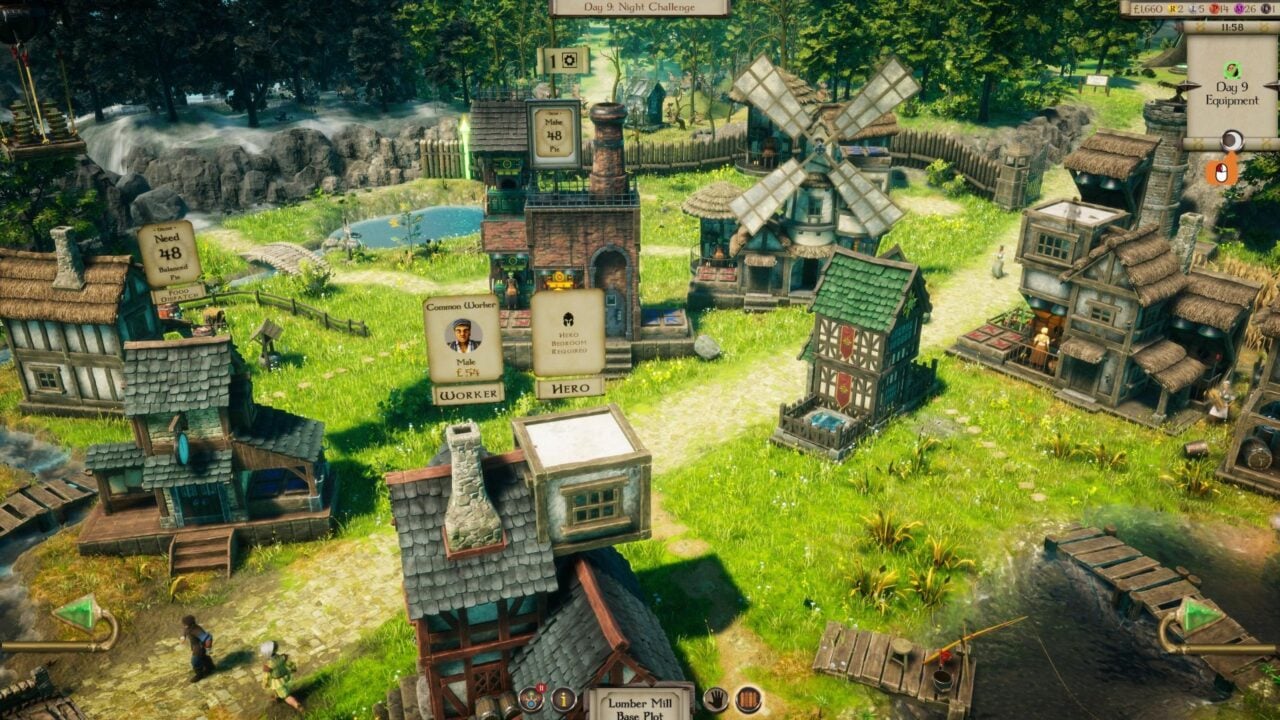
At first glance, *Masters of Albion* showcases a captivating village and a divine floating hand, reminiscent of Molyneux’s prior creations. As players delve into the visuals and engage with the village’s activities, they are momentarily drawn into a deceptive sense of positivity. Nonetheless, the illusion soon dissipates as gameplay unveils itself to be a convoluted repetition of trivial tasks—particularly, the relentless creation of sandwiches. This seemingly insignificant chore epitomizes a broader trend in Molyneux’s recent projects, which have often struggled to provide significant and captivating experiences.
The gameplay mechanics toggle between a village-building simulator and a tower defense genre, where players must defend against zombie invasions at night. Regrettably, the combat mechanics are profoundly dissatisfactory, turning the once-promising heroes into burdens instead of assets. The game confines players to carrying out tedious errands for their villagers, instead of empowering them to assume a more substantial position as creators or leaders.
Additionally, *Masters of Albion* is plagued by major technical glitches, including bugs that can result in frustrating gameplay situations, like soft-locks and an inability to navigate the menu without quitting the game altogether. This lack of refinement has led many to believe that *Masters of Albion* simply lack the necessary quality assurance and polish, raising doubts about the studio’s dedication to quality following the shortcomings of earlier titles.
Being in Early Access gives 22cans the chance to enhance the game based on player feedback; however, the studio’s inconsistent track record with unfinished projects leaves many players hesitant to invest their time and resources into what might turn out to be another subpar offering. The legacy of *Godus*, *Legacy*, and *The Trail* looms large over *Masters of Albion*, eroding any optimism players might have had for this new endeavor.
Despite its numerous flaws, there are sparks of promise within *Masters of Albion*. The artistic design is praiseworthy, demonstrating a remarkable degree of skill and inventiveness. Players might derive some pleasure from the stunning visuals and the smooth transition between close-up views and the world map. However, these redeeming aspects are insufficient to bypass the absence of engaging gameplay and the continual emphasis on turning the mundane—such as sandwich making—into the core of the player experience.
In conclusion, *Masters of Albion* acts as a stark reminder of the difficulties faced by developers moving from groundbreaking creations to fulfilling recent releases. While it may hold onto the allure of Molyneux’s celebrated history, it ultimately presents itself as yet another lost chance amid a series of letdowns from 22cans. As it currently stands, the game seems more like a mobile clicker game than the innovative god game fans had anticipated, leaving many players questioning the future of Molyneux’s legacy in the gaming world.