**After Shooting Incident at White House Correspondents’ Dinner: The Downfall of Cole Tomas Allen and His Game *Bohrdom***
In an astonishing series of events this past weekend, Cole Tomas Allen, purportedly responsible for an attempted shooting, sought to breach security during the White House Correspondents’ Dinner in Washington, D.C. Preparations for formal charges against him are set in motion following this occurrence, which regrettably led to the injury of a security official. Allen notably proclaimed himself an independent game developer, with his sole project, *Bohrdom*, listed on Steam.
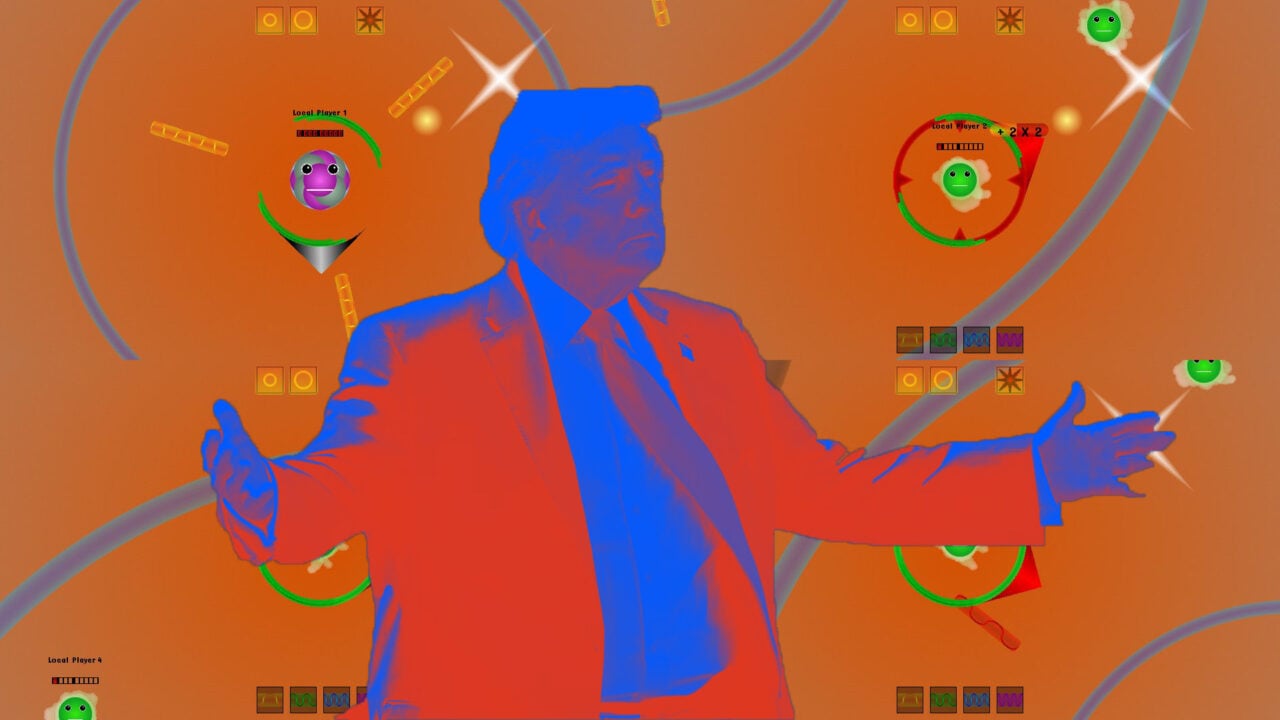
Originally launched in 2018, *Bohrdom* attracted scant attention, following a predictable path shared by numerous indie games on various digital platforms. The game, a tribute to Danish theoretical physicist Niels Bohr, was characterized as a “non-violent asymmetrical fighting game” blending elements of bullet hell and racing genres. However, it hardly made a mark within the gaming community, peaking at a meager two simultaneous players and garnering just two sardonic reviews at its debut. Despite Allen’s assertions of a “successful launch” on LinkedIn, it was evident that the game was among the many that slipped into obscurity on Steam.
In the aftermath of the shooting attempt, *Bohrdom* experienced an unanticipated influx of activity, receiving 134 new reviews—predominantly memes, jokes, or politically charged remarks—many reflecting the tumultuous nature of the incident. By this morning, while *Bohrdom’s* store page remained active on Steam, it had been removed from sale, a likely move by Valve to evade profiting from Allen’s actions.
The reviews unveiled a stark contrast within America in 2026, highlighted by the divided reception of *Bohrdom*, which achieved an almost equal split of positive and negative ratings. While some reviewers conveyed shock and dismay at Allen’s unsuccessful attempt at mass violence, others seized the moment to critique the game’s quality, drawing comparisons to Allen himself. Regrettably, the comments section also became a venue for reflections on the nation’s division, showcasing an alarming presence of racist and anti-Semitic remarks alongside puns about the game’s name and mechanics.
Amid the turmoil, one credible review surfaced, evaluating the game’s gameplay mechanics with genuine discontent, pointing out flaws like a disruptive tutorial that obstructed the gameplay experience. This critical perspective stands out amidst a sea of humorous reactions and social commentary attempts.
Valve’s decision to remove *Bohrdom* from sale likely signifies an intent to approach this delicate situation with caution. Experts suggest the company would want to steer clear of the stigma associated with profiting from actions connected to Allen, given the seriousness of the event that occurred at a renowned gathering of journalists and public figures.
The story surrounding Cole Tomas Allen presents more than just insight into one man’s actions; it casts a wider commentary on the current cultural landscape in America where video games, typically viewed as mere entertainment, intersect with pressing social issues and national security. As legal actions against Allen progress and society reflects on the events that unfolded, attention will surely focus on both the ramifications of such violence and the reactions of digital platforms in a realm where the distinctions between virtual engagement and real-world repercussions continuously converge.