### The Cancellation of Project Blackbird: Insights from ZeniMax Online Studios’ Founder
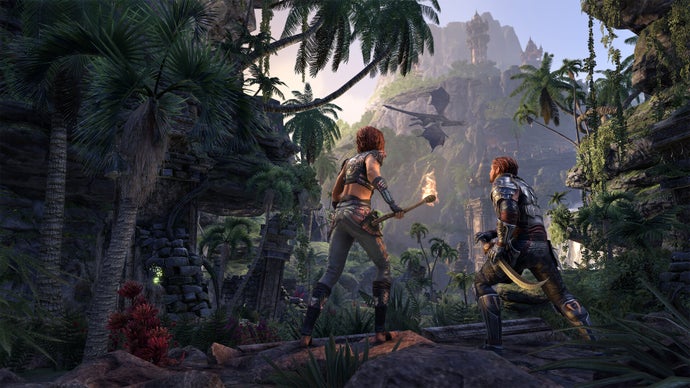
Last year, amidst significant layoffs at Microsoft, ZeniMax Online Studios, the creators of *The Elder Scrolls Online*, saw the cancellation of an anticipated MMORPG project codenamed Blackbird. The decision to halt development was part of a broader strategy by Microsoft, affecting numerous projects and personnel within the company. Following the cancellation, ZeniMax Online founder Matt Firor, who had been with the company since 2007, resigned, citing his disappointment and the implications of the decision.
#### The Vision Behind Project Blackbird
Firor shared that the vision for Blackbird was deeply personal, describing it as a project he had long anticipated bringing to life. He believed that it would have represented a significant achievement not only for ZeniMax and Bethesda but also for Xbox at large. According to Firor, the initial idea for Blackbird involved the development of a new game engine designed to enhance the game’s long-term viability through cost-effective live-service support. This approach was meant to ensure that the game’s development could adapt and evolve over time, providing a richer experience for players.
In a candid remark, Firor stated, “How do I feel about it? I think it’s a missed opportunity.” He reflected on the extensive rationale behind the cancellation, emphasizing that the gaming industry often operates under unique pressures that lead to tough decisions.
#### Corporate Financial Pressures
Firor elaborated on the corporate mindset that influenced the cancellation decision. In a bid to ensure a more predictable financial model, Microsoft, like many large public companies, often assesses projects through the lens of potential profitability. “We’re a number on a ledger,” Firor noted. The sheer scale of investment required for Blackbird made it a high-stakes gamble in a landscape where the desire for stable, upward-trending financial forecasts can overshadow creative ambition.
Firor further explained that for major corporations, a highly successful game may not be as enticing as a reliable business model with forecastable gains. This perspective, he believed, illustrates a more systemic issue within the industry, where innovative projects sometimes face hurdles because of financial scrutiny.
#### The Impact of Cancellation and Firor’s Resignation
The cancellation had profound implications for the team involved in Blackbird. Firor mentioned that his decision to resign was a form of protest against what he viewed as an unfortunate and misguided choice. He expressed that while the concept and early development of Blackbird were promising, the decision-makers opted to prioritize short-term financial stability over long-term creative potential.
He expressed deep regret for those who worked on Blackbird and ended up caught in uncertainty following the cancellation. The ZeniMax Online Studios union, ZOS United-CWA, later voiced concerns about the fate of employees left in limbo after the project was shelved.
#### Conclusion
The story of Project Blackbird serves as a reflection on the challenging dynamics within the gaming industry, illustrating the tension between creative vision and corporate financial strategy. As large companies like Microsoft reshape the landscape of gaming, the implications of such decisions resonate beyond boardrooms and affect the lives and careers of many dedicated developers. Firor’s insights highlight the heart of game development as a blend of passion and pragmatism, where opportunities can be lost in the pursuit of stability. The cancellation of Blackbird is not just a story of a failed game but a commentary on the evolving priorities of an industry in constant flux.