### Exploring Roblox Reality: The Future of Photorealistic Gaming
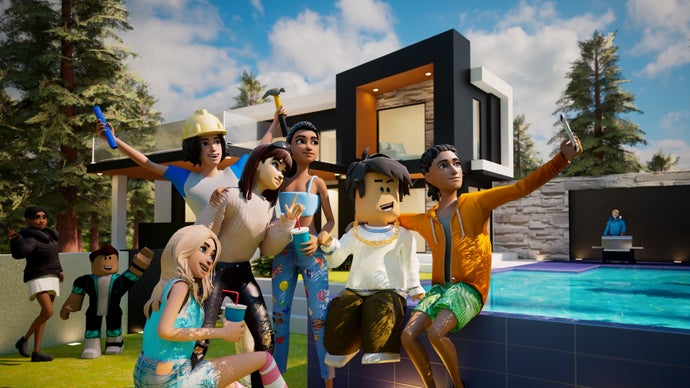
Roblox, a platform renowned for its user-generated games and environments, is taking a significant leap into the future of gaming with its new technology called Roblox Reality. This innovation, which utilizes AI-powered upscaling technology, aims to enhance the visual quality of Roblox’s traditionally blocky characters and environments to a photorealistic level. This transformation invites both excitement and trepidation as players and creators ponder the implications and capabilities of this new technology.
#### The Technical Backbone of Roblox Reality
At the core of Roblox Reality lies a hybrid architecture that separates responsibilities between the Roblox Game Engine and the Roblox Video World Model. The Roblox Game Engine is tasked with the structured and logical aspects of game worlds, including long-term memory, symbolic logic, and simulation processes. It manages fundamental physical operations such as collision detection and object behaviors. For instance, the engine controls the dynamics of a vehicle, including its location, velocity, and movement mechanics.
Complementing this, the Video World Model introduces additional layers of visual and generative components that elevate the aesthetic experience. This model applies finer details like water streaming down a car’s windshield or the movement of leaves as the vehicle speeds past. Consequently, while the Game Engine maintains a stable and consistent data model, the Video World Model creates dynamic and visually appealing imagery—essentially generating what the developers describe as “the visual dream.”
#### Comparison with Existing Technologies
While some may draw parallels between Roblox Reality and Nvidia’s DLSS 5, both technologies share the goal of enhancing original visuals with photorealistic layers, Roblox’s approach stands apart in its commitment to retaining core gaming elements. Roblox’s senior vice president of engineering, Anupam Singh, emphasizes that while current interactive video models are visually stunning, they often lack essential gaming attributes like interactivity and persistence.
Singh argues that relying solely on neural models is insufficient for crafting an engaging multiplayer experience. He points out significant limitations involving coherence over time, long-term memory, latency issues, and creator control. Hence, he asserts that a purely neural engine is not equipped to fulfill the demands of a comprehensive game engine.
#### Future Aspirations and Economic Implications
Roblox’s CEO, David Baszucki, envisions an ambitious future for Roblox Reality. He expressed that this technology could enable small teams to produce intricate, narrative-driven, photorealistic games within a week. The potential for democratizing high-fidelity creation is thrilling, but it also aligns with the company’s economic objectives—namely, increasing revenue.
However, for Roblox Reality to reach its full potential, the technology must evolve from its current state, which demands significant computing resources, to a more cost-effective solution. The transition to affordability is crucial for enabling widespread adoption among creators, who often work on tight budgets.
#### Community Reactions and Market Trends
Despite the exciting advancements, there is skepticism regarding whether Roblox players prioritize photorealism in a platform traditionally known for its unique blocky aesthetic. Historical trends suggest that visuals sometimes evolve through community-driven changes, as seen with Minecraft, which has embraced realism through various mods and official updates.
As Roblox Reality seeks to redefine the visual landscape of the platform, the reception from its user base will ultimately determine its success. The challenge remains to balance artistic identity with technological advancement—ensuring that the heart of gaming—the interactivity and community spirit—remains intact amid growing ambition for enhanced visual fidelity.
### Conclusion
Roblox Reality marks a pivotal moment in the evolution of gaming technology, pushing boundaries towards photorealistic visuals while striving to maintain core gaming principles. The journey towards this ambitious goal will not only reshape the platform but could also pave the way for new creative opportunities for developers and users alike. As this technology rolls out, it will be fascinating to see how it transforms gameplay experiences and community engagement in the renowned world of Roblox.