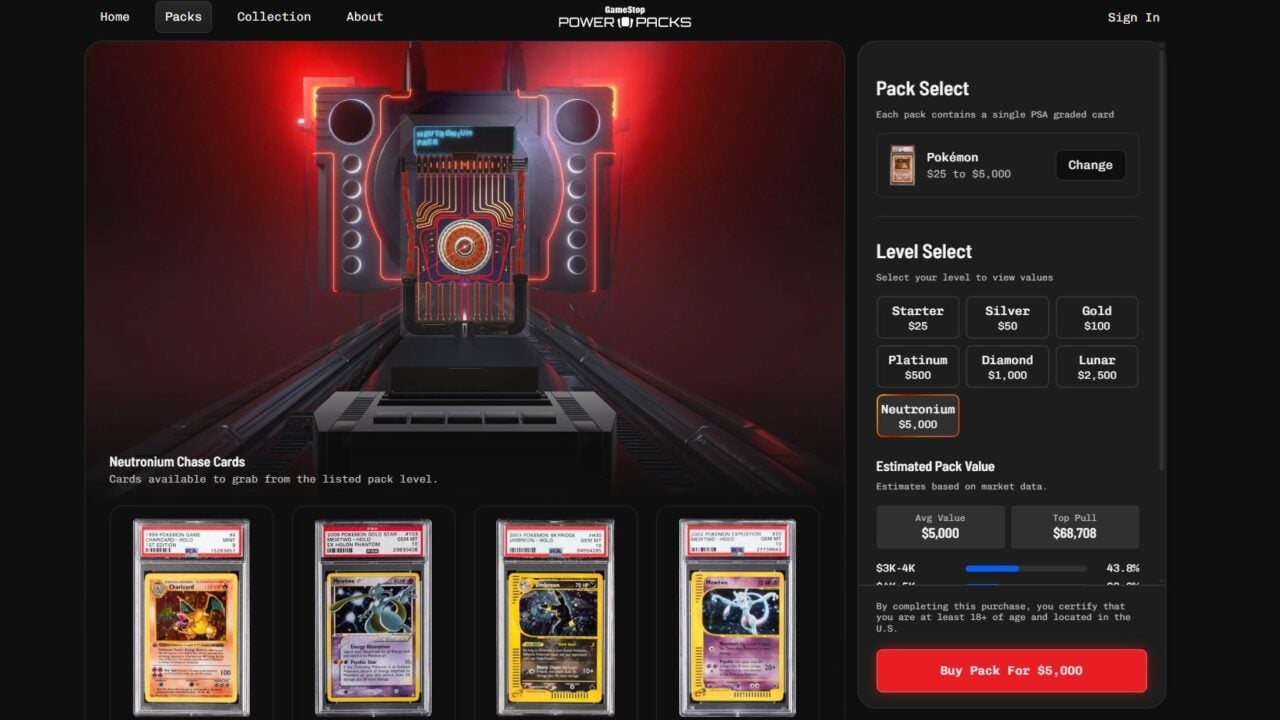
As GameStop works to enhance its presence in the collectibles market while pursuing a significant acquisition, the company has opted for a daring move by launching single, randomized PSA-graded Pokémon cards priced at $5,000. This initiative is part of GameStop’s “Power Packs” program, developed in partnership with PSA, a leading card-grading service.
GameStop’s Power Packs enable customers to acquire a virtual card pack, which includes one PSA-graded card. Customers are able to “rip” the pack digitally and then choose whether to have the card sent to them, sell it on GameStop’s platform (where GameStop retains a portion of the sale), or store it safely in a climate-controlled facility located in Delaware. The program has been operational for several months and offers diverse price points, making it accessible to various budget ranges.
The cost for these digital packs spans from $25 to $5,000, with the latter being a recent addition. As the price escalates, so does the supposed potential value of the cards inside, allegedly providing improved odds of acquiring a high-value card. For example, the top tier, aptly labeled “Neutronium,” presents a 0.4% chance of obtaining a card valued over $40,000. However, these odds unveil a stark reality, showing a 72% probability of ending up with a card worth less than the purchase price, in addition to a 25% chance of receiving a card valued just slightly above the amount spent.
This method bears resemblances to Lucky Box vending machines, marked by the element of chance and the excitement of possible big wins. However, GameStop’s strategy signals a larger concern about adult behaviors in the children’s trading card market, reflecting recent occurrences of heightened demand and inflated prices driven by adult collectors willing to invest heavily in these items.
GameStop’s bold pricing strategy mirrors a trend of the company’s attempts to invigorate its business amidst dwindling in-store sales and evolving consumer interests. The retailer’s ventures across various trends through the years include initiatives in NFTs, investments in cryptocurrency, and focusing on vintage collectibles. This recent pursuit of eBay, highlighted by a proposed $56 billion acquisition, further emphasizes GameStop’s drive towards diversification and innovation in revenue sources, even while facing backlash for perceived price gouging in its collectibles offerings.
As GameStop continues to seek novel paths for profit amidst a transforming retail landscape, its latest venture into high-priced Pokémon cards not only showcases its efforts to leverage collector enthusiasm but also raises concerns about the sustainability and ethics of such strategies in the domain of trading card collectibles. Whether this approach will prove successful or further alienate its customer base remains to be seen.