**The Complexities of Monogamy and Relationships in Gaming: A Look at Stardew Valley**
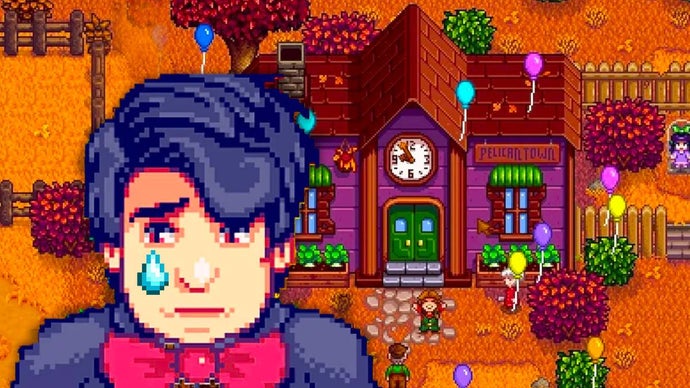
This morning, as serendipity would have it, I encountered a lifestyle headline asserting that humans are not inherently “built” for monogamy. Shortly after, I came across news about Eric “ConcernedApe” Barone, the creator of the beloved farming simulator *Stardew Valley*, contemplating the introduction of adultery and divorce into the game. This sparked an intriguing conversation on the nature of relationships within virtual environments.
In a recent interview with *Game Informer*, Barone mentioned, “In a sandbox game, you should be able to do wicked things and then face the consequences.” This statement, which reflects a commitment to player agency and realism, juxtaposes starkly with his personal stance against infidelity. The mention of allowing affairs aligns with ongoing discussions among players regarding the potential for more complex relationship dynamics within the game.
Interest in non-traditional relationships spiked in February, particularly when rumors surfaced that the upcoming *Stardew Valley 1.7 update* would allow players to pursue romantic relationships with married characters, notably Demetrius and Robin. Many players speculated about the possibilities of breaking up marriages within the game, showcasing a desire for more dramatic and dynamic narrative arcs than the game currently offers.
Barone’s thoughts on the consequences of such actions are revealing. He stated, “I wouldn’t just make everyone be totally chill about it. It would cause a lot of chaos and disaster and suffering, and people would be angry, and you would ruin the family.” His understanding of the potential fallout from player’s choices indicates a depth of consideration regarding the impact of simulated actions on game worlds.
However, Barone also recognized a boundary that he grapples with: the element of escapism that *Stardew Valley* provides. He reflected, “Maybe this is just too real… It’s too realistic, you know?” This tension between reality and fantasy plays a significant role in the design of relationship mechanics in gaming, especially in titles that aim to provide a cozy, nourishing experience.
While the introduction of affairs and divorces may seem like a simple update, it touches on larger issues of morality and the complexities of human relationships. In gaming, this exploration of fidelity and commitment is often simplified or completely overlooked, leaving many players yearning for more profound engagement with relational themes.
One could argue that the gaming medium is a canvas for exploring such dynamics. The idea of introducing an expansive relationship mechanic that allows interactions among NPCs beyond traditional confines invites creativity. Imagine a gameplay feature akin to a “sex katamari” where players could roll together various characters and elements into a complex web of relationships. Such mechanics could challenge players to rethink societal norms surrounding love and partnerships.
Ultimately, the discussion around monogamy in both life and games reflects a larger inquiry into human behavior, desires, and societal expectations. Whether *Stardew Valley* moves in the direction of exploring these complexities remains to be seen. Still, it raises thought-provoking questions about how we engage with relationships, both in virtual spaces and in reality. As we navigate these multifaceted themes, the invitation to examine and even disrupt traditional narratives becomes increasingly relevant, reminding us that we are, indeed, not “built” for a singular understanding of love.