### Moss: The Forgotten Relic – A New Era for a Beloved Series
As virtual reality (VR) technology continues to evolve and captivate the gaming community, the transition of VR titles to traditional screen formats has sparked mixed feelings among players. While many enthusiasts celebrate the broader accessibility of these games, some mourn the loss of the immersive experiences crafted specifically for VR. Such sentiments arise in the wake of the announcement of **Moss: The Forgotten Relic**, a new release that fuses the critically acclaimed games *Moss* and *Moss: Book II* into a single package designed for PC.
#### A Revamped Experience
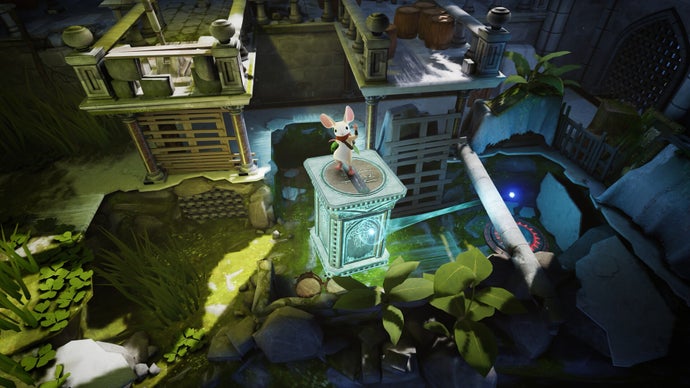
Scheduled for release in summer 2024, *Moss: The Forgotten Relic* represents more than just a port—it offers a reimagined experience that unites the two original games into one cohesive adventure. According to the game’s Steam page, it promises to deliver a “definitive singular adventure” that enhances and beautifies the source material. While specific details about the improvements remain sparse, the developers have highlighted advancements in visuals and performance designed to take full advantage of its new platform.
#### New Features and Enhancements
In moving away from the VR format, *Moss: The Forgotten Relic* introduces several intriguing features aimed at enhancing gameplay for standard screens. A new “Smart Follow Camera” will likely alter the way players interact with the world of Moss, making exploration more dynamic, although the exact mechanics remain undisclosed. Additionally, the game will include “handcrafted cutscenes,” suggesting a focus on storytelling that was likely adapted for a non-VR audience.
The package will also contain the **Twilight Garden DLC**, further enriching the experience for both new players and returning fans. For those who prefer puzzle-solving over combat, a skip combat option has been introduced, allowing players to engage with the game’s challenges at their own pace.
#### The Impact of Technology on Game Design
The adaptation of *Moss* raises fundamental questions about how technology influences design processes. While the reformatting enhances accessibility for players without VR headsets, there is a concern that certain unique aspects of VR experiences may be compromised. The original *Moss* titles were lauded for their innovative use of VR to immerse players in a tactile world, allowing for a sense of presence that’s tough to replicate on a flat screen.
Despite these reservations, *Moss: The Forgotten Relic* has the potential to attract a wider audience, introducing the charm of the *Moss* universe to gamers who may not have experienced it through VR. This move aligns with a growing trend in the industry where developers seek to broaden their reach while balancing fidelity to the original vision.
As we await the summer release, anticipation builds around how *Moss: The Forgotten Relic* will translate its enchanting story and gameplay, along with the implications this port carries for the future of VR adaptations. Players can already add the title to their Steam wishlist, preparing for what promises to be a unique amalgamation of adventure, puzzle-solving, and rich storytelling in a reimagined format.