**Zero Parades: An Examination of Cultural Identity and Authenticity**
In the realm of video games, few titles have sparked as much debate as *Zero Parades: For Dead Spies*, with comparisons often drawn to its predecessor, *Disco Elysium*. For many players, *Zero Parades* is regarded merely as an imitation, a pale reflection of the original’s leftist narrative excellence. This perception is particularly poignant considering the tumultuous background of *Disco Elysium*, marked by the ousting of its original creators amidst corporate turmoil. However, *Zero Parades* dives deeper than mere imitation, engaging in a complex dialogue about authenticity and identity in a world suffused with clones and forgeries.
Set in the fictional coastal city of Portofiro, *Zero Parades* confronts the dystopian implications of cultural erasure. The characters grapple with a fading local culture and a Communist past, overwhelmed by the imports of La Luz, a “techno-fascist” state seeking to regain control over its former territories. This scenario can be interpreted as a commentary on Russia’s contemporary geopolitical posture, illustrating how soft power can transform cultural landscapes.
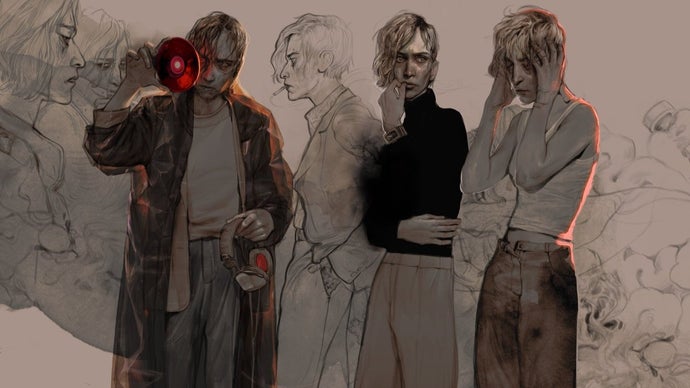
At the heart of the narrative is La Luz’s ruling elite—a philosophical cadre rumored to be inbred—who exemplify the pervasive corruption undermining genuine cultural expression. The protagonist, Cascade, reflects on their status as “the worst kind of bootleg,” managing to confront existential crises while navigating the remnant bitterness of the local populace. Characters embody this cultural tension, with aging artists lamenting the loss of authenticity while unable to form a cohesive response against their encroaching adversaries.
Luzian art plays a paradoxical role within Portofiro, representing both allure and artistic decay. The hyper-commercialized art form thrives on catchy slogans and superficial appeal, attracting a youth culture that idolizes its exponents while resolutely dismissing bootleg media. This exclusivity hints at a deeper societal critique, where cultural purity serves as a gateway to broader prejudices.
The game’s exploration of authenticity finds a further echo in the marketplace, showcasing a rare format vendor whose disdainful critique of replayable media suggests that art has been commodified to facilitate “format-assisted auto-annihilation.” This perspective emphasizes the manufactured nature of what the citizens consume and raises questions about the nature of cultural consumption and creativity in a globally connected world.
Even amid this cultural onslaught, the remnants of Portofiro’s music scene strive to survive, chronicling tales of the bygone days of authentic music experiences. Yet, here too, the narrative thrives on ambivalence, presenting a world where nostalgia meets the practical acceptance of contemporary realities.
Throughout the 15-hour gameplay, *Zero Parades* emerges as an homage to fandom and cultural critique, steeped in character-driven narratives filled with sharply witty dialogue. Cascade functions as a new iteration of *Disco Elysium*’s Harry Du Bois, navigating a storyline colored by personal flaws and a mental landscape dominated by the pressures of anxiety, delirium, and fatigue. While the game introduces these new psychological elements, they create a mixed bag; some players might find them structurally rewarding, while others could view them merely as cumbersome layers of managerial complexity.
The dialogue is structured to resonate with a multitude of ideologies, leaning into whimsically functional, absurdly narcissistic, and comically delusional territories. Yet, such a spectrum might cause some dissonance, as the protagonist’s journey of self-discovery contrasts starkly with the amnesiac charm that defined *Disco Elysium*. This shift could lead to a perception of Cascade as a less impactful character—a figure composed more of references and less of genuine emotional depth.
*Zero Parades* critiques the authenticity of cultural narratives while reflecting the tumultuous market conditions of creative industries. Though resonant in critiques of its predecessors and the environment from which it emerged, it navigates a complex landscape—balancing instances of parody and homage. The game is evolving, and as players venture deeper, it remains to be seen how it will embody its commentary on cultural identity and the notion of the ‘genuine article’ amidst a world increasingly characterized by its clones and forgeries.
As the story unfolds, with hours of gameplay still to be experienced, players may find themselves grappling with the deeper thematic content of *Zero Parades*, questioning how far authenticity can be stretched before it ultimately becomes a hollow production. Indeed, the upcoming exploration of Portofiro’s Museum of Culture promises to shed light on these ongoing conflicts and further enrich the player’s understanding of the world defined by cultural displacement.