**The Strategic Complexity of Sacrifices in Fantasy Resource Management Games**
Fantasy games often explore the intriguing concept of sacrifice — specifically, the ritualistic offering of treasures or individuals to appease deities. While many games touch on this theme superficially, few delve into the rich logistical complexities that accompany such acts. Consider the scenario of needing to regularly sacrifice virgins to a volcano god to prevent the cataclysmic destruction of the surrounding region. The fundamental question arises: how does one secure a consistent supply of sacrifices without exhausting their resources?
One possible solution involves trading with nearby villages. For instance, offering steel wire from furnaces may be a tempting deal. However, if those villages are more interested in fishing supplies, the negotiation pivots. The strategy shifts towards selling steel wire to coastal towns, enabling them to expand their fishing capabilities. In turn, these coastal villagers can exchange their surplus catch with the inland villages, who are in need of fish. This creates an interconnected web of trade, allowing the inland villages to procure more virgins, even as they run low on their offerings. Ultimately, this complex trade route design reflects a reality where the decisions of one party could inadvertently affect another, echoing the sentiment that one cannot be held accountable for external business choices.
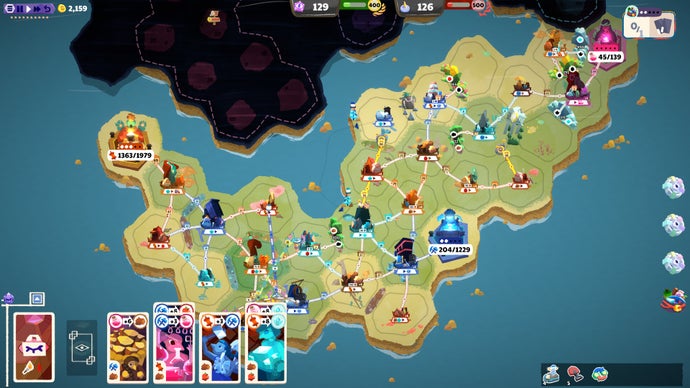
Introducing this complex resource management concept brings to mind the game *Prophet Margin*, developed by the creators of *To The Stars*. This title is a resource management strategy game where players are tasked with building elaborate trade routes to support various gods by delivering specific commodities. The game’s tagline reflects its quintessential theme: “The gods hunger for tribute!” Players are required to optimize trade routes to ensure that the right goods reach the appropriate temples, seamlessly blending elements of city-building and strategic puzzles.
*Prophet Margin* redefines the resource management genre by introducing a “real-time with pause” mechanic, allowing players to carefully plan their movements and decisions. Each temple demands a single sacred resource, challenging players to appease these gods by efficiently managing their trade networks. The developers describe the game as a meditative experience that merges board-game logic with intricate resource management, appealing particularly to fans of city-building classics like *Anno*, *The Settlers*, and *Captain of Industry*.
While the theme of divine tribute serves as an exciting backdrop, the game’s mechanics are rooted in logical trade connections rather than strictly thematic sacrifices. The leveling up of settlements based on optimized trade routes leads to a changing requirement for resources, thereby adjusting the overall challenge as players develop their networks. Unlike other games where failure to meet divine expectations could lead to dire consequences, such as supernatural retribution, *Prophet Margin* offers a more forgiving approach, presenting a tranquil environment wherein strategy and planning take precedence.
The anticipation surrounding *Prophet Margin* suggests a unique addition to the genre of resource management games, with a demo expected to arrive soon. The integration of gods, offerings, and sophisticated trade strategies illustrates how the theme of sacrifice can be complemented by engaging gameplay, producing a captivating experience that challenges players to think critically about logistics and resource allocation in a fantastical setting.