**The Challenges of Realistic Lighting in Modern Stealth Games**
In the realm of video game design, few discussions are as contentious as the impact of technological advancements on gameplay. Recently, celebrated game designer Clint Hocking, known for his work on titles like *Far Cry 2*, *Splinter Cell: Chaos Theory*, and the upcoming *Assassin’s Creed Codename Hexe*, has articulated a viewpoint that resonates with many gamers: modern technology, particularly realistic lighting, complicates the development of stealth games.
Hocking’s insights come in light of the complexities introduced by advanced graphics rendering techniques. He argues that while realistic lighting enhances visual fidelity, it also obscures vital gameplay mechanics in stealth games. The sophistication of modern rendering, including phenomena such as light diffusion and ambient occlusion, creates a challenging environment for players, making it difficult to discern safe spaces from dangerous ones. As Hocking mentions, “the simulation of, say, diffusion – light scattering from different surfaces – makes stealth games ‘so much harder to read.'”
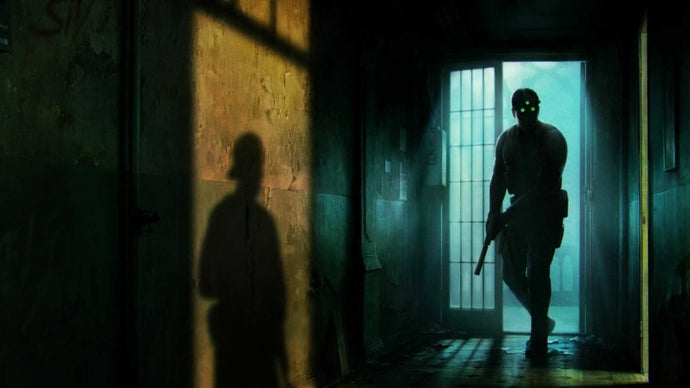
Historically, stealth game designers have employed various strategies to guide players in navigating light and shadow. For instance, the original *Thief* introduced the light gem, a simplified visual cue indicating the player’s visibility based on surrounding light conditions. Similarly, Sam Fisher from the *Splinter Cell* series utilizes headlamps that paradoxically highlight the character’s visibility status. Klei’s *Mark of the Ninja* employs a desaturation mechanic, where the character appears less vibrant when shrouded in shadow. Despite these innovative solutions, many players still struggle to accurately assess their visibility in modern games that leverage cutting-edge lighting techniques.
Lighting direction plays a pivotal role in this discussion as well. Hocking highlights that real-world stage lighting is often dramatic and purposeful, designed specifically to enhance visibility and aesthetic appeal. In contrast, modern games sometimes prioritize realistic lighting that may not effectively serve the stealth gameplay experience. This disconnect raises questions about the design priorities within the industry—a common challenge as developers strive to balance artistic realism with gameplay clarity.
As the gaming industry embraces technologies like ray tracing, which simulates the behavior of light with unprecedented realism, Hocking suggests that developers need to re-evaluate their approach to stealth mechanics. He posits that there is potential for innovation in using these modern lighting techniques to craft a pure stealth experience, but it requires careful consideration and a deep understanding of gameplay dynamics.
Additionally, it is worth exploring how modern lighting technologies may have influenced the evolution of stealth gameplay. The rise of “social stealth,” as seen in titles like *Hitman* and *Assassin’s Creed*, introduces not just environmental stealth but also interactions with NPCs, further complicating the balancing act for designers. Hocking’s thoughts on this matter are eagerly anticipated, especially as he embarks on a new endeavor with his studio, Build Machine Games.
As for iconic franchises like *Splinter Cell*, the future remains uncertain. A remake is in development, yet sparse updates have led to concerns about its progress, especially following staffing layoffs at Ubisoft Toronto. The evolution of stealth games amidst advancing technology presents a rich area for exploration, providing fertile ground for both developers and players to reflect on the delicate interplay between realism and gameplay mechanics.