**Capcom’s Pragmata: An Eccentric Expedition in a Futuristic Realm**
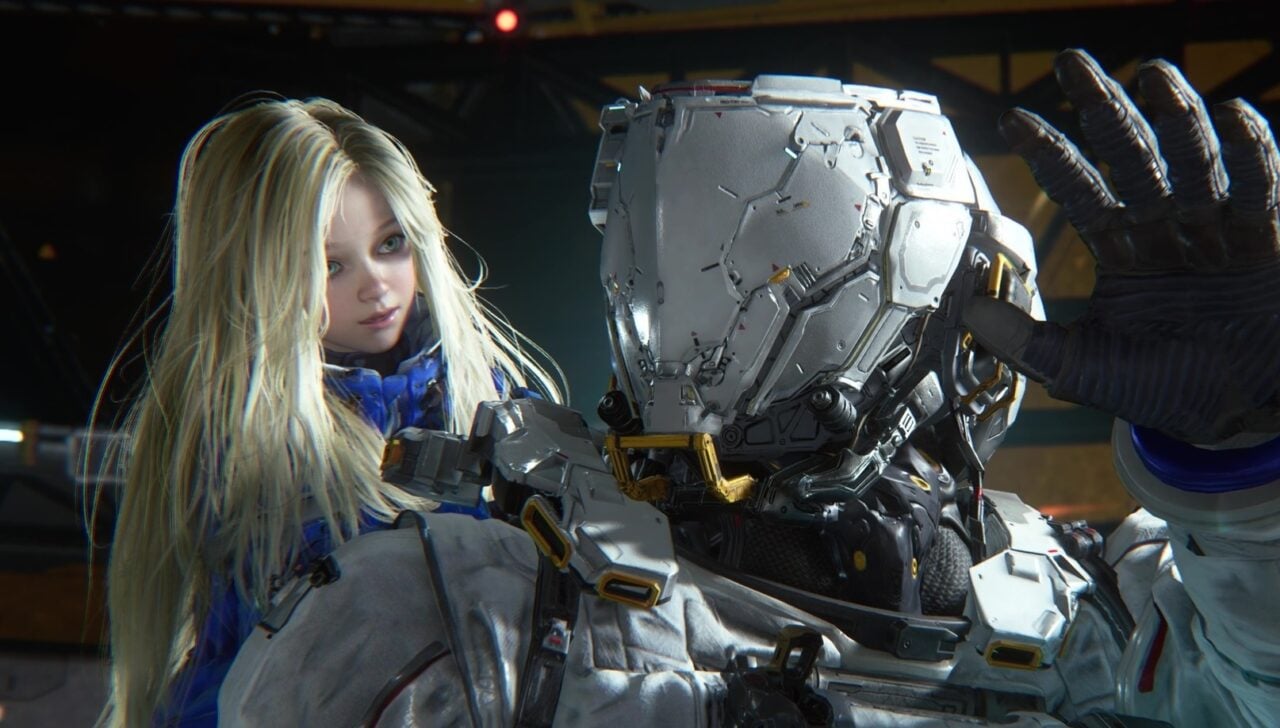
Launched last month, Capcom’s *Pragmata* has rapidly gained commercial acclaim, with the company rejoicing over 1 million sales shortly after its debut, quickly exceeding 2 million. The game showcases the unlikely alliance of a cosmonaut engineer, Hugh Williams, alongside a child android known as Diana, as they confront rebellious robots on the moon. This distinctive premise gives rise to a gameplay style that innovatively fuses real-time combat with puzzle-solving features, incorporating elements from both hacking games and shooters. Additionally, *Pragmata* has marked its presence as a vital contender in the “sad dad” genre, reminiscent of critically praised entries like *The Last of Us* and the newer *God of War* franchise.
First unveiled during the PS5 showcase in 2020, *Pragmata* has undergone an extensive development process. David Menkin, the voice of Hugh, joined the endeavor relatively late, portraying his initial role as a “simple” character. In an enlightening interview, Menkin discussed his experiences with the character, the warm reception of the game, and how Hugh’s optimistic demeanor challenges the traditional “sad dad” archetype.
Menkin highlighted the notable interaction from fans, saying, “I’ve had individuals contact me regarding my previous work, but people have truly wanted to connect for *Pragmata*, sending me some wonderful messages.” He underscored the relationship between Hugh and Diana, asserting the importance of having a compelling reason to undertake heroic deeds in gaming stories. “Everybody longs to be that ‘Space Dad,’” he noted, emphasizing the shared aspiration for meaningful relationships and motivations.
Having contributed his voice to several prominent titles, including *Battlefield: Bad Company* and *Assassin’s Creed Valhalla*, Menkin approached *Pragmata* with a renewed viewpoint. The onboarding experience distinguished it from other titles; the cast participated in a classic table read—an approach typically seen in film and theater, yet less frequent in video game production. This initial collaboration established the foundation for the chemistry vital to the narrative.
The table read was crucial in developing a rapport between Menkin and Grace Saif, who plays Diana. Menkin recalled, “When Grace joined our read, I sensed that I needed to elevate my game as an actor,” reflecting the high caliber of talent involved in the project. This bonding and mutual advancement were key themes throughout the development phase, illustrating the commitment from both the cast and Capcom’s narrative team.
Upon its release, *Pragmata* was immediately linked to the “sad dad” trope due to overlapping thematic elements with other games within the genre. While it clearly includes aspects of emotional storytelling centered around a caretaker guiding a younger character, the game diverges in its tone. In contrast to the grimmer themes found in *The Last of Us* or *God of War*, *Pragmata* presents a hopeful protagonist. Hugh serves as a source of optimism for Diana, affirming her existence as a person, not merely as a machine.
Menkin redefined the “sad dad” label, suggesting that Hugh embodies a person endeavoring to identify the silver lining amidst challenges without succumbing to despair or seeking redemption. He reflects, “For Hugh in *Pragmata*, that’s simply not the case. It’s something we discussed during recording—they clearly conveyed to me that this is an ordinary guy who excels at his work.”
Throughout the story, Hugh’s relationship with Diana evolves, tackling themes of responsibility and autonomy. He motivates her to articulate her wishes, signifying a meaningful transformation in their respective journeys. This progression reflects a bond rooted in collaboration, positivity, and a common goal.
Menkin’s viewpoint aligns with the overarching theme of *Pragmata*: making the best of one’s situation. It delivers a poignant message wrapped in an immersive gameplay experience. “I think the team intentionally didn’t reveal much about themselves or how dedicated they were,” Menkin remarked, referencing the collaborative ethos at Capcom, implying that the game has certainly been shaped by devoted individuals who appreciate the significance of human connection.
In conclusion, *Pragmata* beckons players on a distinctive journey filled with challenges interlaced with hope, positioning itself not only as a triumphant entry in Capcom’s catalog but also as an invigorating narrative experience that champions optimism in a tumultuous world.