**Title: Dissecting the Intricate Storyline of *Saros*: A Thorough Exploration of Character Connections and Meanings**
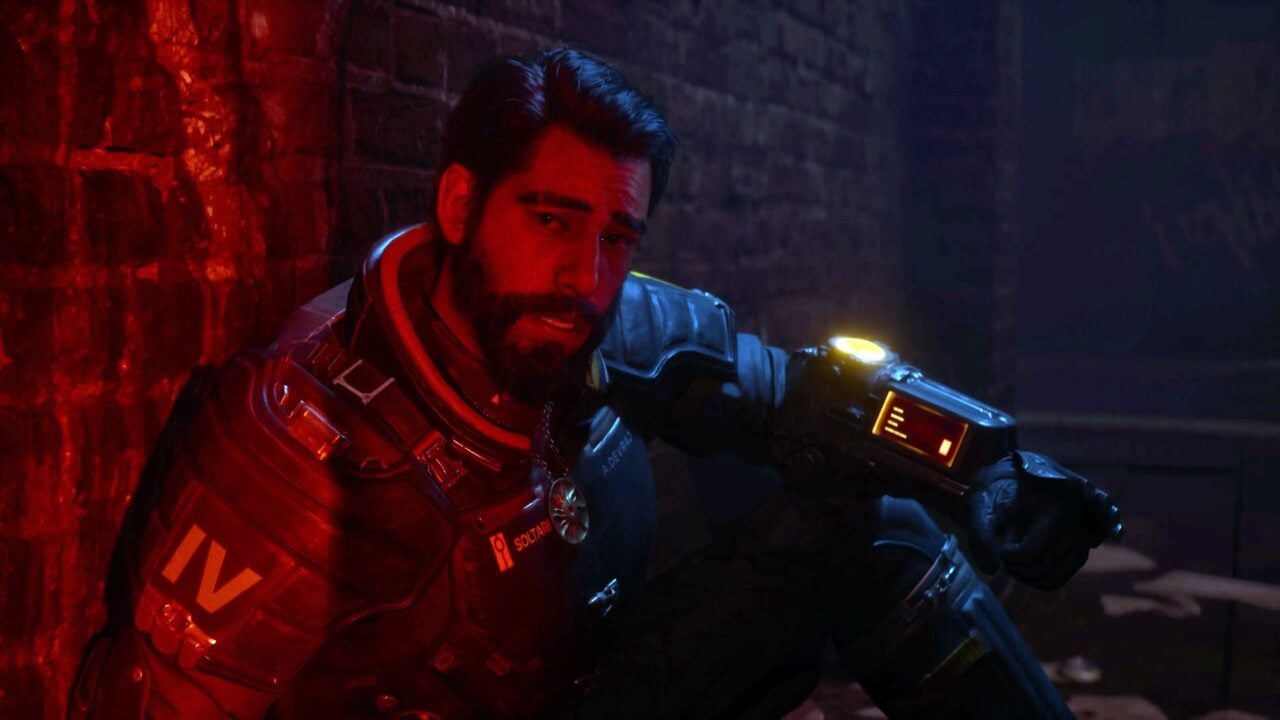
Within the domain of video games, storytelling frequently serves a crucial function in engaging players, and *Saros*, the newest offering from Housemarque, exemplifies this. This roguelike shooter infused with psychological elements encourages players to delve into an intricately woven plot filled with mythology and multifaceted character interactions. A recent review brought to light a particularly intriguing perspective on protagonist Arjun’s connections, notably with a character named Sebastian, which has spurred diverse conversations among players and critics alike.
**The Passage: Hub of Mysteries**
At the core of *Saros* is the Passage, where players regroup between missions. Here, Arjun interacts with other crew members from the doomed Echelon IV expedition. Among them is Sebastian, whose bond with Arjun suggests an evident backstory that hints at deeper emotional connections. Their conversations are thick with tension, implying guilt and accusations, yet leaving explicit details about their shared history unspoken. As players guide Arjun’s journey through the time-bending planet of Carcosa, these interactions with Sebastian prove essential for revealing the protagonist’s inner struggles.
**Flashbacks and the Burden of Regret**
Integral to players’ grasp of Arjun is a sequence of flashbacks that uncover his troubled past on Earth. These fragments of memory depict Arjun engaging in self-sabotaging behaviors, including infidelity that may have triggered Sebastian’s premature death—an incident cloaked in mystery. The enigmatic nature of Sebastian’s presence prompts inquiries about his role within the plot, leaving players to ponder whether he is simply a manifestation of Arjun’s guilt or a representation of unresolved anguish.
As players piece together more of Arjun’s history through these interconnected scenarios, they begin to uncover the troubling consequences of his choices. It becomes clear that Sebastian’s fate is intertwined with Arjun’s remorse and the toxic masculinity inherited from his upbringing. This examination of internal conflicts enriches the game’s narrative tapestry, emphasizing the emotional burden carried by Arjun as he seeks atonement in a tumultuous realm.
**Confronting Trauma: The Redemption Journey**
In the climax of *Saros*, Arjun sets off on what resembles an apology tour. This venture symbolizes his confrontation with the phantoms of his past, particularly regarding his relationships, both with those he has wronged and his own self-perception. The revelation that Sebastian represented more than a friend, possibly his hidden lover, further complicates the narrative. This insight recontextualizes their exchanges and reveals Arjun’s emotional strife: the challenge of balancing personal desires alongside societal expectations.
The poignant moment when Sebastian asks Arjun—“What was I to you?”—provides a heartbreaking glimpse into Arjun’s mind. His reply, admitting that he had sidelined Sebastian as “nothing” in his thoughts, serves as a striking commentary on his denial and disgrace. It embodies the tragedy of their bond, highlighting not just betrayal but the deep repercussions of suppressed affection and grief.
**Understanding Intentions: The Significance of Creator Commentary**
Recent discussions surrounding *Saros* have been further complicated by actor Rahul Kohli’s remarks regarding the nature of Arjun and Sebastian’s relationship. Kohli’s claim that both actors were instructed to approach their roles with an emphasis on friendship instead of romance has sparked debate. This disclosure contributes to a larger dialogue within the gaming community about creator intent versus player interpretation, particularly in stories that thrive on uncertainty.
While some players value the clarity offered by creators revealing their intentions, others feel that such insights can detract from the richness of personal interpretations. *Saros* flourishes due to its open-ended narrative framework, where players can derive unique meanings from the character interactions and overarching themes of guilt, love, and redemption.
**Conclusion: The Intricacy of Storytelling in *Saros***
*Saros* stands as a captivating exploration of how personal histories and societal norms converge, shaping the characters’ fates. As players traverse Arjun’s journey, they encounter reflections on masculinity, guilt, and the consequences of choice—elements that resonate profoundly through varied identity experiences.
Ultimately, the discourse surrounding *Saros* mirrors a broader cultural conversation within the gaming community regarding the balance between creator intent and player interpretation. While Kohli’s clarification provides an alternative perspective on the narrative, the emotional complexity and depth of Arjun’s character invite a wide array of interpretations. This ambiguity—whether viewed as romantic or platonic—adds nuances to the story, encouraging players to engage deeply with their comprehension of the characters while navigating the moral dilemmas of their actions.