### The Art of Videogame Collages: A Dive into Texturetown and Beyond
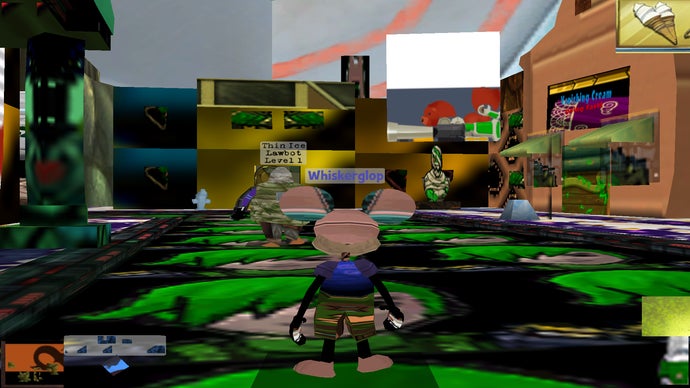
In recent years, the realm of indie gaming has given rise to innovative projects that blend nostalgia, creativity, and a critique of the digital landscape. One such project is **Texturetown**, an algorithmically remixed MMO that curatorially resurrects assets from a host of now-defunct children’s MMOs. Developed by LA-based academic **Aidan Strong**, Texturetown stands as a haunting tribute to the early 2000s, a time when children’s online gaming was experiencing a brief, yet vibrant, renaissance.
#### Concept and Design
Texturetown draws its essence from the memories of multiplayer environments that were once teeming with life, yet are now but ghosts in the digital ether. As outlined on its [Itch.io page](https://str0nkyk0ng.itch.io/texturetown), the game incorporates **altered code from Toontown** (2003-2013), **audio from Pirates of the Caribbean Online** (2007-2013), **text from Club Penguin** (2005-2017), and **textures from Fusionfall** (2009-2013). Strong notes the irony in this project; the early aughts boasted a variety of MMOs spearheaded by companies like **Disney** and **Cartoon Network**, aiming to tap into the financial prospects demonstrated by predecessors like **Everquest** and **World of Warcraft**. However, many of these games succumbed to financial failure, leading to sudden and jarring shutdowns, leaving communities bereft of their beloved worlds.
#### Nostalgia and Decontextualization
The essence of Texturetown lies in its ability to evoke nostalgia through disjointed and altered remnants of these once vibrant virtual spaces. Strong describes the game as a “hypothetically playable, but functionally inert” experience that repurposes these elements to invoke a collective memory. The disjointed nature of its components forces players to confront the juxtaposition of familiarity and estrangement, illustrating how the jarring compatibility of various assets plays into a larger conversation about the preservation of digital memories.
#### A Commentary on AI and Creation
Furthering its artistic depth, Texturetown can also be perceived as both a parody and a critique of AI-generated art. Unlike AI algorithms that synthesize elements into cohesive forms through educated guesses, Texturetown presents its materials in a “rough” assembly. This method emphasizes the chaotic combination of assets that once competed for attention, suggesting a fragmented narrative that celebrates the imperfections and idiosyncrasies of nostalgic gaming lore.
#### The Poetics of Hyperlinks and Meanderware
Texturetown embodies what **Natalie Lawhead** terms **”meanderware,”** which champions the beauty of hyperlinks and the decentralized nature of early internet experiences. This game serves as a reminder of a digital landscape unshackled from the homogenizing effects of modern social media and search engines. Lawhead emphasizes the importance of fostering this kind of internet culture among younger generations, encouraging creativity and empowerment through exploration.
#### Conclusion
Texturetown and its ilk represent a fascinating fusion of artistic expression, nostalgic reflection, and socio-digital commentary. These projects open doors for gamers and creators to think creatively about their digital pasts and futures. They challenge players to not only engage with but also critically analyze the environments they have inhabited, while providing a platform for cultural exploration.
In contemplating potential contributions to a personal videogame collage, one might ponder the inclusion of titles like **Vagrant Story**, **Crash Bandicoot**, **Wipeout**, and **Civilization II**—each of which could evoke its unique thread in the tapestry of gaming history, further enriching the ongoing dialogue around the aesthetics of nostalgia in the digital age.