**Delving into the Depths of *Mina the Hollower*: Narrative Choices and Dungeon Order**
*Mina the Hollower*, created by Yacht Club Games, is an indie game that enchants players with its intricate story and adaptive dungeon exploration. The game comprises seven primary dungeons, with the final one acting as the dramatic conclusion. While the last dungeon is predetermined, players have the opportunity to undertake the preceding six in any order, granting them the ability to select their journey. However, the dungeons differ in terms of difficulty, leading to a unique design decision that promotes exploration and player autonomy.
Among these dungeons, the “designated” sixth dungeon, *Astral Orrery*, distinguishes itself with its notably greater difficulty, intricacy, and length relative to its earlier counterparts. Nonetheless, players can venture into *Astral Orrery* prior to tackling simpler dungeons, like the *Queensbury Crypt*. David D’Angelo, a programmer from Yacht Club Games, highlighted their philosophy of enabling players to explore at their own rhythm. Alec Faulkner, the game designer, playfully remarked, “Why would we stop them?” This design ethos embodies the creators’ goal to inspire exploration and experimentation within the game universe.
Traversing the dungeons in *Mina the Hollower* requires discovering concealed mirrors that lead to diverse locations, including *Astral Orrery*. Players need to interact with these mirrors to activate the dungeon, introducing an extra layer of challenge and discovery. Although barriers exist to hinder less prepared players from encountering overwhelming obstacles, those who are sufficiently committed can find means to circumvent them. The game also features modifiers and cheats, catering to various playstyles and preferences.
The narrative journey in *Mina the Hollower* is equally engaging, featuring nuanced ethical decisions that lead to significant reflections. Throughout the experience, players guide Mina, who encounters moral challenges with repercussions that resound throughout the game world. As the story unfolds, clearing the six main dungeons exposes the treachery of Mina’s benefactor, Lionel, propelling players into a pivotal showdown where their previous choices are examined.
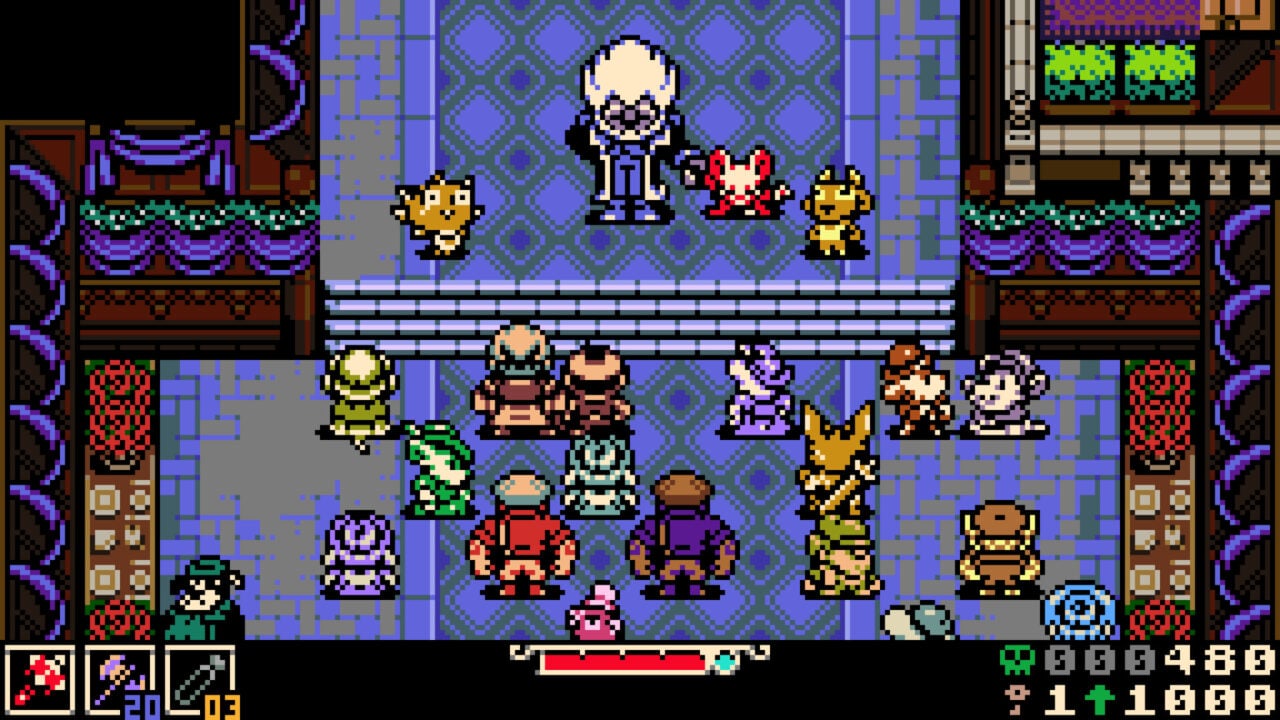
During the banquet hall confrontation, Lionel questions Mina’s actions throughout the game, highlighting themes of societal influence and personal responsibility. This moment acts as a profound insight into how individual choices reverberate within a broader context, presenting a stark departure from traditional hero narratives in which consequences are frequently overlooked. The twist reveals Yacht Club’s ambition to provoke player perceptions, allowing them to contemplate their character’s morality.
The game’s conclusion takes a somber twist, as Mina, after vanquishing Lionel and deactivating the generators, faces blame for the resulting chaos and is compelled to escape. D’Angelo and Faulkner crafted the narrative to echo Victorian themes, addressing class conflict, the repercussions of industrial advancements, and the intricacies of progress. This deliberate design decision enhances the game’s richness, prompting players to reflect on their decisions and the implications of the narrative.
In summary, *Mina the Hollower* adeptly combines challenging gameplay with a rich, layered story. The liberty of dungeon exploration intertwined with significant moral choices creates an experience that resonates long after the game concludes. Through every challenge and discovery, players are encouraged to contemplate the wider consequences of their actions, making *Mina the Hollower* a thought-provoking and captivating contribution to the indie gaming scene.