**Disney’s *Hexed*: Examining the Trailer and Social Media Presentation**
Yesterday, Disney released a new trailer for its forthcoming animated feature, *Hexed*, which is set to debut in theaters on November 25. The film features Hailee Steinfeld as Billie, a teenage girl who uncovers her magical talents and finds a community among witches and wizards. Although early reactions to the film may differ, a significant element of the trailer has surfaced regarding its visual arrangement.
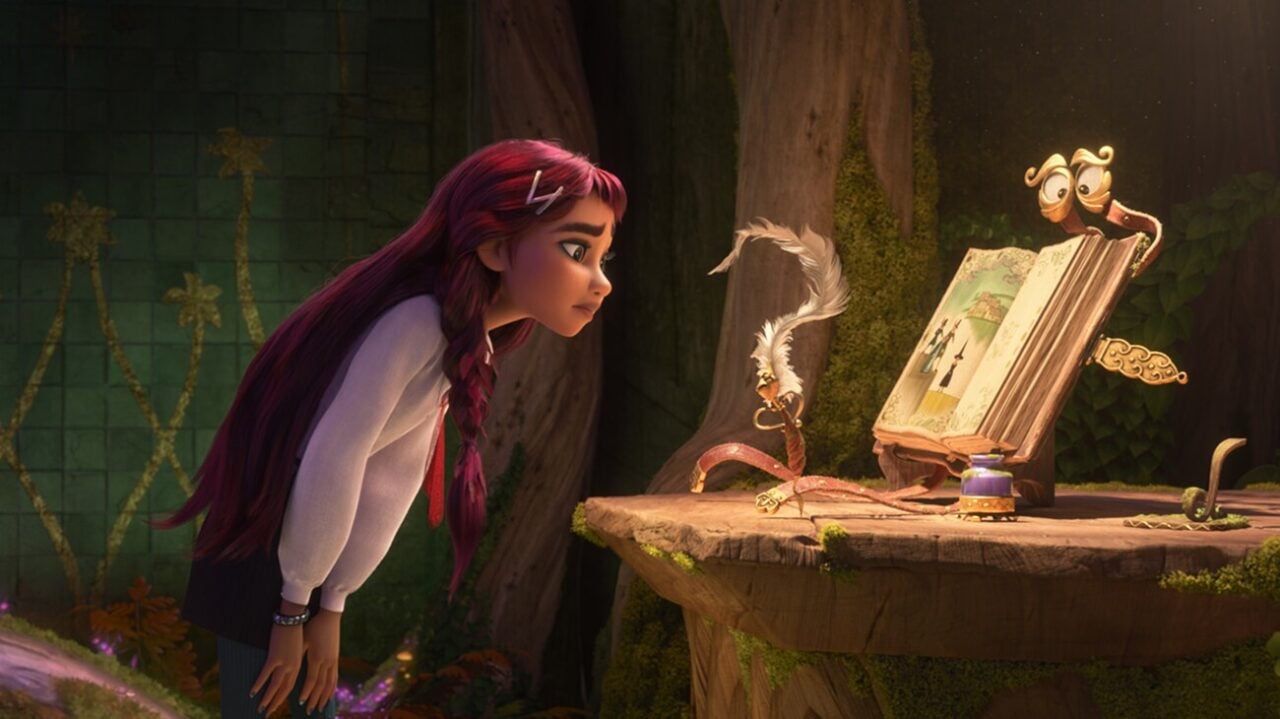
Viewers have noted that the actions in *Hexed* appear deliberately designed to keep attention focused at the center of the screen. This creative decision raises inquiries about the reasons behind such framing. Many theorize that the goal is to enable seamless sharing of clips on popular vertical-video platforms like TikTok and Instagram.
In today’s digital environment, cinematic marketing greatly depends on social media. Platforms like TikTok and Instagram not only spread official material but also feature countless fan-made edits showcasing beloved characters paired with trending music. To thrive in this realm, companies like Disney frequently issue vertical versions of their trailers, which may necessitate cropping segments of the original widescreen footage. However, in the instance of *Hexed*, the trailer’s visuals are designed in a manner that keeps most content intact, with a central emphasis that easily transitions to vertical formats.
A notable distinction arises when comparing the trailer for *Hexed* with Dreamworks’ forthcoming animated project, *Forgotten Island*. The latter presents a wider variety of shot compositions, employing more of the screen’s expanse while still offering centered shots appropriate for social media sharing. This variation has sparked discussions among fans regarding the artistic implications of such purposeful framing choices.
While this trend isn’t new for Disney, as seen in Pixar’s *Elio*—which also employed centralized action in its display—there’s an increasing theory that this technique is tailored to influencer culture, with hopes of creating organic viral marketing through user-generated content.
In the end, regardless of the framing decisions, *Hexed* could turn out to be an engaging film. Nonetheless, these stylistic choices reflect a wider trend in filmmaking, where the demand for social media interaction may undermine artistic authenticity in favor of potential virality. As short-form vertical video continues to rise, there are worries that this transition could weaken the essence of cinematic creation.
On a related point, the character designs in *Hexed* have been likened to generative AI outputs, raising issues about originality and uniqueness in upcoming projects. As audiences eagerly anticipate further news from Disney, especially regarding the forthcoming *Frozen 3*, there remains hope for a renewed focus on inventive storytelling and visual creativity beyond the limits of social media aesthetics.