**Control Resonant: A New Era in the Remedyverse**
Following the chilling atmosphere of *Alan Wake II*, Remedy Entertainment is making a distinct pivot with *Control Resonant*, a game that embraces frenetic combat and supernatural elements in a vibrant iteration of its unique universe. With a recent playable preview build showcasing approximately three hours of gameplay, it seems that this upcoming title is set to excite fans and newcomers alike.
**Melee Combat and Character Dynamics**
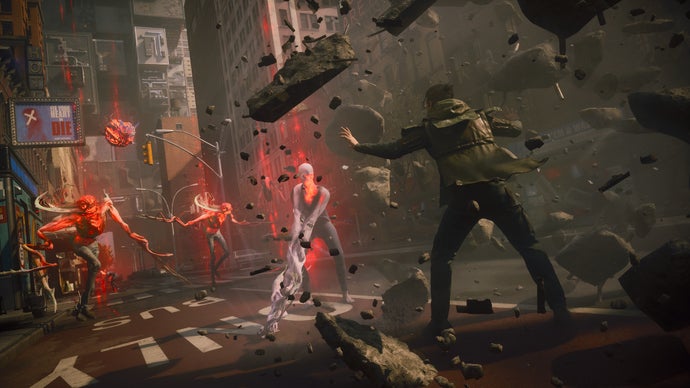
One of the most striking features of *Control Resonant* is its emphasis on melee combat. The game introduces Dylan Faden, whose journey into superhuman abilities contrasts sharply with his sister Jesse’s effortless command of psychic powers. Players will find Dylan’s initial clumsiness in combat relatable; as he adapts to using the Abberant—his versatile weapon that morphs into a hammer, spear, axe, or nunchucks—the gameplay transforms. Combat flows seamlessly, echoing the kinetic style of franchises like *Devil May Cry*, coupled with the transition smoothness found in *Batman: Arkham* games. The pace is swift, requiring players to execute lengthy combos while deftly avoiding attacks, promoting an aggressive gameplay style that encourages players to stay on the offensive rather than seek cover.
As lead game designer Sergey Mohov points out, the design philosophy behind the combat emphasizes a feeling of empowerment; players are placed in the role of a powerful entity feared by enemies, challenging the norms of melee combat games that often involve defensive posturing.
**Exploring a Twisted Manhattan**
In a significant departure from the stark environment of the Oldest House in the original *Control*, *Resonant* transports players to a brilliantly warped version of Manhattan. This version of the city doesn’t strive for realism; instead, it embodies a cinematic dreamscape. Mohov describes it as a reflection of collective perceptions of Manhattan, filled with whimsical details like retro phone booths—elements that capture the essence of a movie version of the city.
Environmental design plays a crucial role, introducing bizarre visual elements that blur the lines of reality. Players can expect to encounter surreal settings, including a labyrinthine Sinkhole filled with distorted apartments, creating a challenging navigation experience that complements the game’s flashy combat mechanics.
**Character-Driven Narrative and Interaction**
While Dylan may not initially resonate as easily as Jesse, the character dynamics enhance the narrative depth of *Control Resonant*. His relationship with Zoe, who acts as a guide and voice in his head, introduces a new layer of storytelling reminiscent of *Firewatch*. This dynamic provides players with opportunities for interactive dialogues that reveal more about Dylan’s exploration of his identity in the chaotic world around him.
As he navigates encounters with strange adversaries—ranging from grotesquely transformed beings to surreal bosses like a half-buried giant face—Dylan’s character arc unfolds in engaging ways, allowing players to grow alongside him in this previously uncharted territory of the Remedyverse.
**Conclusion**
*Control Resonant* aims to redefine expectations. With its thrilling combat, rich environmental storytelling, and character development, it promises to capture the essence of its predecessors while venturing into bold new directions. Set to release on September 24th, fans of the franchise and action RPG enthusiasts alike have much to look forward to in this imaginative continuation of the Remedy story. As the game evolves, it leaves an impression of uncertainty tempered with excitement, making players eager to traverse its intricately crafted landscapes and embrace its chaos.