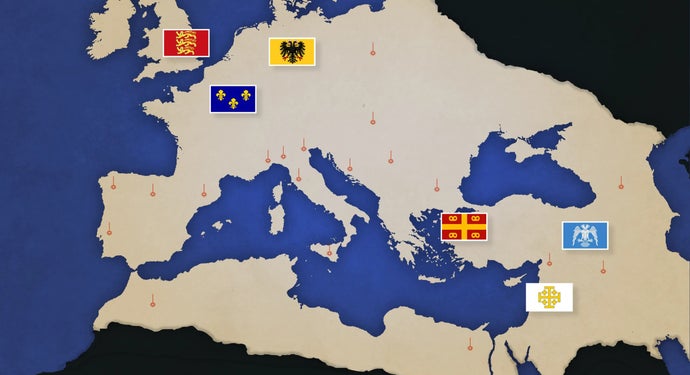
Creative Assembly has announced the first six playable factions for the highly anticipated historical strategy game, Total War: Medieval 3. These factions include the Kingdoms of France and England, the Kingdom of Jerusalem, the Sultanate of Rum (the precursor to the Ottoman Empire), the Byzantine Empire, and the Holy Roman Empire. These selections, according to Creative Assembly, were made based on their iconic status and historical significance during the medieval era.
The creative director, Lief Walter, shared insights into the faction selection process in a recent blog post, highlighting key factors such as brand familiarity, uniqueness of starting situations, and variety of potential endgame paths. He noted the importance of historical significance, which encompasses more than just familiarity, while also considering the game’s expansive world map that spans from Iberia to Baghdad.
Walter emphasized the iconic nature of England and France, particularly due to their intertwined histories, such as during the Hundred Years’ War. The Holy Roman Empire represents the feudal complexities and ambitions of the time, while the Byzantine Empire, the last remnant of Roman power, presents a sophisticated but vulnerable position at the start of the game. The Sultanate of Rum symbolizes the rise of the Ottoman Empire, and the Kingdom of Jerusalem is a representation of the crusader states central to medieval Christian aspirations.
While these six factions are confirmed, Creative Assembly is also seeking community input for an additional 23 factions under consideration for inclusion. Fans can vote on various factions from different regions, such as the Italian city-states, Eastern European kingdoms like the Duchy of Greater Poland, and northern realms including the Kingdom of Norway. The developers hope that player feedback will shape the pre-production of the game further, although they may need to maintain creative control based on their established design and production pipelines.
Some potential factions reflect the diverse historical tapestry of the medieval world, including the Iberian kingdoms and the Almohad Caliphate, among others. However, certain factions like the Mongols and Papal States are omitted as playable due to their unique complexities in gameplay development.
In conclusion, as Creative Assembly progresses with Total War: Medieval 3, the combination of iconic historical factions and community engagement promises an engaging strategy experience that aims to revisit the intricate political and military landscapes of the medieval era. Interested players can read more details and participate in voting through the official Total War website.