**The Future of Gaming Economies: Tim Sweeney’s Vision for Connectivity**
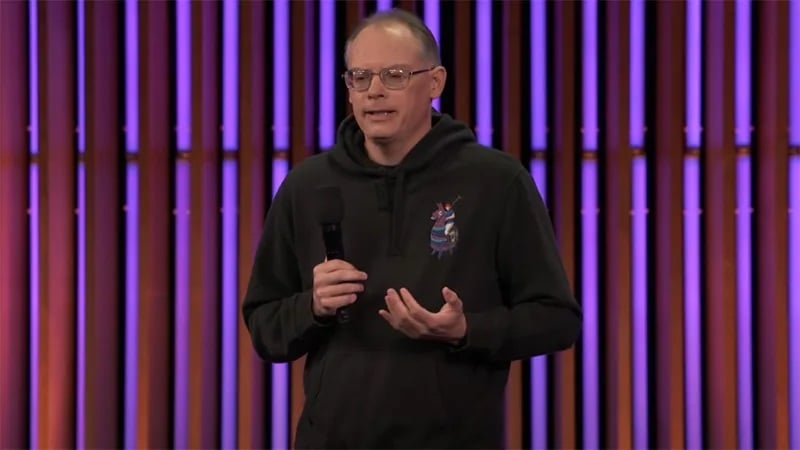
In a recent discussion with *PC Gamer*, Tim Sweeney, the head of Epic Games, expressed his aspirations for a more cohesive gaming landscape. Sweeney’s remarks are set against a backdrop of volatility in the gaming sector, marked by job cuts and management issues noted in various accounts, including problems faced by Epic Games itself. Central to Sweeney’s perspective is the belief that leading gaming companies would thrive by merging their social platforms and economies, transcending the divisions that presently keep gamers apart across various settings.
### The Current Landscape of Gaming Platforms
Sweeney points out the friction present in the current gaming ecosystem, where players encounter different social landscapes on platforms such as Xbox, PlayStation, and Steam. He described the existing arrangement as a major obstacle for gamers who wish to effortlessly invite friends to join them across games. This annoyance stems from user experiences, where each platform maintains its own closed social ecosystem, resulting in difficulties in communication and interaction among players.
### The Proposal of “Team Open”
To tackle these challenges, Sweeney proposed his idea, termed “Team Open.” He imagines a framework where all significant gaming publishers and platform owners work together to establish a cohesive social infrastructure. Drawing comparisons to the formative stages of email systems, he highlighted the necessity for a universal standard that would enable users to retain a single identity across multiple gaming platforms. This framework would allow players to converse freely, regardless of the platform, thus enhancing the overall gaming experience and connectivity among users.
### Is It Really That Complex?
Skeptics might question whether the challenges highlighted by Sweeney are as critical as he claims, citing that existing platforms like Discord have already enabled cross-game interaction. Utilizing tools like Discord allows gamers to connect without the need for uniformity among gaming platforms. Nevertheless, Sweeney’s vision appears more ambitious: a fundamental transformation in the way gaming economies and social engagements are structured at a foundational level.
### The Push for Cooperation Over Monopoly
Interestingly, Sweeney also mentioned the acknowledgment among gaming publishers that the monopolistic ambitions from the early console conflicts are no longer plausible. He posits that the advantages of interconnectivity surpass the benefits of fragmentation, suggesting that a cooperative strategy could benefit both publishers and players. However, this notion prompts inquiries about what genuine cooperation might entail, particularly when many leading firms still hesitate to share their products and platforms as players wish.
### A Deeper Look Into Sweeney’s Vision
While Sweeney’s observations may arise from authentic intentions to enhance user experience, skeptics might interpret them as a move by Epic Games, struggling to compete directly with Steam, to align more closely with its rivals in a bid for relevance. His emphasis on shared emotes and cosmetic items, although potentially improving the gamer experience, may not fulfill the deeper desires of consumers looking for broader access to games across platforms.
Overall, Sweeney’s proposals highlight a possible transformation in the gaming industry, where collaboration could promote a more seamless gaming environment. Whether the industry will adopt such changes is yet to be determined, but for Sweeney, the future of gaming undoubtedly involves dismantling the barriers that currently exist and nurturing a more interconnected player community.