### Dbrand’s Companion Cube Cover: A Cautionary Narrative in Intellectual Property
In the realm of gaming accessories, Dbrand has built a reputation for its distinctive and often provocative offerings. Yet, their most recent pursuit—the Companion Cube cover for the Steam Machine—has swiftly transformed into a cautionary narrative after facing substantial legal challenges with Valve, the gaming development firm behind the renowned Portal series.
#### The Launch and Swift Backlash
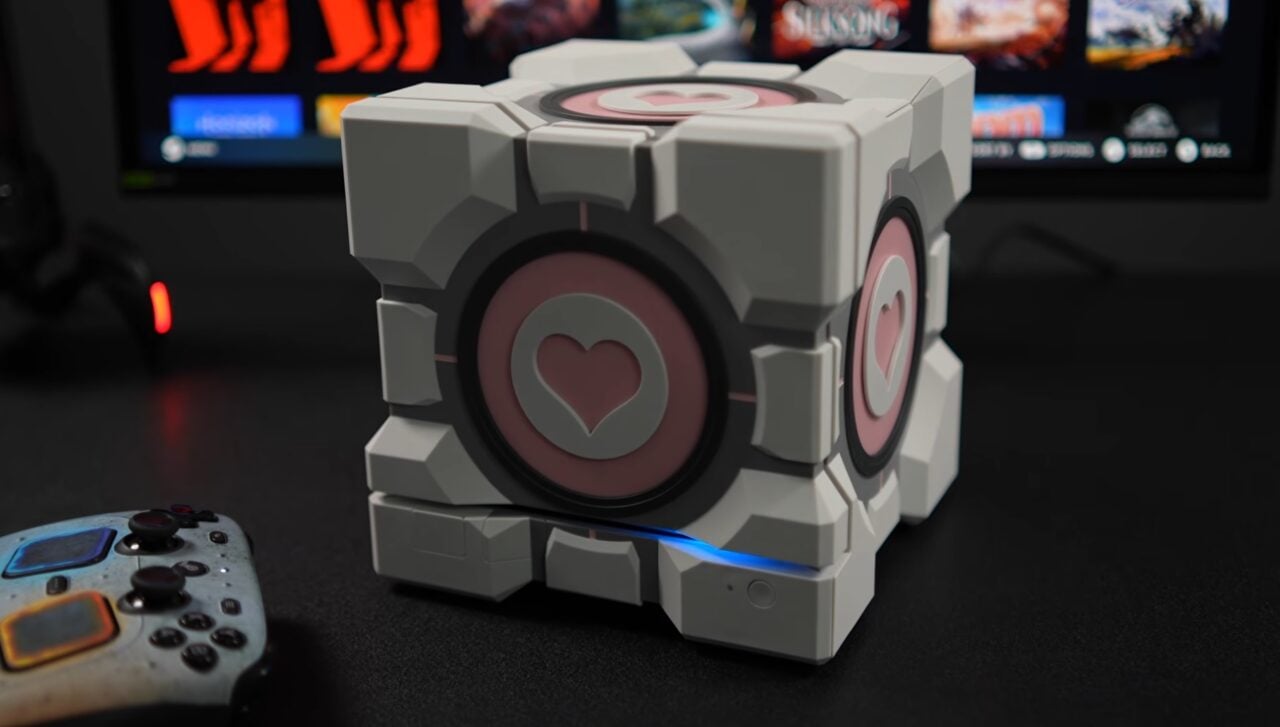
Dbrand revealed the Companion Cube cover on June 22, 2026, at around 3 AM. The product sparked immediate interest, becoming the second-fastest selling item in Dbrand’s 15-year journey, second only to their Switch 2 Killswitch. However, the thrill was fleeting. Shortly after its release, Valve’s legal department contacted Dbrand, claiming that the Companion Cube is their intellectual property and that Dbrand did not have authorization to market a product featuring its resemblance.
Dbrand recognized Valve’s request, noting that the company approached them in a respectful and fair manner. In reaction, Dbrand swiftly removed all mentions of the Companion Cube from their website and social media outlets and processed refunds for all pre-order customers. This reactive strategy ignited concerns regarding Dbrand’s decision-making and planning procedures prior to the product launch.
#### The Consequences of Inaction
Despite investing considerable resources into the launch, including multiple product redesigns and even leasing a university campus for promotional videos, Dbrand found itself in a precarious financial dilemma. They disclosed that they were incurring losses on every sale of the $99 Companion Cube cover, yet the effort had evolved beyond mere profit margins and turned into a “passion project” for the company.
The magnitude of Dbrand’s financial downturn remains ambiguous, but industry speculation points to it potentially being substantial. Numerous observers expressed astonishment that Dbrand did not pursue a partnership or licensing agreement with Valve prior to proceeding with sales. A pointed social media remark echoed this sentiment: “You had months to prepare and nobody at the company thought that, ‘hey, we’re about to sell a commercial product that contains someone else’s IP, maybe we should ask them?’”
#### Community Response and Product Evaluation
Initial assessments from creators who received early models of the Companion Cube cover were predominantly favorable. Tech YouTuber Tyler Price commended the design, asserting that Dbrand had invested significant thought and detail into the product, making it one of the most exciting gaming accessories in recent times. The early positive reactions stood in stark contrast to the subsequent legal predicaments, leaving many in the gaming community disheartened about the product’s outcome.
#### Dbrand’s Background with Intellectual Property
This scenario isn’t Dbrand’s inaugural encounter with legal disputes. Following the launch of the PlayStation 5, the company clashed with Sony over its black cover plates, resulting in intense legal discourse and a notable exchange on social media. This precedent indicates a trend of Dbrand embracing controversy as part of its marketing approach, prompting inquiries about its methodology in product launches involving acknowledged intellectual properties.
#### Conclusion: Insights Gained
Dbrand’s ordeal with the Companion Cube cover acts as a vivid reminder of the significance of intellectual property rights in the gaming sector and beyond. As companies navigate the intricacies of creativity and legal concerns, the necessity for proactive steps, such as obtaining licenses and forging partnerships when addressing established trademarks, becomes crucial. Whether Dbrand will seek a second attempt with the Companion Cube or pivot to other projects remains uncertain, but this incident highlights the dangers of hastily entering the market without adequate safeguards in place.