### The Incident At Galley House: An Engaging Yet Flawed Deduction Game
**Developer:** William Rous and Evil Trout
**Publisher:** Evil Trout
**Release Date:** July 14th, 2026
**Platform:** Windows 10 and up
**Available on:** [Steam](https://store.steampowered.com/app/3641000/The_Incident_at_Galley_House/)
**Price:** £17.75
**Reviewed on:** Intel Core i7-8700, 16GB RAM, Nvidia GeForce GTX 1070, Windows 11
The Incident At Galley House is a captivating deduction game that invites players into a chilling mystery set in a seemingly haunted manor. Helmed by developers William Rous and Evil Trout, this game takes a unique approach to storytelling through interactive gameplay, echoing mechanics seen in previous deduction games like *Her Story* and *TR-49*.
Upon entering the Galley House, players are immediately struck by the eerie atmosphere and a mysterious backstory. The narrative unfolds around a tragic event from March 1936, where multiple guests mysteriously perish during their stay, some with evident causes of death, while others remain shrouded in uncertainty. The player, armed with a bizarre contraption resembling a cross between a guessing game and a detective’s toolkit, must unravel the fateful night’s events.
### Gameplay Mechanics
The core gameplay revolves around a device referred to as the “Guess Who machine.” This device features three rows of portraits, switches, and a radio dial, allowing players to scan through time, locations, and characters present during the incidents. Players must accurately set the parameters to reveal scenes from the tragic night, listening to the voices of the deceased and gathering clues about their whereabouts.
It is essential to engage with the game actively: tuning into scenes requires players to link time codes, locations, and character identities. This process is rewarding, as correctly configured settings grant a sneak peek into pivotal moments, offering tantalizing insights and stimulating further investigation.
The addition of automated systems for tracking characters, scenes, and timelines marks a significant improvement from the original text adventure *Type Help*. Players can now access an in-game terminal that simplifies the organization of evidence, making it easier to follow various threads of the story while alleviating some of the mental burden associated with manual tracking.
### A Blend of Visual and Auditory Storytelling
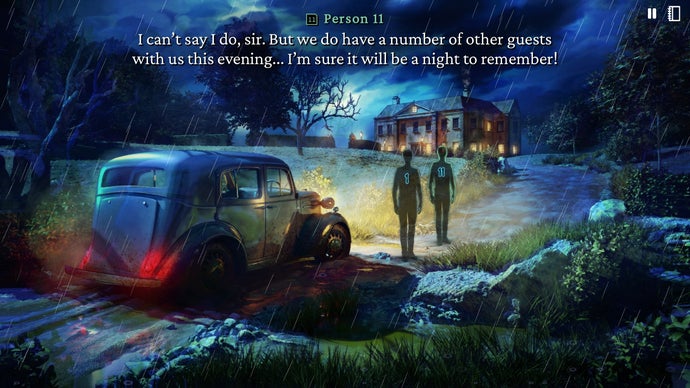
One of the notable enhancements in *The Incident At Galley House* is the visual representation of scenes, as opposed to relying on text alone. Initially, players witness silhouettes acting out scenes, which later transform into more fleshed-out characters once their identities are confirmed through profiles. This added layer makes the deduction process more immersive and visually engaging.
Furthermore, the game introduces an optional hint system that aids players in discovering connections between scenes, serving as a gentle guide through the complexities of the narrative. This caters to varying player preferences, allowing them to engage with hints according to their desired level of difficulty.
### Mixed Experiences
As thrilling as the initial exploration is, the game’s structure reveals some intrinsic challenges typical of the deduction genre. After the initial frenzy of discovering new characters and locations, pacing tends to slow, leading to moments of tediousness. The excitement that accompanied the uncovering of secrets can dissipate as the focus shifts to ensuring no detail or character interaction has been overlooked.
While this may resonate with fans of the genre accustomed to similar pacing issues in *Telling Lies* or *The Return Of The Obra Dinn*, it is an inherent flaw that can detract from the overall experience. Fortunately, the game introduces clever narrative twists in the late game that help reignite the player’s interest, breaking the monotony that can settle in during the investigative process.
### Conclusion
The Incident At Galley House stands as an enthralling entry into the deduction genre, boasting innovative gameplay mechanics and a rich narrative backdrop. While it does suffer from pacing issues common to the genre, the overall experience of piecing together a grisly puzzle in a haunted manor is undeniably captivating. Whether you are a fan of serious deduction games or new to the genre, this game promises a compelling, albeit occasionally flawed, mystery to unravel.