### Denshattack: A Playful Yet Profound Critique of Modern Society
In the growing genre of video games that blend whimsy with social commentary, *Denshattack* stands out as an unexpected champion of countercultural expression. Developed by Undercoders, the game presents an engaging scenario where players navigate a train-driving experience reminiscent of skateboarding culture while tackling serious issues reflective of contemporary society. This article delves into the game’s unique approach to satire and its unexpected political undertones.
#### A Whimsical Yet Meaningful Adventure
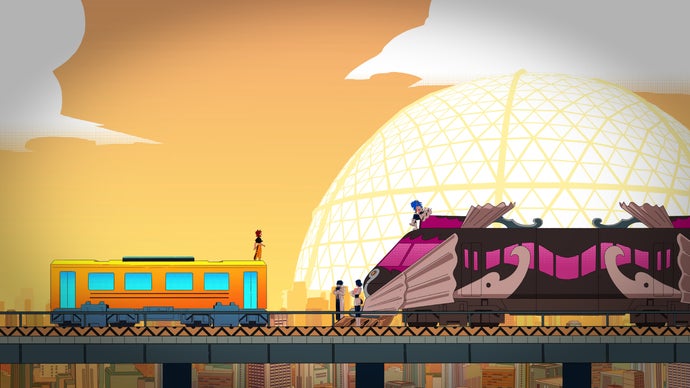
At first glance, *Denshattack* may appear as a lighthearted endeavor—constructing train mechanics on an imaginative quest of absurdity. However, the game’s satire targets specific societal challenges of 2026, embodied by a rogue tech conglomerate that enforces inequality and perpetuates chaos through mass surveillance, misinformation, and police violence. Here, players take on the role of Emi, a feisty train enthusiast who, along with a motley crew of unique characters, directly confronts these issues at exhilarating speeds, paralleling the thrill of skateboarding.
David Jaumandreu, the game director, points out that this political consciousness wasn’t a premeditated aspect but rather an organic reflection of societal realities intertwined with the gameplay environment. The synergy between the outlandish mechanics and pressing social issues serves to deliver a message: fun and revolution can coexist.
#### The Landscape of Counterculture
One of the most fascinating elements of *Denshattack* is its representation of diverse Japanese subcultures alongside Western influences, particularly skateboarding culture. Players encounter characters embodying various facets of rebellion, such as gyaru queen Yoshie, a rockabilly duo, and the bōsōzoku motorcycling subculture. This blend highlights a respect for authenticity while allowing for a creative fusion that enhances the game’s narrative depth.
Producers Jaumandreu and Àngel Beltran emphasize the importance of research and lived experience in accurately depicting these subcultures. Jaumandreu’s travels to Japan and his first-hand observations of cultural phenomena provide a rich backdrop for the game’s characters. This genuine representation is a critical aspect of making the gameplay resonate beyond mere entertainment.
#### Catharsis Through Video Game Mechanics
While *Denshattack* boasts thrilling gameplay filled with imaginative set pieces—such as executing tricks on trains and whimsical battles against technocratic foes—it also serves a cathartic purpose. For many players, the game becomes a means to confront and process grievances about the real-world structures that oppress them. Each encounter with authoritarian figures and their mechanisms becomes an opportunity for players to express frustration and reclaim agency, albeit within a fantastical framework.
Emi’s journey represents more than just a thrill ride; it symbolizes personal growth and communal responsibility. As players guide her from carefree antics to a more profound understanding of societal issues, they are reminded that making a difference doesn’t require monumental activism, just a willingness to care.
#### An Optimistic Take on Activism
Interestingly, *Denshattack* cultivates an optimistic air amidst its critique of capitalism and modern technology. It illustrates that even within a game that acknowledges substantial societal problems, one can find joy and empowerment. Jaumandreu and Beltran argue for the necessity of maintaining hope, asserting that while the game’s narrative intertwines with genuine concern, it simultaneously invites players to revel in the playful nature of their adventures.
The cheerful tone, coupled with meaningful challenges and engaging character arcs, ensures that players are entertained while reflecting on their realities. In this sense, *Denshattack* becomes not only a game about train flipping but also a vehicle for encouraging more profound dialogues about the world we inhabit.
### Conclusion
*Denshattack* cleverly navigates the intersection of joy and activism, allowing players to indulge in whimsical fun while engaging with critical social issues. Through its vibrant characters and fast-paced mechanics, it presents a narrative of rebellion—one where anyone can participate, whether through playful tricks or acts of defiance against oppressive systems. As players skate through its colorful world, they also explore the idea that optimism and change can flourish even amidst adversity, guided by the whimsical spirits of train stunts and countercultural expression.