**The Prospects of a Dragon Age Trilogy Remaster: Insights from Mark Darrah**
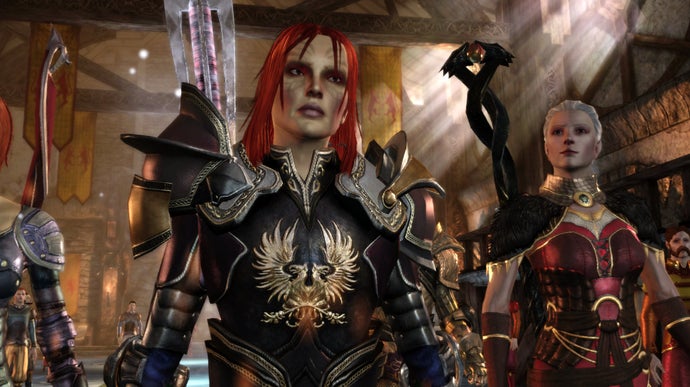
Mark Darrah, a former producer for the Dragon Age series at BioWare, recently shared his views on the feasibility of remastering or remaking the original Dragon Age trilogy. While he expressed optimism regarding the potential commercial success of such a project, citing that the original games’ graphics could use significant improvement, he also emphasized the complexities involved, primarily due to the proprietary technology that underpins those older RPGs.
The original Dragon Age: Origins, released in 2009, was built using BioWare’s Eclipse Engine, an evolution of the Aurora Engine which had been created for Neverwinter Nights. Dragon Age 2, which followed in 2011, used a variant of this engine called the Lycium Engine. The latest installment, Dragon Age: Inquisition, was built on the Frostbite Engine, originally developed for EA’s Battlefield series. The transition to Frostbite during Inquisition’s development posed significant challenges for the Dragon Age team, as the engine did not support many essential features required for RPG development.
Given that each game of the trilogy operates on different proprietary technologies, Darrah pointed out that combining them into a single remastered package presents a formidable challenge. In contrast, remastering the Mass Effect trilogy was more straightforward since all those games utilized Epic’s publicly licensed Unreal Engine, which is widely understood in the industry.
Darrah conveyed that, during his time at BioWare, he had envisioned the possibility of creating a “Champion’s Trilogy,” which would involve retroactively associating the three games through significant characters and collective narrative elements. He had suggested that BioWare could collaborate with a talented modding house to work on a remake of Dragon Age: Origins, utilizing Frostbite tools to achieve this.
He reiterated his belief that a trilogy remaster would likely sell well, though he pointed out that the knowledge necessary to work with the older engines, like the Aurora Engine, has significantly diminished within BioWare and the industry at large. “There is basically no one at BioWare anymore that understands the Aurora Engine,” he noted, highlighting the difficulty of finding external companies capable of assisting with such a project.
Moreover, the current climate at EA, BioWare’s parent company, could hinder any new Dragon Age projects. EA is in the process of being acquired by a consortium linked to Saudi Arabia’s public investment fund, an endeavor that comes with substantial financial obligations. This situation has led to company-wide cost-cutting measures, including layoffs at BioWare, which Darrah indicated would reduce the likelihood of further development on the Dragon Age series as the studio focuses on the next installment of Mass Effect.
In general, Darrah’s insights reflect broader concerns regarding how video game companies maintain expertise and knowledge about their proprietary tools. The loss of experienced team members can lead to significant challenges in game development, particularly when it comes to remastering older titles that relied on technologies that become obscure over time.
In conclusion, while the idea of a remastered Dragon Age trilogy remains appealing for fans, various factors, including technological challenges and the current situation at EA, suggest that it is unlikely to materialize in the near future. For now, the community continues to rely on creative mods to keep the Dragon Age spirit alive during its uncertain phase.