**Investigating the Social Interactions of ‘Big Walk’**
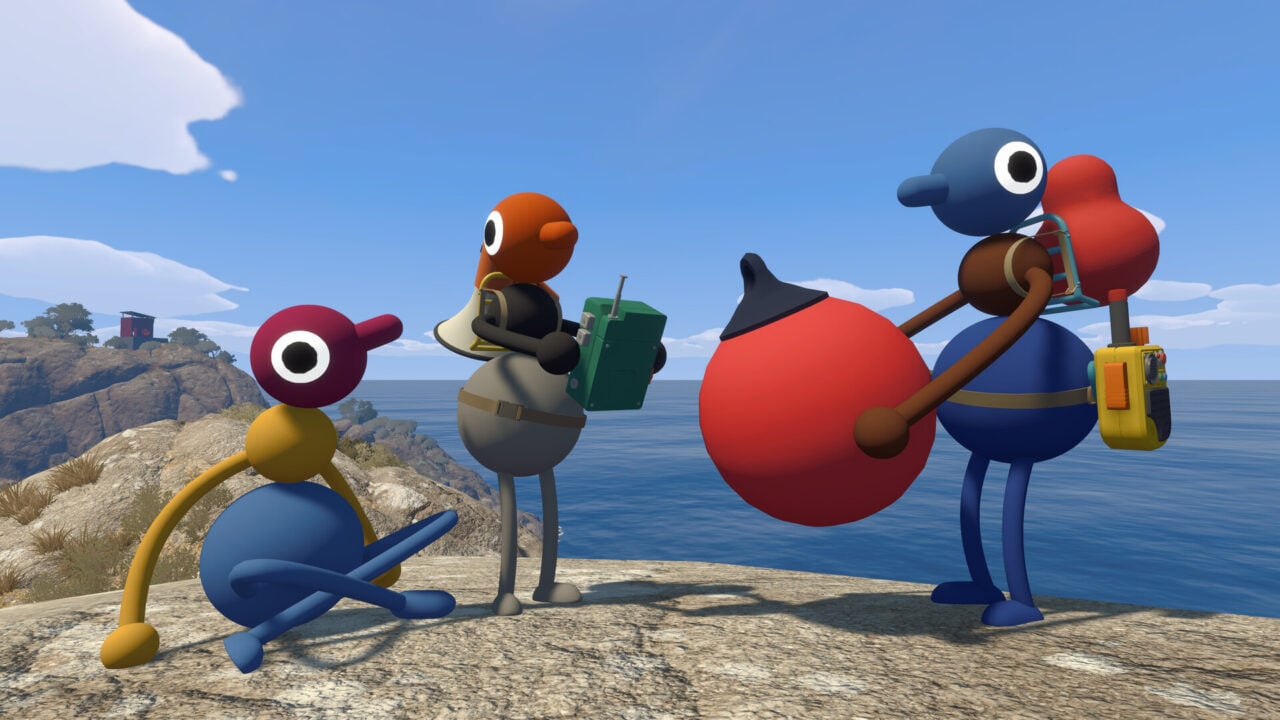
House House, the indie game developer celebrated for the whimsical appeal of *Untitled Goose Game*, has made a notable contribution to the co-op gaming scene with the debut of *Big Walk* on August 4. This game focuses on exploration and teamwork, requiring teams of two to twelve players to traverse its vivid and enchanting settings. However, this social gameplay comes with a distinctive condition: *Big Walk* is not available for solo play, meaning players must have a group of friends ready to embark on their adventures together.
The decision to center *Big Walk* around collaboration offers both benefits and hurdles. For those lucky enough to have a circle of friends willing to spend $15 on the game and synchronize their schedules for gaming sessions, the experience is bound to be enhanced by shared moments and collective accomplishments. Nevertheless, the absence of online matchmaking or public lobby systems implies that players lacking pre-existing social networks may face difficulties in engaging with the game.
As a direct result of this design, the *Big Walk* subreddit has witnessed a surge of players looking for partners to join them in their gaming experiences. A mega-thread focused on forming groups has gathered over 200 requests, with users sharing their gaming codes, time zone preferences, and appeals for anyone interested in playing. This interaction underscores how *Big Walk* is promoting community building even as it restricts access for solo players.
Some players have voiced their discontent with the game’s friend stipulation, especially when compared to recent releases that permit more adaptable gameplay. Many modern games offer public lobbies or other features that facilitate solo play, rendering *Big Walk*’s approach a deviation from established trends. The game’s requirement for regular team involvement, projected to require around 15 hours to finish, means players must organize multiple play sessions with the same group, presenting a logistical challenge in the absence of public matchmaking.
Interestingly, while certain players may feel hindered by the game’s limitations, others derive pleasure from the collaborative aspect of seeking friends online. This social dynamic can lead to the development of new friendships as players bond over shared interests, schedule coordination, and mutual enthusiasm for the game. The exploration components of *Big Walk* are likely to amplify these interactions as players craft shared memories, from assigning names to curious blobs they encounter to tackling the game’s challenges as a team.
In summary, *Big Walk* by House House is not merely a game; it serves as a social experiment that necessitates cooperation and communication among players. While it may present a challenge for those without an established group, it also nurtures a sense of camaraderie, making the game’s community an essential aspect of the overall experience. As players prepare for quests in vibrant settings, they’ll not only be exploring digital realms but also cultivating friendships that go beyond the screen.