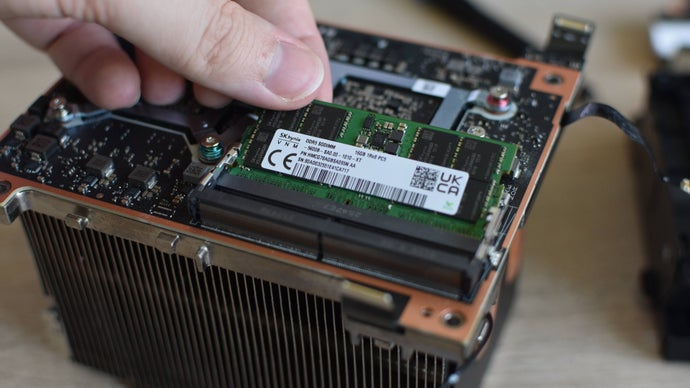
In recent developments concerning the semiconductor market, a report has emerged indicating that the leading memory manufacturers—Samsung, Micron, and SK Hynix—have not only sold their anticipated output for 2026 but have also secured sales for 2027. This information, reported by Taiwanese outlet DigiTimes and partially translated by TweakTown, highlights a brewing crisis in the availability of RAM chips, suggesting that future supplies may remain tight until as late as 2028. This scenario casts a long shadow over prospects for declining prices of PC RAM, storage solutions, and graphics cards, exacerbating ongoing consumer concerns about the costs of essential components.
The news forms part of a continuous string of adverse reports regarding the current components crisis. Notably, Samsung has admitted that pricing pressures will remain unaddressed through 2027. Adding to the dismal outlook, Valve has voiced similar concerns, indicating that products like the Steam Deck OLED and the Steam Machine are struggling due to ongoing shortages and rising prices, with indications that conditions may deteriorate further before any improvement can be anticipated.
DigiTimes specifies that the three dominant players in the memory production space—Samsung, Micron, and SK Hynix—have completely booked their DRAM and HBM manufacturing capacity. DRAM is crucial for standard RAM modules and high-performance graphics cards, as well as premium SSDs. Although NAND flash storage, produced by these companies, is reportedly in slightly better condition with some availability into 2027, it is predicted that this output will also be exhausted shortly.
The mechanical hard drive sector is not a feasible workaround, either, as leading manufacturers have already faced similar sales for their 2026 stock, indicating burgeoning demand effectively outstripping supply across the board.
Amid tumbling stock and soaring prices, industry watchers are beginning to look towards emerging players such as Chinese DRAM manufacturers like CXMT, who are ramping up production. However, reports suggest that any benefits from a broader supply chain diversification, particularly for consumer components, may be slow to materialize. Currently, only major manufacturers like HP, Asus, and Acer are incorporating CXMT’s memory solutions within select products—primarily targeted for the Asian market.
Moreover, the restrictions in memory supply are compounded by the burgeoning demand from the artificial intelligence (AI) sector. Data centers continually absorb vast amounts of DRAM, further tightening availability for general consumers. Despite widespread concerns over AI’s potential risks and ethical implications, the demand for high-performance hardware used in AI applications shows no signs of diminishing.
As the market grapples with these constraints, consumers are left without much recourse, facing persistent pricing pressures and limited options in a landscape already impacted by significant technological advancements and supply chain challenges. This has raised questions about the future of PC upgrades and game development, with many in the industry uncertain about when—or if—relief from escalating costs will arrive.