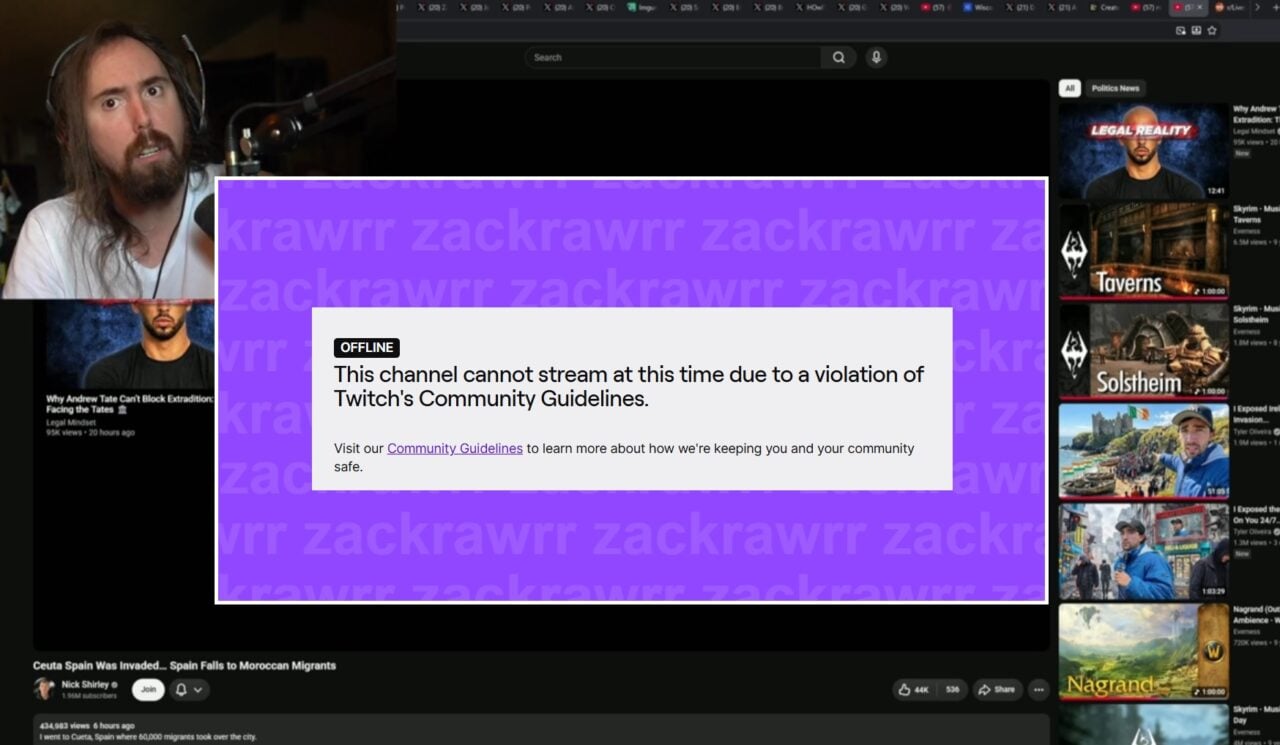
Zack “Asmongold” Hoyt, a well-known Twitch streamer and content creator, has encountered considerable backlash after a recent stream in which he made contentious comments about immigration and violence. His statements, which included a blatant endorsement of shooting children as a means to curb illegal immigration, resulted in the suspension of one of his Twitch channels for breaching the platform’s community guidelines.
During a livestream, Hoyt reiterated opinions from his chat, asserting, “Shoot ‘em, problem solved,” in reference to discussions about immigrants crossing the border. Citing a video from a right-wing content creator concerning immigration from Morocco to Spain, Hoyt ramped up his rhetoric by proposing drastic actions against families with children, claiming that such measures were warranted to avert perceived dangers to society.
The aftermath of his comments has been substantial, inciting debates about the accountability of content creators in public dialogue, especially on sensitive issues like immigration and violence. Despite the gravity of his remarks, Twitch has not clarified the specific statements that resulted in the channel suspension, allowing for speculation regarding the implementation of its guidelines.
This is not the first instance of Hoyt facing consequences for his conduct on the platform. He was earlier suspended in April 2023 for derogatory remarks about individuals from less economically developed regions, and again in 2024 for comments pertaining to the Palestinian conflict. In a moment of reflection during that suspension, he recognized a transformation in his on-stream persona, characterizing it as a shift towards a more “mean-spirited” iteration of himself.
Hoyt’s increasingly provocative rhetoric has drawn both supporters and opponents, with some, including identified white nationalists, commending his views as aligned with extremist ideologies. This convergence of gaming culture and extremist discourse raises vital questions about the sway of popular streamers and the potential societal consequences of their public pronouncements.
The broader ramifications of Hoyt’s comments and subsequent suspension extend beyond the Twitch platform, underscoring the necessity for cautious consideration of speech in digital environments where vast audiences engage with content. As discussions around free expression and responsibility persist, the case of Asmongold acts as a stark reminder of the duties that accompany influence in the contemporary digital landscape.