**Shades on! Mario’s Arrival on Cube is an Epic Wow. Superior to Super Mario 64? Absolutely!**
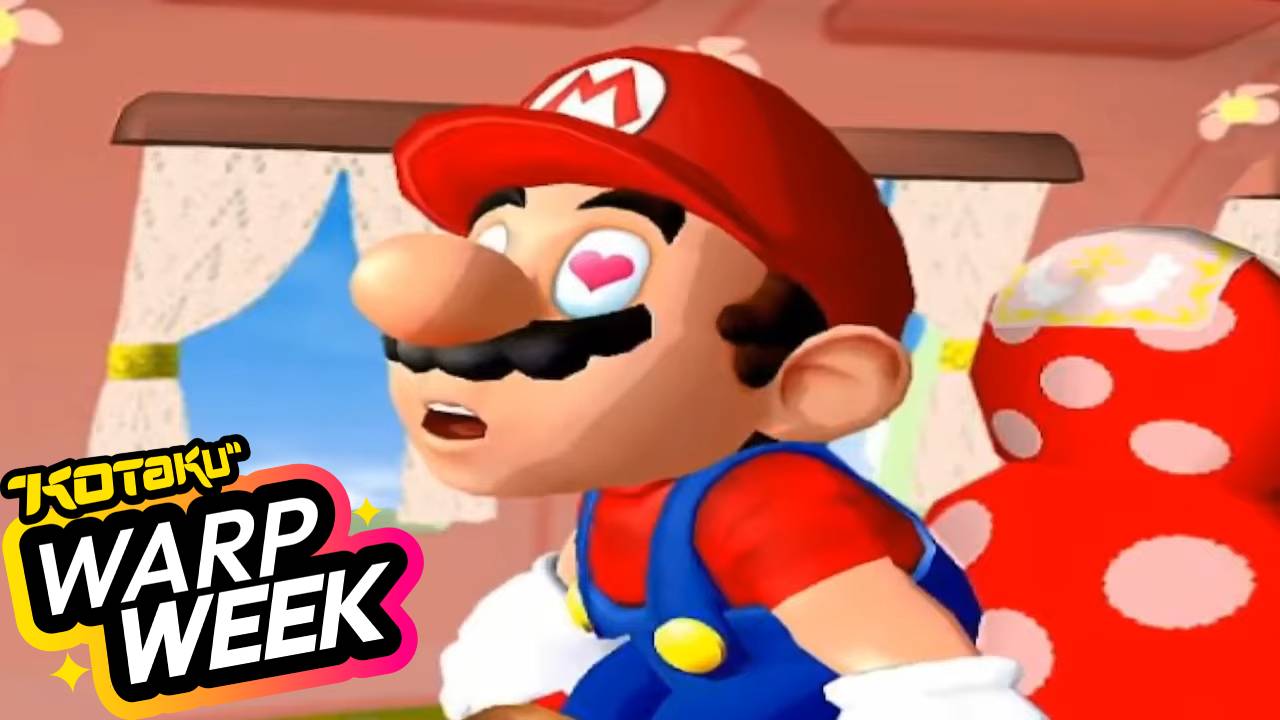
This was the opening line to Michael Cooper’s enthusiastic 10/10 review for *Computer and Video Games* of *Super Mario Sunshine* for the Nintendo GameCube, which debuted on July 19, 2002. Nintendo’s 3D sequel to *Super Mario 64*, *Super Mario Sunshine* quickly distinguishes itself with its tropical getaway themes and the fact that Mario now sports a backpack dubbed FLUDD that sprays water. Odd as it may seem, according to Cooper, we’re definitely going to adore this one.
“To label this game as entirely sensational is akin to saying Shigeru Miyamoto is merely a programmer. Your eyes will throb with delight and your heart will overflow with happiness as you navigate Mario’s vast universe. But beneath this cheerful shining surface are solid challenges and hardcore gameplay of the utmost quality.”
Based on the deluge of high ratings it’s garnering, *Super Mario Sunshine* is indeed cherished by critics, though most were a bit more measured in their accolades than Cooper. Most reviewers concur that *Super Mario Sunshine*, despite its distinctive setting and style, isn’t groundbreaking. Instead, it’s a logical successor to *Super Mario 64*. Here’s Andrew Reiner for *Game Informer*, for example, with his 9.75/10 review emphasizing that point:
“This is aged-in-oak evidence that a game doesn’t have to be original to capture gamers’ hearts. When a new Mario game is released, there’s a deep-seated expectation that it’ll transform gaming as we know it. Admittedly, this assertion might appear exaggerated, but if you consider the impact of each Mario release, it’s not so outlandish after all. Consider this: If Nintendo had never launched *Super Mario 64*, what would the landscape of 3D gaming look like? It’s a daunting thought, especially considering that nearly every platformer available is influenced in some way by this iconic release. Of course, that was six years ago, and with the long hiatus, everyone expected that Mario’s return would usher in another astonishing gaming revolution.”
“Instead of reinventing the wheel, Nintendo created the much-anticipated GameCube sequel under the mantra ‘if it ain’t broke, don’t fix it.’ *Super Mario Sunshine* is truly 64-bit at its core. Just the visual style of the game should trigger a wave of nostalgia. Ironically, time is on Mario’s side. Instead of venturing into futuristic technologies, Nintendo drew from the knowledge and experience of the earlier game and used it to craft the ideal sequel.”
And here’s Tom Bramwell from *Eurogamer*, with a comparable perspective in a 9/10 review:
“To claim that there has been a palpable sense of anticipation surrounding *Super Mario Sunshine* is like asserting that plumbers don’t don ties. It seems almost redundant to highlight something so overt. This is the sequel to *Super Mario 64*, the game that initiated a platform and reminded the world that Shigeru Miyamoto produces the finest platform games. *Super Mario Sunshine* couldn’t aspire to break boundaries and redefine the genre for a second time, but it could and has succeeded in delivering one of the largest and most engaging platform games since its renowned predecessor. The greatest game ever? No, but you’d be unwise not to get it.”
The most striking difference between *Super Mario Sunshine* and its Mario forerunners is, as noted, its tropical island backdrop and vacation-themed features. Most critics adored these, with IGN’s Fran Mirabella III stating that “the Caribbean-themed settings, grand and stunning, are so well crafted that a broad smile is often elicited” in a 9.4/10 review.
However, as delightful as the aesthetics were, many reviewers couldn’t overlook certain inconsistencies. Several of *Super Mario Sunshine*’s visual components, such as its water and color application, received accolades. Yet many noted textures that appeared downright ugly up close. Jeff Gerstmann, in his 8/10 review for *GameSpot*, encapsulated it effectively:
“Much debate has arisen regarding *Super Mario Sunshine*’s graphics. It seems some individuals think it looks dreadful while others consider it beautiful, and that divide likely won’t alter. Personally, I fall into the latter camp; although there are a few unpleasant textures, most of the game is simply stunning. The character modeling for Mario and Yoshi is superb, the draw distance is unmatched, and the water is the finest I’ve ever encountered in any game. Simple yet charming special effects abound, from the little ribbons of light